



- Your cart is empty Browse Shop
Dextrose Monohydrate Storage and Handling: Moisture Control, Caking Prevention and Packaging
Storage problems do not always begin with visibly damaged material. A poorly sealed bag, short exposure to humid air, unsuitable pallet placement, or an overlooked warehouse leak can gradually affect the condition and handling of a powdered food ingredient.
Effective dextrose monohydrate storage therefore involves more than placing unopened bags in a warehouse. Food manufacturers must consider moisture protection, packaging integrity, pallet management, stock rotation, opened-bag handling, and batch traceability throughout receiving, storage, and production use.
This guide explains practical measures for managing dextrose monohydrate under normal warehouse and processing conditions. It also examines common causes of caking, essential receiving checks, and the appropriate response when packaging damage or moisture exposure is discovered. Because requirements may differ by product and supplier, all decisions should ultimately follow the current specification, packaging instructions, and the manufacturer’s approved quality procedures.For a broader review of its properties, production and food-grade requirements, see our food grade dextrose monohydrate guide.
Why Dextrose Monohydrate Storage and Handling Conditions Matter
Dextrose monohydrate may appear stable when delivered in sealed packaging, but its condition can still be affected by the way it is transported, stored, and handled. Exposure to moisture can reduce free-flowing performance and contribute to caking, while damaged packaging may allow the material to absorb surrounding odors or come into contact with potential contaminants.
Warehouse practices also influence packaging condition. Excessive stacking pressure, unsuitable pallets, contact with damp floors, and repeated movement can weaken bags or liners over time. Temperature changes between transportation and storage environments may create additional condensation concerns, particularly when materials are moved without considering local conditions.
Proper dextrose monohydrate handling is therefore part of both ingredient protection and quality management. A clear storage procedure helps manufacturers preserve packaging integrity, identify affected batches, maintain reliable inventory records, and prevent questionable material from entering production before it has been properly evaluated.
Recommended Dextrose Monohydrate Storage Conditions
Well-managed dextrose monohydrate storage begins with a suitable warehouse environment and intact original packaging. Although exact requirements may vary by product and supplier, several basic practices apply throughout receiving, storage, and internal transportation.
Keep the Product in a Cool, Dry, and Ventilated Area
Store unopened bags in a clean area protected from excessive heat, humidity, direct sunlight, and rapid temperature changes. Adequate ventilation can help maintain stable warehouse conditions, but the product should not be placed near open doors, exposed loading areas, or other locations where outdoor moisture may enter.
Protect It From Moisture, Odors, and Contamination
Dextrose monohydrate should remain sealed in its original packaging until required for production. Bags should be kept away from water sources, leaking pipes, damp walls, cleaning chemicals, strongly scented materials, and other potential contaminants. Even when the outer bag appears undamaged, poor warehouse placement may increase the risk of moisture exposure or odor absorption.
Follow Product-Specific Storage Instructions
There is no single temperature or humidity limit that should automatically be applied to every product, packaging format, or warehouse. Storage decisions should follow the current product specification, packaging label, supplier instructions, and the manufacturer’s approved quality procedures.
Warehouse teams should document relevant storage conditions and investigate unusual changes rather than relying only on visual inspection. Clear requirements help protect packaging integrity, support consistent ingredient handling, and provide useful records if a quality concern is identified later.Buyers can review our food grade dextrose monohydrate product page for available packaging, documentation and bulk supply information.
Moisture Control in Warehouse Storage
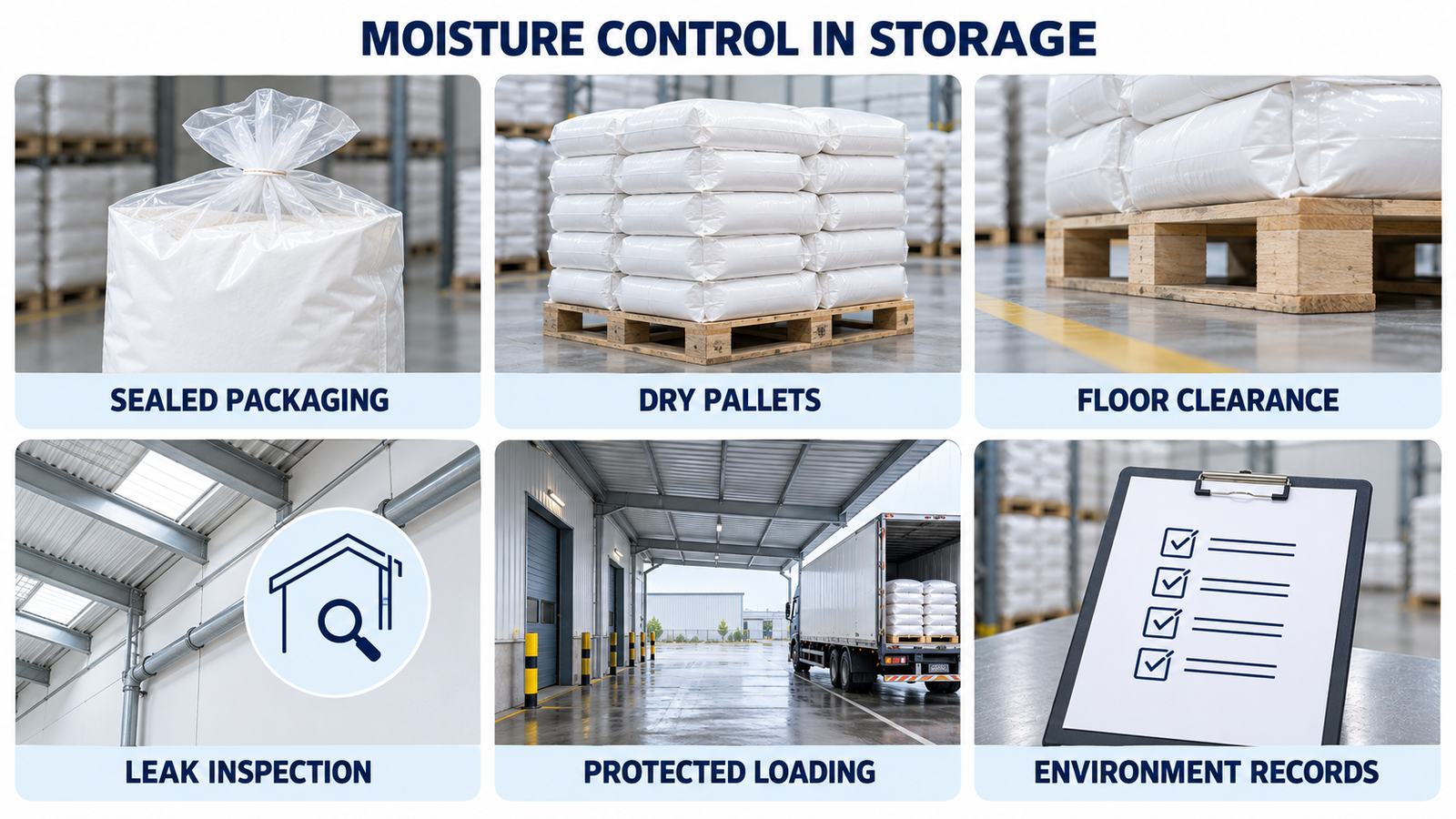
Moisture control is one of the most important parts of dextrose monohydrate storage. Exposure may occur through obvious events, such as torn bags or water leaks, but it can also result from condensation, damp pallets, unprotected loading areas, or packaging left open longer than necessary.
Bags should be stored on clean, dry, and structurally sound pallets rather than directly on the warehouse floor. Appropriate clearance from walls can make cleaning and inspection easier while reducing contact with potentially damp surfaces. Storage locations beneath pipes, near drains, or beside frequently opened external doors should be assessed carefully.
Warehouse teams should regularly inspect roofs, walls, floors, ventilation systems, and loading areas for signs of water entry or condensation. When ingredients arrive during rain or move between environments with different temperatures, the outer packaging should be checked before the material enters normal storage.
The original packaging should remain sealed until the product is scheduled for use. If a bag is damaged, wet, or visibly stained, it should not simply be moved into available inventory. The affected material should be identified, isolated, and evaluated according to the company’s quality procedures.
Environmental records can support investigations when moisture exposure is suspected. However, acceptable temperature and humidity limits should come from the current product documentation and approved warehouse requirements rather than from a generic value applied to every dextrose monohydrate product.
How to Reduce Caking Risk
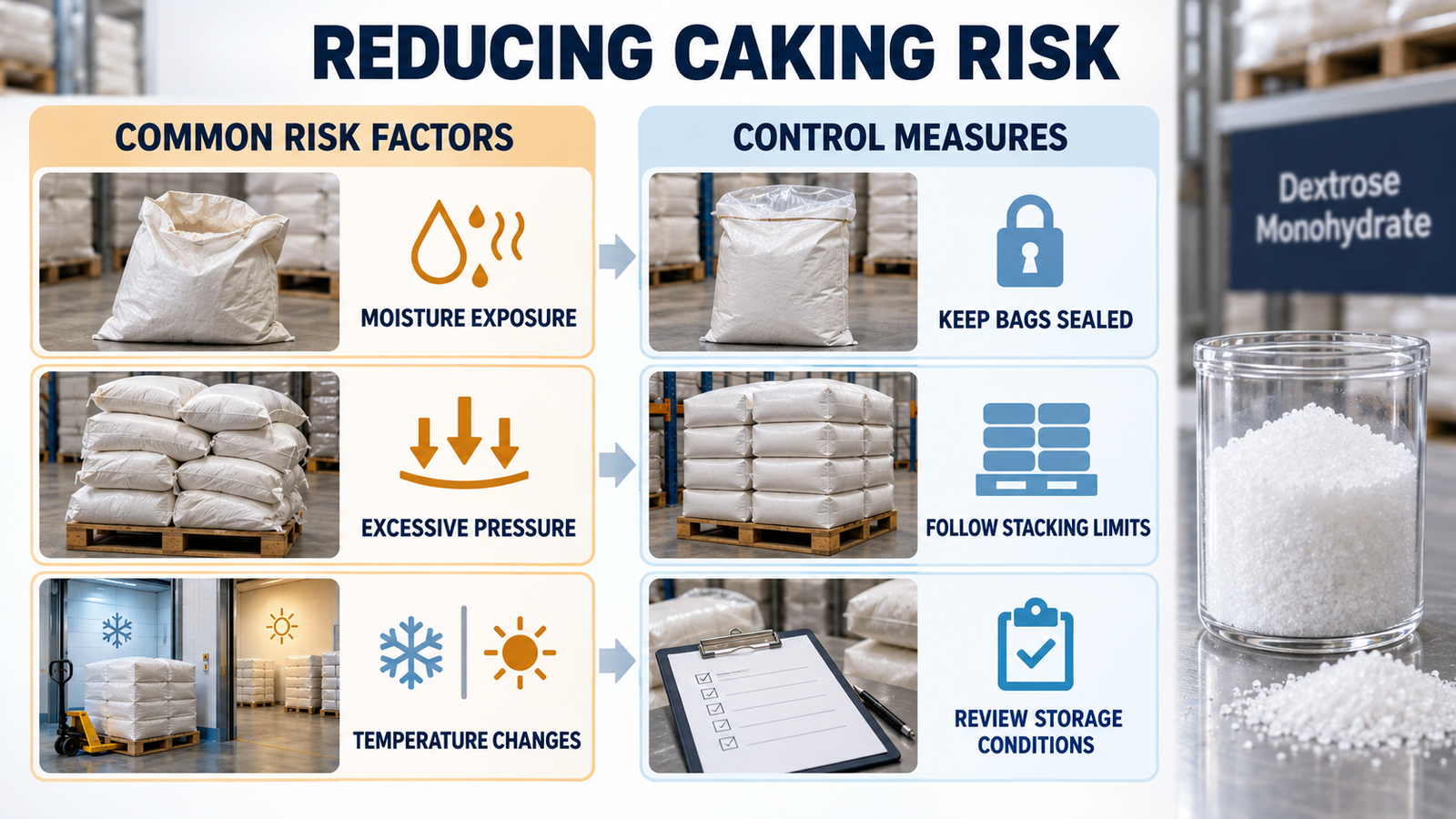
Caking can make a powdered ingredient more difficult to discharge, weigh, disperse, and transfer during production. It does not always indicate that dextrose monohydrate is unsuitable for use, but unexpected changes in powder condition should be investigated before the affected material is released.
Limit Moisture Exposure
Moisture may encourage particles to adhere to one another and form lumps. Keeping bags sealed, protecting them during loading and unloading, and limiting the exposure time of opened packaging are practical parts of caking prevention. Warehouse staff should also respond quickly to leaks, condensation, or damaged liners.
Avoid Excessive Compression
Poor stacking practices may place unnecessary pressure on bags stored at the bottom of a pallet. Pallet loads should remain stable and follow approved stacking limits, packaging instructions, and warehouse safety procedures. Materials should not be compressed merely to create additional storage space.
Manage Environmental Changes
Moving ingredients between substantially different environments may create condensation concerns. Warehouse and production teams should consider local temperature and humidity conditions when transferring material, particularly after transportation or storage in a cooler area.
If hard lumps, damp areas, damaged packaging, or an unusual powder appearance are found, the batch should be identified and assessed. Breaking up or screening the material without authorization may conceal a quality problem rather than resolve its cause.
Packaging Integrity and Pallet Management
Packaging provides the first line of protection against moisture, contamination, and physical damage during transportation and warehouse storage. Depending on the supplier and order requirements, dextrose monohydrate may be supplied in paper bags, woven polypropylene bags, or other approved formats with an inner liner. The applicable packaging configuration should be confirmed before purchase.
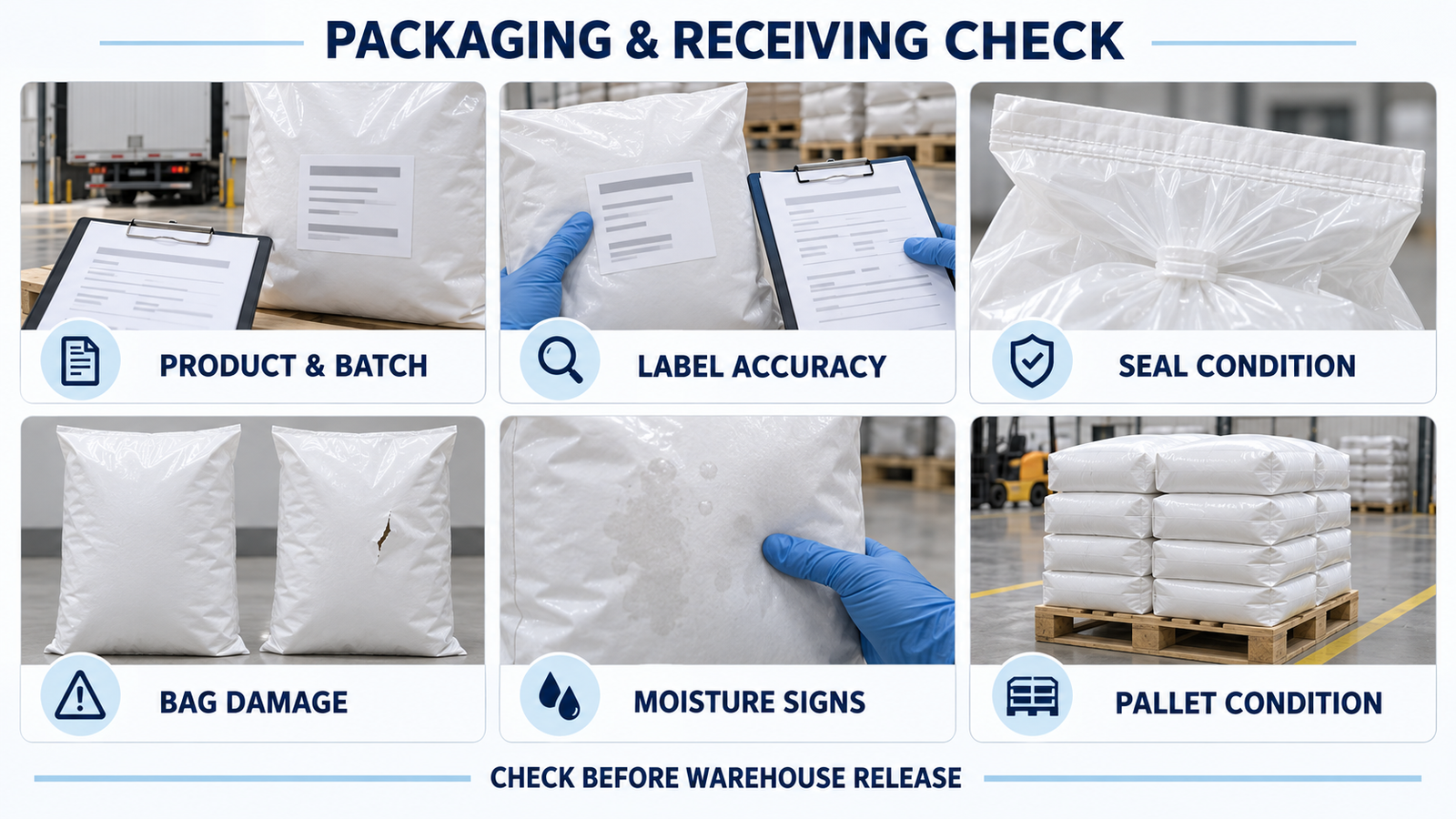
Every delivery should be checked for open seams, punctures, tears, water stains, loose closures, and damaged liners. A clean outer surface does not automatically confirm that the inner packaging remains intact, so any unusual condition should be documented and referred for quality evaluation.
Pallets should be clean, dry, stable, and free from exposed nails, broken boards, or other features that could damage the bags. Loads should be positioned securely without extending beyond the pallet edges. Protective wrapping may help stabilize a pallet during transportation, but it does not replace properly sealed product packaging.
Stacking arrangements should follow the supplier’s packaging guidance and the warehouse’s approved safety limits. Excessive height or uneven weight distribution may deform lower bags, damage seals, and make stock inspection more difficult.
Different batches should remain clearly identified and separated where necessary. Pallet labels should be visible, and materials should not be moved without updating their warehouse location. Consistent pallet management protects packaging integrity while also supporting inventory accuracy, traceability, and efficient retrieval for production.
Handling Opened Bags of Dextrose Monohydrate
Once a bag is opened, the product loses part of the protection provided by its original sealed packaging. Production teams should therefore open only the quantity required for planned use and avoid leaving exposed material near water, steam, cleaning activities, open doors, or other sources of humidity and contamination.
Any unused dextrose monohydrate should be resealed promptly using an approved method that protects the remaining material. The bag or secondary container should retain clear identification, including the product name, batch number, opening date, and remaining quantity where required. Transferring material into an unmarked container can break traceability and increase the risk of ingredient mix-ups.
Scoops, transfer equipment, and contact surfaces should be clean, dry, and suitable for food-ingredient handling. Unused material should not automatically be returned to an unopened bag or mixed with another batch.
Opened-bag handling requirements, including any internal time limit for use, should follow the manufacturer’s approved quality procedures and relevant supplier guidance. If the material has remained exposed for an uncertain period, or if its powder condition has changed, it should be identified and evaluated before further use.
Receiving Inspection Checklist
Storage control begins before dextrose monohydrate enters the warehouse. A structured receiving inspection helps identify transportation damage, documentation inconsistencies, and possible moisture exposure before the material is added to available inventory.
Receiving personnel should verify:
- Product name and grade
- Supplier and purchase-order details
- Batch or lot number
- Delivered quantity and packaging format
- Label accuracy and legibility
- Seal and closure condition
- Tears, punctures, or damaged stitching
- Water stains, dampness, or condensation
- Unusual odors or visible contamination
- Pallet stability and general cleanliness
- Consistency between the delivery documents, product labels, and batch COA
For a more detailed technical review, see our guide to dextrose monohydrate specifications and COA evaluation.These checks should be completed in an appropriate receiving area before the material is transferred to its assigned warehouse location. Photographs and inspection records can provide valuable evidence if damage or discrepancies are discovered.
A bag with visible damage should not be accepted into normal stock simply because the powder inside appears usable. The affected unit or batch should be clearly identified, separated from released inventory, and reviewed according to the company’s quality procedures. Where necessary, the supplier should be contacted to clarify documentation, packaging integrity, transportation conditions, or the appropriate next steps.
Inventory Rotation and Warehouse Traceability
Effective inventory control ensures that stored material can be located, identified, and connected to the relevant receiving and production records. Each pallet or storage unit should display a readable product name, batch number, receipt date, and applicable shelf-life information.
Depending on the company’s quality system, stock may be managed through first-in, first-out (FIFO) or first-expired, first-out (FEFO) procedures. FEFO may be more appropriate when batches have different expiry dates, while FIFO can support orderly movement when shelf-life conditions are comparable. The selected method should be documented and applied consistently.
Released, quarantined, returned, and rejected materials should remain clearly separated. Warehouse location changes, partial pallet movements, and opened quantities should also be recorded to prevent inventory discrepancies.
Reliable warehouse traceability becomes especially important when packaging damage, moisture exposure, or caking is discovered. Accurate records allow the quality team to identify the affected quantity, review storage history, and determine whether other units from the same batch require inspection. This reduces unnecessary disruption while preventing questionable material from entering production.
What to Do If Moisture Exposure or Caking Is Found
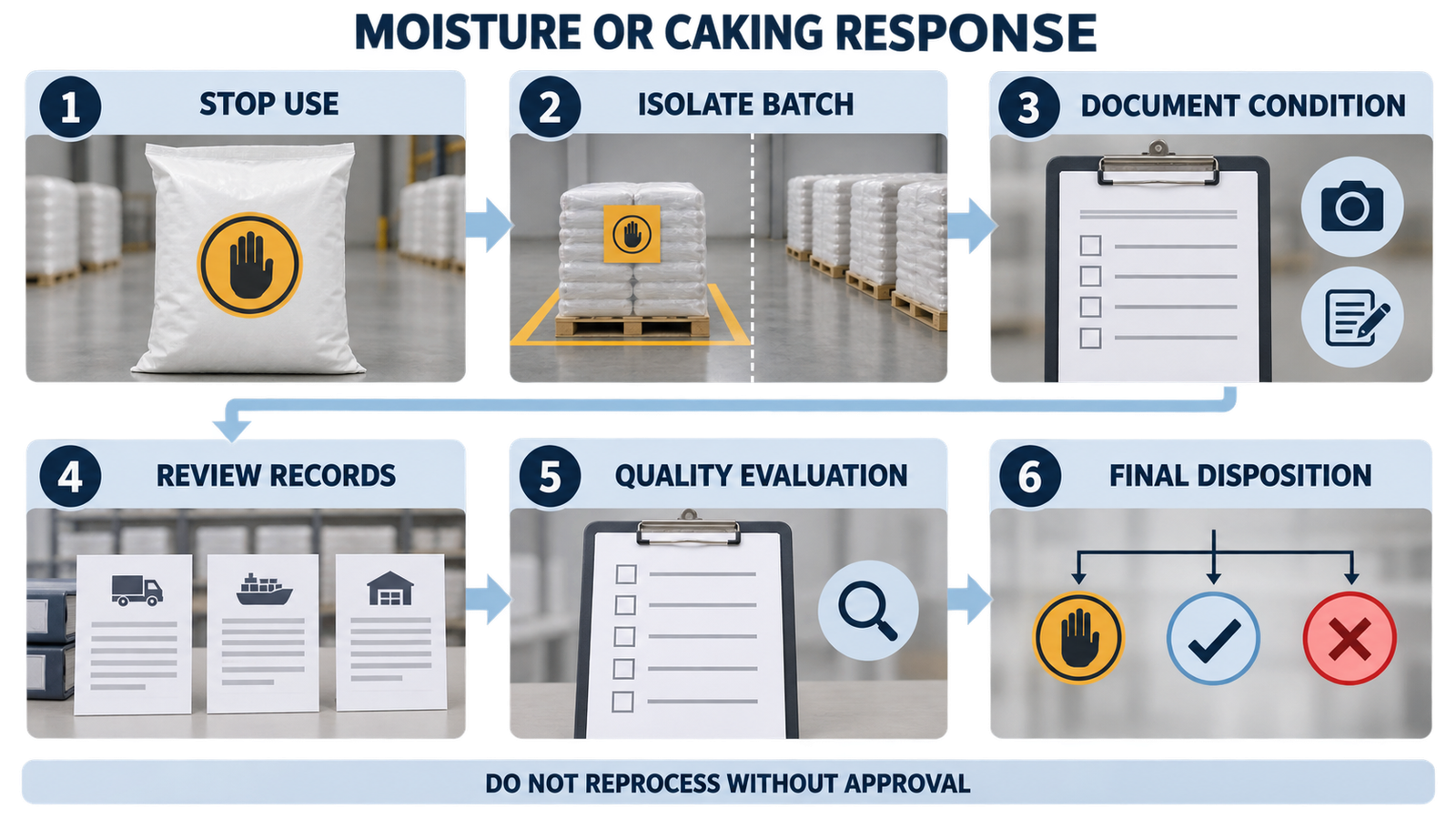
Visible caking, damp packaging, water stains, or an unusual change in powder condition should trigger a documented review rather than an immediate decision to use or discard the material. The first priority is to prevent the affected product from entering production while its condition remains uncertain.
A practical response should include the following steps:
- Stop the movement or use of the affected material.
- Identify and isolate the relevant bags, pallet, and batch.
- Photograph the packaging and record the observed condition.
- Review receiving, transportation, and warehouse records.
- Check whether nearby bags or pallets may also be affected.
- Notify the quality team and contact the supplier when necessary.
- Determine the final disposition through approved evaluation procedures.
Employees should not independently break up lumps, screen the powder, mix it with unaffected material, or attempt to dry it for reuse. These actions may conceal a moisture or packaging problem without confirming that the product remains suitable for its intended application.
The final decision should consider the extent of exposure, packaging integrity, available documentation, and any testing required under the manufacturer’s quality system.
Dextrose Monohydrate Storage and Handling Checklist
A consistent routine makes dextrose monohydrate storage easier to manage across receiving, warehousing, and production. Use the following checklist as a practical review:
- Keep unopened bags in their original sealed packaging.
- Store the product in a clean, cool, dry, and ventilated area.
- Use clean, dry, and structurally sound pallets.
- Protect packaging during transportation and internal movement.
- Inspect bags for damage, dampness, and unusual conditions.
- Reseal opened bags promptly and retain batch identification.
- Record receiving dates, opening dates, and warehouse locations.
- Rotate inventory according to approved FIFO or FEFO procedures.
- Isolate damaged or moisture-exposed material for evaluation.
- Follow the current product specification, supplier guidance, and internal quality procedures.
Applying these dextrose monohydrate handling controls consistently can reduce avoidable storage problems and support reliable batch traceability.
Frequently Asked Questions
Does dextrose monohydrate need to be refrigerated?
Dextrose monohydrate does not generally require refrigeration under normal warehouse conditions. It should usually be kept in a cool, dry, and ventilated area in sealed packaging. However, the current product specification, label, and supplier instructions should determine the applicable storage requirements.
How should an opened bag of dextrose monohydrate be stored?
Reseal the bag promptly using an approved method and keep it protected from moisture, odors, and contamination. Retain the product name, batch number, and opening date. Any internal time limit for using opened material should follow the manufacturer’s quality procedures.
Does caking mean dextrose monohydrate is unsuitable for use?
Not necessarily. Caking may result from pressure, storage duration, moisture exposure, or changing environmental conditions. However, unexpected or severe caking should be documented and evaluated before use, particularly when it appears together with dampness, damaged packaging, or an unusual odor.
Can moisture-exposed material be dried and reused?
Moisture-exposed dextrose monohydrate should not be independently dried, screened, or returned to production without an approved assessment. The affected material should be isolated while the quality team reviews its packaging condition, exposure history, supplier guidance, and any necessary testing.
How long can dextrose monohydrate remain in storage?
The acceptable storage period depends on the assigned shelf life, packaging integrity, and actual storage conditions. Warehouse teams should check the product label and current specification, rotate stock through approved FIFO or FEFO procedures, and review any material approaching its expiry date.
Conclusion
Effective dextrose monohydrate storage depends on more than maintaining a tidy warehouse. Sealed packaging, moisture control, suitable pallet management, careful opened-bag handling, and reliable batch records all help protect the ingredient throughout its movement from receiving to production.
When packaging damage, dampness, or unexpected caking is identified, the affected material should be isolated and evaluated rather than automatically used, reprocessed, or discarded. Final decisions should follow the current product specification, supplier guidance, and approved quality procedures.
Buyers comparing commercial sources can also review our dextrose monohydrate supplier evaluation guide for specifications, packaging, traceability and supply considerations.For purchasing review, buyers should confirm the available specification, batch COA, packaging format, storage guidance, shelf life, and bulk supply information with the supplier before placing an order.