



- Your cart is empty Browse Shop
Bulk Corn Starch Storage and Handling: Moisture Control and Caking Prevention
Bulk corn starch storage is an important part of managing ingredient quality between delivery and production. A shipment may meet the agreed specification when it leaves the supplier, yet still require careful handling during transport, warehousing and use. Damaged packaging, moisture exposure or poorly controlled opened bags can create concerns that purchasing, warehouse and quality teams need to assess before the material enters a food formulation.
For food manufacturers, effective storage involves more than choosing a dry location. It requires clear receiving checks, suitable packaging protection and consistent procedures for handling both unopened and partially used bags. When caking or an unusual change in powder condition is observed, the response should be based on the material’s condition and handling history rather than an assumption about the cause.
This guide focuses on dry, bagged corn starch used as a food manufacturing ingredient. It covers supplier storage requirements, incoming-shipment checks, warehouse moisture control, opened-bag handling and a practical approach to investigating caking. The aim is to help teams identify issues early, maintain batch traceability and make informed decisions using the applicable product documentation and site quality procedures.

Storage Requirements for Bulk Corn Starch
Before a bulk shipment arrives, the receiving and warehouse teams should know which storage requirements apply to the corn starch being purchased. The supplier’s current product specification, packaging information and storage instructions provide the starting point. These requirements should be reviewed alongside the site’s own ingredient-handling procedures so that the material can be received, stored and issued to production under consistent conditions.For available packaging options and product documentation, see our food grade corn starch product page.
Descriptions such as “cool and dry” offer general guidance, but they may leave practical questions unanswered. Buyers should clarify any stated temperature or relative humidity limits, packaging precautions and stacking restrictions that affect their warehouse arrangements. Where numerical limits are provided, they should relate to the specific product and packaging. A value taken from another starch grade or a general storage article should not be adopted without checking its suitability.
Establish Suitable Warehouse Conditions
The storage location should protect bagged corn starch from moisture, contamination and physical damage. When assessing a location, consider potential sources of exposure, including roof leaks, condensation, nearby washing activities and materials with strong odors. These conditions can vary across a warehouse, so the suitability of the actual storage area matters more than a general description of the building.
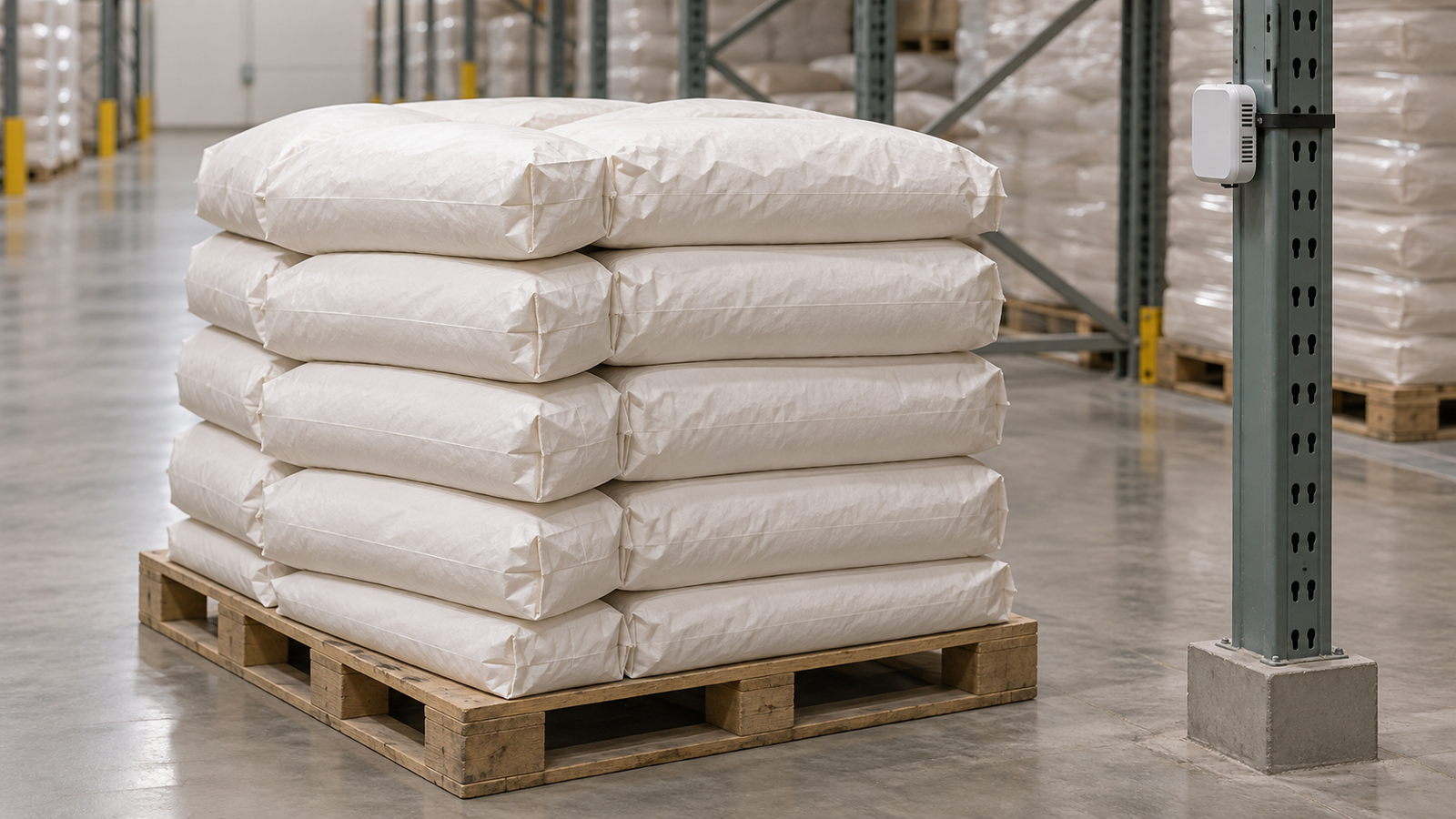
Keep bags on clean, dry pallets or suitable racking, with access for inspection and stock handling. Pallet configuration and stacking arrangements should follow the applicable packaging instructions. Bags should remain sealed until required, and handling practices should protect both the outer packaging and any inner liner.
Storage conditions also need to remain suitable over time. Seasonal humidity changes, maintenance work or changes in nearby warehouse activities may require a review of the location and its controls.
Confirm Shelf Life and Packaging Conditions
Shelf life should be taken from the current supplier documentation and read together with its stated conditions. Confirm whether the period applies to the original unopened packaging, how it is calculated and which production or expiry information appears on the label.
Opening or repacking a bag changes the protection provided by the original packaging. The stated shelf life should therefore not be assumed to establish an automatic use period after opening. Partially used material needs an appropriate handling procedure that preserves its identity, protects it from exposure and allows its condition to be reviewed before further use.
Once these requirements are clear, the receiving team has a basis for checking the shipment and identifying any concerns before the material enters warehouse stock.
Receiving Checks Before Warehouse Storage
Receiving is the first opportunity to assess whether a corn starch shipment has arrived in the expected condition. Before bags are placed into regular warehouse stock, the receiving team should check the delivery against the purchase requirements and look for signs of damage or exposure during transport. These checks help identify material that needs further review before it becomes available for production.
Verify Shipment Details and Batch Identity
Start by confirming that the delivered product, grade, quantity and packaging match the order. Check that bag labels are legible and that the batch numbers correspond to the relevant delivery documents and batch Certificate of Analysis (COA). Where several batches are included in one shipment, each should remain identifiable during receiving and storage.
Production dates, expiry dates or other shelf-life information should also be reviewed against the agreed requirements. Missing labels, inconsistent batch details or unclear documentation should be resolved before the affected material is released for use. A COA provides information about the tested batch, but it does not establish that the shipment remained protected throughout transportation.For a broader purchasing review covering specifications, batch COAs and supplier qualification, see our bulk corn starch supplier guide.
Inspect Bags, Pallets and Visible Transport Conditions
Examine the bags for tears, punctures, damaged seams, loose closures and powder leakage. Where an inner liner is used, damage to the outer bag may require closer inspection to determine whether the liner has also been affected.
Look for wet patches, water staining or other signs of possible moisture exposure. Check pallet condition and the surrounding load for anything that could compromise the packaging, such as protruding nails, unstable stacking or contamination. If unloading conditions allow, record relevant observations about the vehicle or container, including visible water ingress or condensation.
The extent and location of any damage are useful details. A problem affecting a few bags on one side of a pallet may warrant a different investigation from a similar condition found throughout the shipment. Neither pattern, however, confirms the cause on its own.

Check Material Condition Through the Approved Inspection Procedure
Any sampling should follow the site’s approved procedure, using suitable equipment and protecting the remaining material from contamination. Compare the sample with the applicable appearance requirements, noting unusual agglomeration, discoloration, foreign material or abnormal odor where these checks form part of the inspection procedure.
Visual observations can identify concerns, but they cannot establish compliance with every quality requirement. Additional testing should be determined by the agreed specification, the site’s quality procedures and the nature of any issue observed.
Record Concerns Before Moving Material into Stock
If a shipment has damaged packaging, unclear batch identification or suspect material, identify and segregate the affected bags pending quality review. Record the batch numbers, quantities, location of the issue and relevant photographs while the condition of the delivery is still clear.
Routine receiving checks do not replace the site’s material-release process. Once the required review is complete, accepted stock can be moved to its assigned storage location with its batch identity and inspection status preserved.
Moisture Control During Warehouse Storage
Passing receiving inspection establishes the condition of a shipment at arrival. Maintaining that condition requires attention to the storage environment throughout the time the material remains in stock. For bulk corn starch, moisture control should address both everyday warehouse conditions and occasional events, such as leaks, wet cleaning or condensation near stored bags.
Identify Where Moisture Exposure Could Occur
Begin with the actual storage location. Inspect the roof, nearby pipework, walls and floor for leaks or signs of dampness. Consider whether rain can enter through loading doors or whether washing in an adjacent area could splash the stock or leave pallets standing on a wet surface.
Condensation deserves separate attention. Water may collect on cold surfaces when they come into contact with warmer, humid air, creating a local exposure that a general warehouse humidity reading may not reveal. Where this is a recurring concern, the site should review the affected location and the conditions under which condensation develops.
These checks help distinguish different routes of exposure. A damaged bag beside a leaking pipe presents a different problem from intact stock held in an area with persistently high humidity. The response should address the observed conditions rather than rely on a single general explanation.
Monitor Conditions Where the Stock Is Held
Where temperature and relative humidity monitoring is required, measurements should represent the areas in which corn starch is stored. A reading from an office or a distant part of the warehouse may not reflect conditions near an external wall or loading bay.
Review recorded conditions against the applicable supplier requirements and site limits. Trends and the duration of any excursion are more useful than an isolated reading alone. Monitoring frequency and instrument checks should follow the site’s procedures, with additional attention when weather, maintenance or warehouse activities change.
Environmental readings describe the surrounding air; they do not directly measure the moisture content of the corn starch. If exposure is suspected, the quality team should determine whether material inspection or testing is needed.
Keep Moisture Protection Part of Routine Warehouse Work
Protecting stock also depends on everyday handling. Keep pallets dry, preserve bag closures and check for packaging damage after movement. Plan cleaning so that stored ingredients remain protected, and confirm that cleaned areas and handling equipment are suitably dry before bringing stock into contact with them.
Stock rotation helps avoid unnecessary storage time. Use the site’s approved system, taking account of expiry dates and release status, while keeping batch labels accessible.
If a leak, condensation event or environmental excursion occurs, record when it happened, where it occurred and which stock may have been affected. Move material away from continuing exposure where this can be done safely, and refer suspect bags for quality review. Once a bag is opened for production, its protection also depends on how it is handled and closed between uses.
Packaging and Opened-Bag Handling
Warehouse controls provide the storage environment, while packaging protects the material within it. Once a bag is opened, that protection depends increasingly on how operators take out the starch, close the remaining material and return it to storage. A consistent procedure helps prevent partially used bags from becoming an overlooked source of exposure or lost batch information.
Understand the Packaging Supplied
Corn starch packaging should be assessed as a complete system, including the outer bag, any inner liner and the closure. The outer layer supports handling, while a suitable liner may provide additional protection against moisture and contamination. Packaging performance cannot be determined from the bag material alone; seams, closures and condition also matter.
Confirm the packaging construction and handling instructions with the supplier. An outer bag that appears intact does not establish that every part of the packaging is undamaged. Equally, closing the outer bag after use may not adequately protect the material if an inner liner remains open.
Control Exposure During Opening and Dispensing
Open bags in a designated area using the site’s approved method. Keep the bag exterior and opening tools from introducing dirt or packaging fragments into the starch. Scoops, transfer equipment and receiving containers should be suitable for food-ingredient handling, clean and dry.
Take out the quantity required and close the remaining material promptly. Avoid leaving a bag open while unrelated production or cleaning activities continue nearby. Where repeated access is necessary, the procedure should define how the material remains protected between dispensing operations.
Material removed from a bag should not routinely be returned to the original stock. Any return or rework arrangement needs an approved procedure that addresses its identity, condition and possible exposure during handling.
Reseal and Identify Partially Used Material
Close the inner liner, where present, and secure the outer packaging using a method appropriate to its design and the site’s procedure. If the original packaging can no longer provide adequate protection, refer the material for an approved repacking decision. Replacement containers should be suitable for the ingredient, clean, dry and capable of being securely closed.
Preserve the product name, supplier batch number and applicable date information. Record the opening date and repacking details where required, and keep different batches separately identifiable.
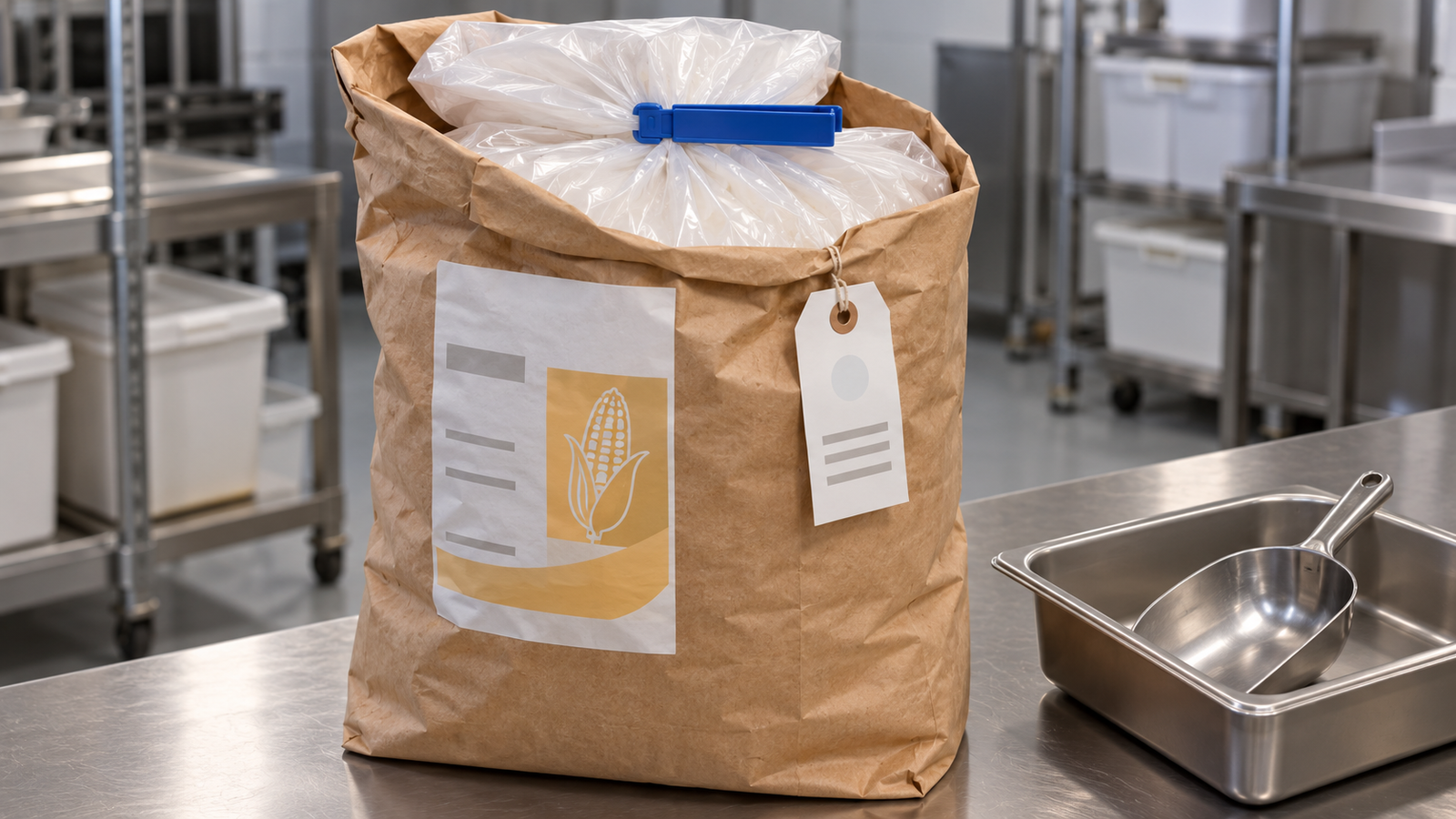
Before a partially used bag is issued again, check its closure, label and visible condition. An unclear opening history, damaged liner or unexpected change in the powder should trigger review. These handling records also provide useful evidence if caking is discovered, helping the quality team investigate when and where the change may have occurred.
Corn Starch Caking: What to Check First
Finding lumps in a bag of corn starch raises two immediate questions: what has changed, and whether the material remains suitable for its intended use. The appearance of the lumps alone cannot answer either question. A useful investigation starts by documenting the condition and comparing it with the product requirements, receiving observations and subsequent handling history.
This assessment concerns agglomeration in dry starch before it enters production. Lumps that develop when starch is added to a liquid involve a different processing issue and should be investigated separately.
Describe the Condition and Its Extent
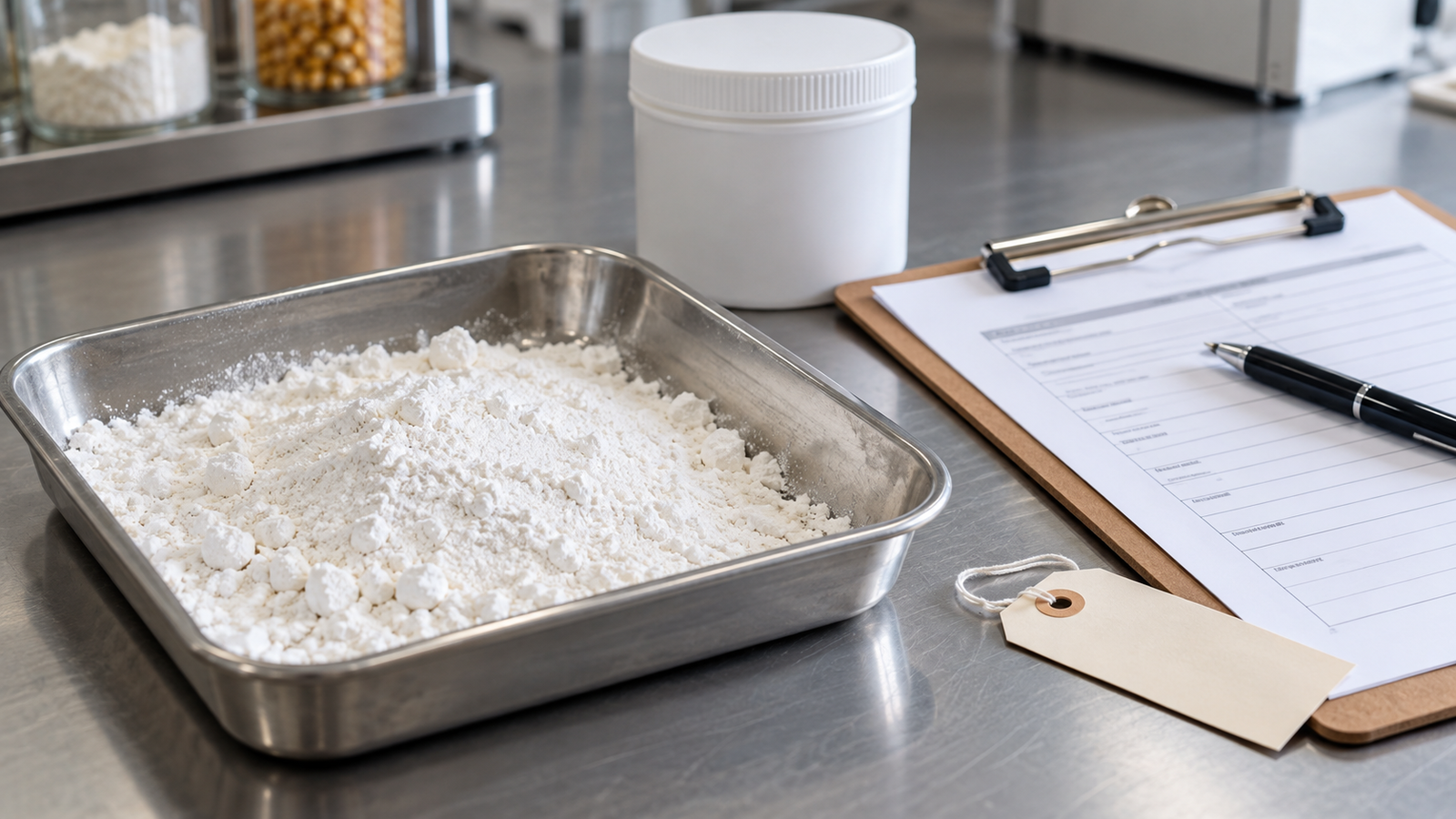
Record where the agglomeration appears and how much material is affected. Note whether it is concentrated near the bag opening, along one side or throughout the powder. Describe whether the lumps appear loose or compact, following the site’s inspection procedure without unnecessarily disturbing the material.
Check whether similar observations have been made in other bags from the same batch or delivery. Comparing unopened bags with partially used bags may also help establish the scope of the issue. Localized agglomeration and a condition found across several pallets provide different leads for investigation, but neither pattern confirms a cause.
Photographs, bag identifiers and the date of discovery make these observations easier to review with the supplier and quality team. Record any accompanying packaging damage, staining, discoloration or other unusual condition.
Review Packaging and Handling History
Examine the affected packaging, including seams, closures and the inner liner where accessible under the approved inspection procedure. Review receiving records to establish whether the condition was present at arrival or was first observed later.
For material held in the warehouse, check relevant environmental records and any reports of leaks, condensation or wet cleaning near the stock. For opened bags, review opening dates, dispensing practices, resealing and any repacking operations. Transport, stacking and handling records may provide additional context.
The aim is to identify plausible explanations and decide what evidence is needed to assess them. A humid period or damaged bag is relevant information, but its presence does not by itself establish why the starch has agglomerated.
Determine What Further Assessment Is Needed
The quality team should decide whether inspection, sampling or testing is required, based on the observed condition and applicable acceptance criteria. Where moisture testing is appropriate, results should be assessed against the agreed specification using a suitable method and representative sampling.
A compliant moisture result alone does not resolve every concern about material condition, just as visible agglomeration does not automatically establish spoilage. Packaging history, possible contamination and performance requirements may also need consideration.
Breaking up or sieving the lumps should not be treated as proof that the material is acceptable. Any proposed treatment and subsequent use require an approved quality decision. Where application testing is required, our guide to corn starch in food manufacturing explains the formulation and processing factors to consider.Until that assessment is complete, the affected stock should remain clearly identified and controlled through the site’s procedure for suspect material.
Handling Suspect or Damaged Material
When corn starch has damaged packaging, signs of possible exposure or an unexpected change in condition, the immediate priority is to prevent unintended use while the concern is assessed. The handling decision should reflect what is known about the affected material, with responsibility for its disposition assigned through the site’s quality procedures.
Place Affected Stock on Hold
Identify the affected bags and place them on hold in the inventory system and physical storage area, as applicable. Labels should make their status clear, and production teams should be informed if the material has already been allocated for use.
Define the scope of the hold using the available evidence. A damaged bag may initially require control of that individual unit, while an issue involving a shared transport or storage condition may require review of a wider group. The quality team should determine whether other bags or batches could also be affected.
If material has already been issued or used, trace the relevant quantities and production records so that any further assessment can include the affected process or finished product.
Preserve Evidence and Contact the Supplier
Record the product and batch identity, affected quantity, date of discovery and a clear description of the concern. Photographs of the packaging, pallet position and visible material condition can help preserve details that may be lost when the stock is moved.
Keep relevant receiving, storage and handling records available. Where samples are needed, collect and retain them according to the approved procedure. Avoid unnecessary repacking or alteration before the evidence required for assessment has been documented.
Provide the supplier with specific observations and request information relevant to the investigation. This may include packaging construction, batch results or handling recommendations. Supplier input supports the review, while the site’s quality team remains responsible for its own material-use decision.
Document and Implement the Disposition
Possible outcomes may include release after satisfactory assessment, approved repacking, return to the supplier or rejection. The decision should state its basis, any conditions attached and who authorized it.
Outer packaging damage does not always mean the starch itself has been compromised, but an apparently intact liner should not automatically be treated as sufficient evidence for release. Likewise, removing visible lumps does not establish that the remaining material meets all requirements.
Update inventory status and retain the assessment records once the decision is implemented. If the investigation identifies a weakness in transport, storage or opened-bag handling, address it through a specific corrective action and review whether that action has resolved the issue.
Storage and Handling Checklist
The following checklist brings together the main checks for bulk corn starch storage and handling. Use it alongside the supplier’s current instructions and the site’s approved procedures. Responsibilities, inspection frequency and acceptance criteria should be defined for the material and storage arrangements in use.
| Stage | What to Check | Records to Keep |
|---|---|---|
| Before delivery | Confirm the product grade, packaging format, storage instructions and applicable shelf-life conditions. | Current supplier documents and agreed purchase requirements. |
| Receiving | Match product labels, batch numbers and quantities with the delivery documents and relevant COA. | Receiving record, batch details and document references. |
| Packaging inspection | Look for tears, damaged closures, leakage, water staining and pallet damage. | Inspection findings, affected quantities and photographs where needed. |
| Warehouse placement | Confirm that the assigned location and pallets are clean, dry and protected from identified sources of exposure. | Storage location and any concerns requiring action. |
| Routine storage | Check packaging condition and review environmental readings where monitoring is required. | Inspection records, monitoring results and relevant incidents. |
| Opening and dispensing | Use suitable clean, dry equipment and protect the material during access. | Opening date and dispensing records as required by the site. |
| Closing or repacking | Secure the liner and outer packaging, or follow an approved repacking procedure. Preserve batch identity. | Repacking details, container identification and applicable date information. |
| Stock rotation | Select stock according to the approved rotation system, expiry information and release status. | Inventory movements and batch quantities. |
| Unexpected condition | Record caking, possible moisture exposure or other changes and place suspect material on hold. | Observations, handling history and hold status. |
| Quality disposition | Implement the authorized decision and confirm that stock status reflects the outcome. | Assessment results, authorization and corrective actions where applicable. |
A completed checklist should make it possible to establish where a batch was stored, how it was handled and what action followed any concern. If a check identifies an issue, record its scope, assign responsibility and track the action through to completion. This gives the checklist value beyond a series of ticked boxes and supports a clearer investigation if a problem is discovered later.
Frequently Asked Questions
What Are Suitable Storage Conditions for Bulk Corn Starch?
Store bulk corn starch according to the supplier’s current instructions, in an area protected from moisture, contamination and packaging damage. Keep bags sealed, use clean, dry pallets or suitable racking, and follow the applicable stacking requirements. Any temperature or relative humidity limits should be confirmed for the specific product and packaging rather than taken from a general storage guide.
How Long Can Corn Starch Be Stored in a Warehouse?
The applicable shelf life should be confirmed from the supplier’s documentation and the date information on the packaging. It depends on the stated storage conditions and may apply specifically to original, unopened bags. Opening, repacking or an exposure incident requires a separate assessment; the printed date alone does not establish that the material remains acceptable.
How Should an Opened Bag of Corn Starch Be Stored?
Protect the remaining starch during dispensing, then securely close the inner liner and outer bag using the approved method. Preserve the product name, batch number and relevant date information, including the opening date where required. If the original packaging is no longer suitable, use an approved repacking procedure and check the material’s condition before issuing it again.
Does Caking Mean That Corn Starch Has Spoiled?
Caking alone does not establish spoilage or confirm that the material is suitable for use. It is an observation that needs to be assessed alongside packaging condition, transport and storage history, and any relevant inspection or testing results. Record the extent of the issue and keep affected material under control while the quality team reviews it.
Can Caked Corn Starch Be Used After Sieving?
Sieving may remove visible lumps, but it does not resolve questions about moisture exposure, contamination or compliance with the product requirements. Any treatment and subsequent use should follow an authorized quality decision. The assessment may need to consider both the material’s condition and its performance in the intended application.
Is Warehouse Humidity the Same as Corn Starch Moisture Content?
No. Relative humidity describes moisture in the surrounding air, while a starch moisture test measures moisture in the sampled material. Warehouse readings help assess exposure conditions, but they cannot replace material testing when it is needed. Both types of information may contribute to an investigation, provided they are interpreted in context.
Conclusion
Reliable bulk corn starch storage depends on consistent handling from delivery through to production. Clear supplier requirements, careful receiving checks, suitable warehouse conditions and controlled opened-bag practices help teams protect the material and maintain its batch identity throughout that process.
When caking, packaging damage or possible moisture exposure is observed, documented conditions and handling records provide the basis for investigation. Decisions about further testing, repacking or use should follow the applicable product requirements and the site’s quality procedures.
Before arranging a bulk order, confirm the packaging format, storage instructions and shelf-life conditions with the supplier. Sharing your expected storage duration and handling arrangements can help clarify whether the proposed supply meets your operational needs.To discuss packaging options and request the current storage documentation for a proposed order, contact our team.