



- Your cart is empty Browse Shop
How to Evaluate Food Grade Citric Acid Quality Before Purchasing
Introduction
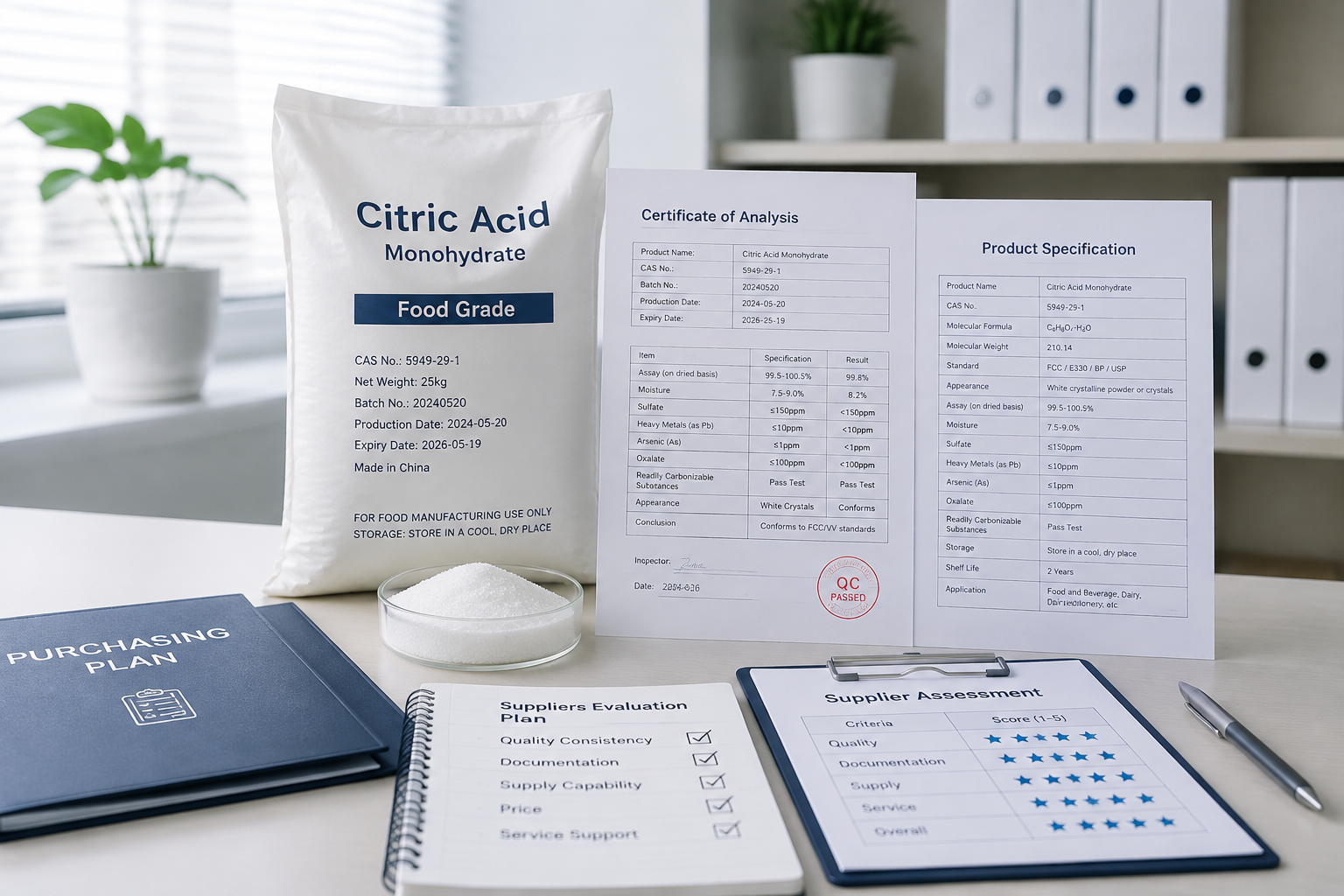
When purchasing citric acid for food manufacturing, price is often one of the first factors considered. However, for food producers, choosing the right ingredient supplier involves much more than comparing costs.
The quality of citric acid directly affects production consistency, product stability, and overall manufacturing performance. A supplier offering a competitive price may not always provide the same level of quality control, documentation support, or batch-to-batch consistency.
For this reason, food manufacturers usually evaluate several key factors before making a purchasing decision, including product specifications, quality documentation, testing procedures, and supplier reliability.
Food grade citric acid is widely used in beverages, dairy products, confectionery, bakery products, and other processed foods. Although different applications may have different formulation requirements, manufacturers generally expect the ingredient to meet strict quality standards and maintain stable performance throughout production.
A reliable evaluation process helps buyers reduce potential risks, avoid inconsistent raw materials, and establish long-term supply partnerships.
This guide explains the main factors that food manufacturers should consider when evaluating food grade citric acid quality before purchasing, including purity requirements, quality documents, certifications, and supplier assessment methods.
What Does Food Grade Mean for Citric Acid?
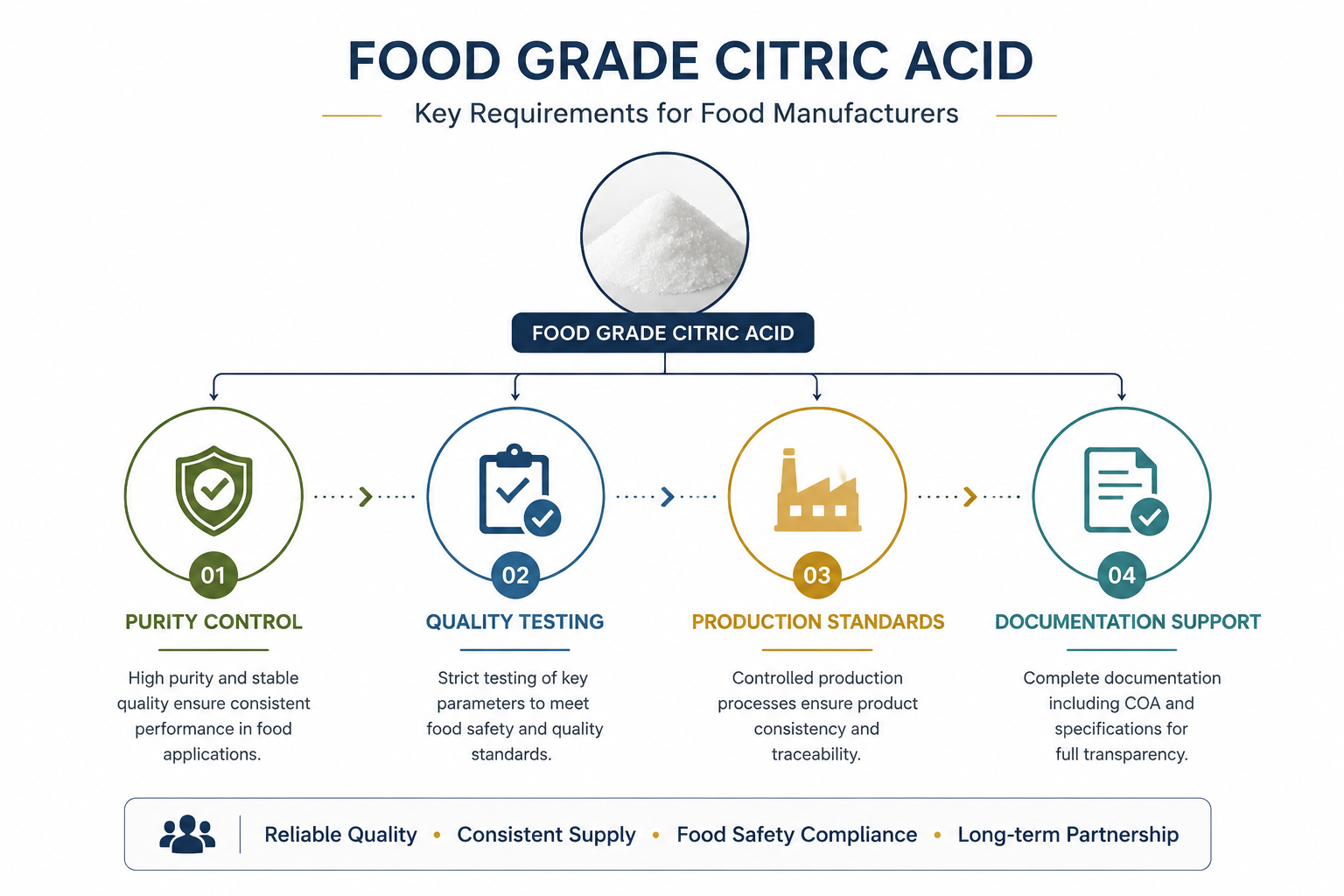
In food manufacturing, the term “food grade” refers to ingredients that meet the quality and safety requirements necessary for use in food applications.
For citric acid, food grade quality is not determined by a single factor. Instead, it involves a combination of product purity, manufacturing control, testing procedures, and compliance with relevant food ingredient requirements.
Compared with industrial-grade citric acid, food grade citric acid requires stricter control during production and quality inspection. Manufacturers need confidence that the ingredient is suitable for direct use in food processing and can perform consistently in different formulations.
Several aspects are typically considered when evaluating food grade citric acid quality:
1. Product Purity and Consistency
Purity is one of the most important indicators of citric acid quality. A consistent purity level helps manufacturers maintain predictable formulation performance across different production batches.
For large-scale food production, even small variations in ingredient quality may influence taste adjustment, acidity control, or processing stability. Therefore, suppliers should provide clear product specifications and reliable batch testing information.
2. Quality Control During Manufacturing
A stable manufacturing process plays an important role in maintaining ingredient consistency.
Food ingredient suppliers should have controlled production procedures, quality inspection systems, and documented testing processes to ensure each batch meets established requirements.
3. Documentation Transparency
Professional food manufacturers usually require supporting documents before purchasing ingredients.
Common quality documents include:
- Certificate of Analysis (COA)
- Product specification sheet
- Batch information
- Quality inspection records
These documents allow buyers to verify that the delivered product matches the agreed specifications.
Understanding what “food grade” means is the first step. However, buyers still need to evaluate specific quality indicators before selecting a citric acid supplier.
Key Quality Factors Buyers Should Check When Evaluating Citric Acid
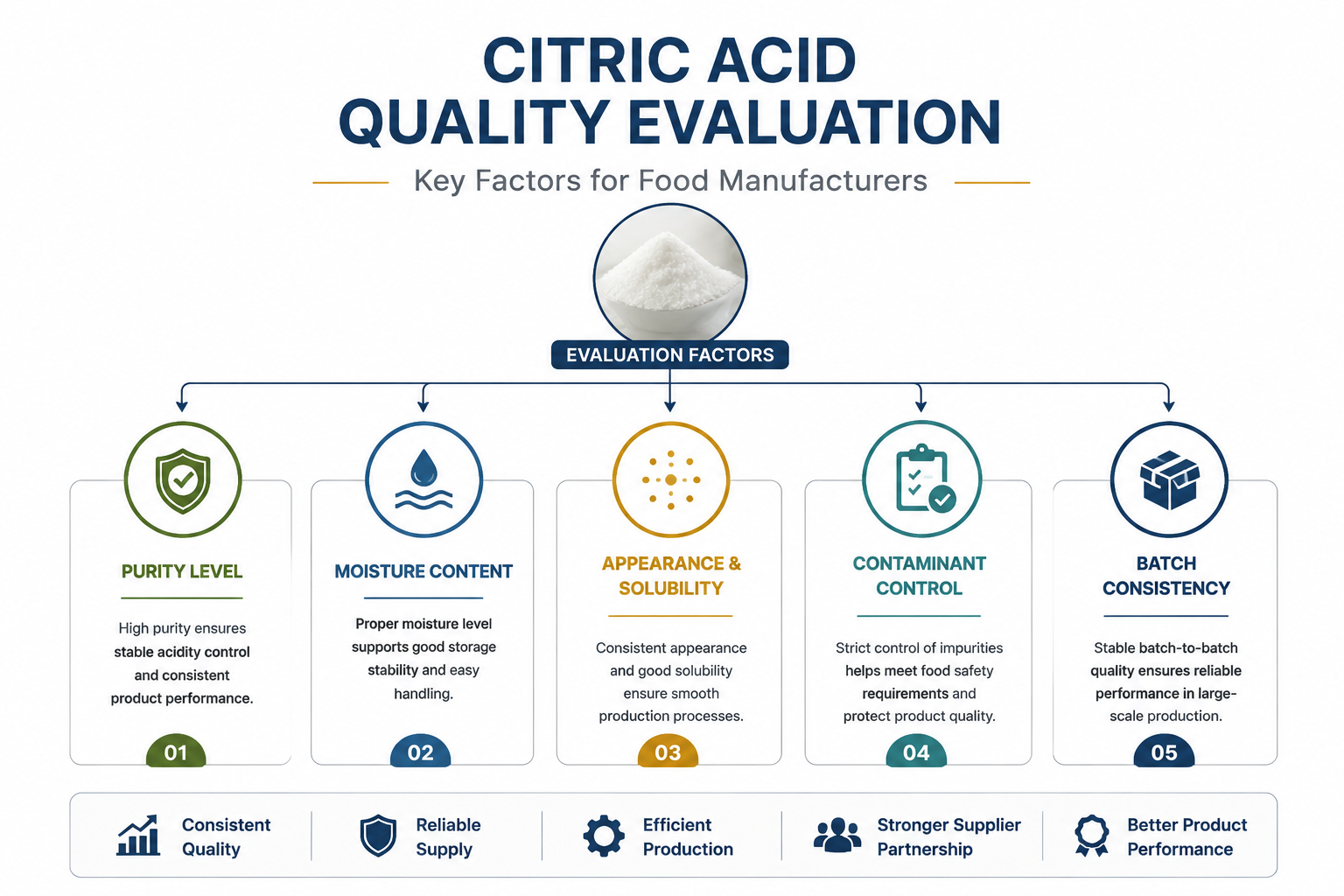
When selecting food grade citric acid, manufacturers should look beyond basic product descriptions and focus on the quality indicators that directly influence production performance.
Different food applications may have different requirements, but several key factors are commonly evaluated by professional ingredient buyers before placing an order.
Buyers should also consider specific citric acid applications in food manufacturing when defining quality and formulation requirements.
A reliable evaluation process helps ensure that the ingredient can perform consistently throughout manufacturing and reduces potential issues caused by unstable raw materials.
1. Purity Level and Product Consistency
Purity is one of the primary indicators used to evaluate citric acid quality.
For food manufacturers, high purity is important because citric acid is often added to products where accurate acidity adjustment and consistent formulation performance are required.
However, purity alone is not the only consideration. A supplier should also demonstrate the ability to maintain stable quality between different production batches.
For example, when a beverage manufacturer produces products at a large scale, small variations in raw material characteristics may affect:
- acidity balance
- flavor consistency
- production efficiency
- final product quality
Therefore, buyers should review not only the stated purity level but also whether the supplier has effective quality control procedures to ensure batch-to-batch consistency.
Professional suppliers usually provide product specifications and testing reports to help customers verify that each batch meets agreed requirements.
2. Moisture Content and Storage Stability
Moisture content is another important factor when evaluating food grade citric acid quality.
Buyers should also confirm whether their application requires citric acid monohydrate or citric acid anhydrous, as the two forms differ in water content and may require different handling and formulation considerations.
Although citric acid is generally a stable ingredient, excessive moisture can influence storage conditions, handling performance, and product appearance.
For manufacturers purchasing citric acid in bulk quantities, moisture control is especially important because ingredients may be stored for extended periods before production.
A supplier with effective moisture management can help ensure that the product maintains:
- consistent physical properties
- good storage stability
- easier handling during production
When reviewing product specifications, buyers should pay attention to the moisture level provided by the supplier and confirm whether it matches their application requirements.
This is particularly relevant for manufacturers operating in different climates, where humidity and storage conditions may affect ingredient performance.
3. Appearance and Solubility Characteristics
Physical characteristics are also practical indicators when evaluating citric acid quality.
Food grade citric acid is typically expected to have a consistent appearance and good solubility characteristics, allowing it to integrate smoothly into different food formulations.
For example, in beverage production, rapid and complete dissolution helps manufacturers maintain efficient processing and avoid issues during mixing.
For other applications, such as confectionery or dairy products, consistent physical properties can support stable production processes.
When assessing a supplier, buyers should confirm:
- product appearance
- particle characteristics
- solubility performance
- packaging condition
These factors may seem simple, but they can influence daily production efficiency, especially for companies using large quantities of citric acid.
4. Contaminant Control and Food Safety Management
Food manufacturers must ensure that raw materials meet appropriate safety requirements before entering production.
For citric acid, quality evaluation should include reviewing the supplier’s testing procedures and quality management practices related to potential contaminants.
Reliable suppliers typically maintain strict control over:
- raw material selection
- production environment
- testing procedures
- finished product inspection
In addition, buyers should request relevant quality documents to confirm that the product meets required food ingredient standards.
A transparent quality management system gives manufacturers greater confidence when introducing a new ingredient supplier into their supply chain.
5. Batch Consistency and Supply Reliability
For long-term cooperation, consistent supply quality is often just as important as the initial product quality.
A supplier may provide a suitable sample, but manufacturers also need to consider whether the supplier can maintain the same standards for future orders.
Important factors include:
- stable production capability
- consistent quality testing
- reliable packaging and delivery
- responsive technical communication
For food manufacturers, changing ingredient suppliers frequently can create unnecessary production risks. Therefore, evaluating a supplier’s ability to provide consistent quality over time is an important part of the purchasing decision.
A complete quality evaluation should combine product testing, documentation review, and supplier assessment rather than focusing on a single specification.
Understanding COA and Quality Documents Before Purchasing Citric Acid
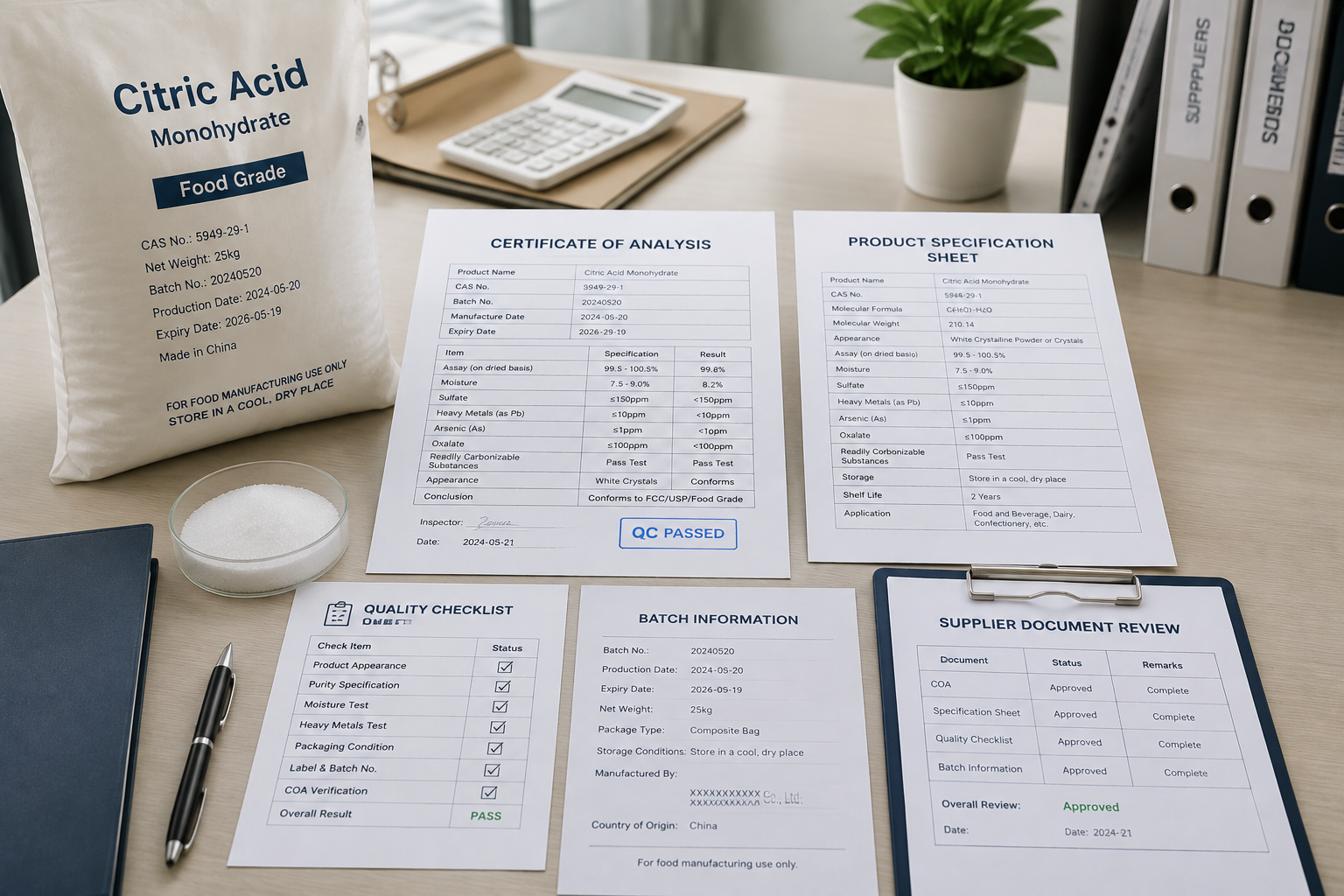
For professional food manufacturers, evaluating citric acid quality does not stop at product specifications. Before approving a supplier, buyers usually review supporting documents to confirm that the product quality matches the stated requirements.
Quality documentation provides transparency throughout the purchasing process and helps manufacturers verify that each batch meets their internal quality standards.
Among these documents, the Certificate of Analysis (COA) is one of the most important references when evaluating food grade citric acid.
What Is a COA for Citric Acid?
A Certificate of Analysis (COA) is a quality document provided by a supplier that shows the test results of a specific production batch.
Unlike a general product specification sheet, which describes the standard requirements of a product, a COA reflects the actual testing results of a particular batch.
For food manufacturers, a COA helps answer important questions:
- Does this batch meet the agreed specifications?
- Was the product tested before shipment?
- Are the quality parameters within the required range?
A professional citric acid supplier should be able to provide accurate and complete batch documentation to support quality verification.
Typical information included in a citric acid COA may include:
- Product name
- Batch or lot number
- Testing date
- Quality parameters
- Test results
- Specification limits
- Inspection conclusion
By reviewing these details, buyers can better understand the consistency and reliability of the ingredient they are purchasing.
Why Quality Documents Matter in Food Ingredient Purchasing
In food manufacturing, ingredient traceability and quality control are essential parts of production management.
When purchasing raw materials such as citric acid, manufacturers need confidence that the product received is consistent with previous orders and suitable for their production process.
Quality documents help companies:
Verify Product Compliance
Before introducing a new supplier, manufacturers can compare the provided documentation with their own ingredient requirements.
This helps reduce uncertainty and ensures that the ingredient meets the expected quality level.
Maintain Internal Quality Control
Many food companies have their own supplier approval procedures.
Documents such as:
- COA
- Product Specification Sheet
- Technical Data Sheet
are often reviewed during supplier qualification and internal audits.
A supplier that provides complete documentation makes the approval process smoother and more efficient.
Improve Supply Chain Transparency
Long-term cooperation requires trust between manufacturers and suppliers.
Transparent documentation allows buyers to better understand:
- how products are tested
- how quality is maintained
- how batches are managed
This becomes especially important for companies purchasing ingredients in bulk or establishing ongoing supply agreements.
Key Documents Buyers Should Request From Citric Acid Suppliers
When evaluating a potential supplier, food manufacturers should consider requesting several important documents.
1. Certificate of Analysis (COA)
The COA provides batch-specific test results and confirms whether the delivered product meets the agreed specifications.
It is one of the most important documents for verifying actual product quality.
2. Product Specification Sheet
A specification sheet defines the standard quality requirements of the product.
It may include information such as:
- purity requirements
- moisture range
- physical appearance
- solubility characteristics
- storage recommendations
This document helps buyers understand the expected product characteristics before placing an order.
3. Technical and Compliance Documents
Depending on the application and market requirements, buyers may also review additional documents related to:
- food safety management
- manufacturing standards
- regulatory compliance
These documents provide further confidence that the supplier follows appropriate quality control procedures.
How Buyers Can Evaluate Supplier Documentation Quality
Not all documentation provides the same level of reliability.
When reviewing supplier documents, buyers should consider:
Accuracy
Information should be clear, consistent, and match the actual product supplied.
Completeness
Important quality information should not be missing or unclear.
Consistency Between Batches
Reliable suppliers should demonstrate stable documentation and quality results across multiple shipments.
Response Speed
A professional supplier should be able to provide requested quality information efficiently and support technical communication when needed.
For manufacturers, documentation is not simply paperwork. It is an important part of evaluating whether a supplier can provide stable and reliable food ingredient supply.
For more information about selecting a reliable bulk supplier, you can refer to our guide on how to choose a reliable citric acid supplier.
Certifications and Compliance Requirements for Food Grade Citric Acid
When purchasing citric acid for food manufacturing, quality evaluation should also include checking whether the supplier follows appropriate food safety and compliance requirements.
For different markets and applications, manufacturers may have different expectations regarding documentation and certification. Therefore, buyers should understand what compliance information is relevant before selecting a supplier.
Food Safety Management Systems
A professional food ingredient supplier usually follows established food safety management practices to control product quality throughout production.
Common quality management systems may include:
- HACCP-based food safety controls
- ISO quality management systems
- Manufacturing process controls
These systems help suppliers maintain consistent production procedures and reduce potential risks during ingredient manufacturing.
However, certifications alone should not be the only factor when evaluating a supplier. Buyers should also consider whether the supplier can provide reliable product documentation, consistent quality, and effective communication support.
Regulatory Compliance and Market Requirements
Food manufacturers should confirm that the citric acid they purchase meets the requirements of their target market and application.
Depending on the region, buyers may need to review:
- food grade compliance information
- product specifications
- safety documentation
- applicable regulatory requirements
A reliable supplier should be able to provide clear information to support the customer’s quality approval process.
For companies selling products internationally, having complete compliance documentation can also simplify supplier qualification and reduce potential delays during production or import procedures.
Why Compliance Matters in Supplier Selection
Compliance requirements are not only about meeting regulations. They also reflect a supplier’s overall quality management capability.
A supplier that maintains proper documentation and quality procedures is more likely to provide:
- stable product quality
- consistent batch performance
- professional technical support
Therefore, food manufacturers should evaluate compliance together with product quality, documentation transparency, and supply reliability when choosing a citric acid supplier.
How to Compare Different Citric Acid Suppliers
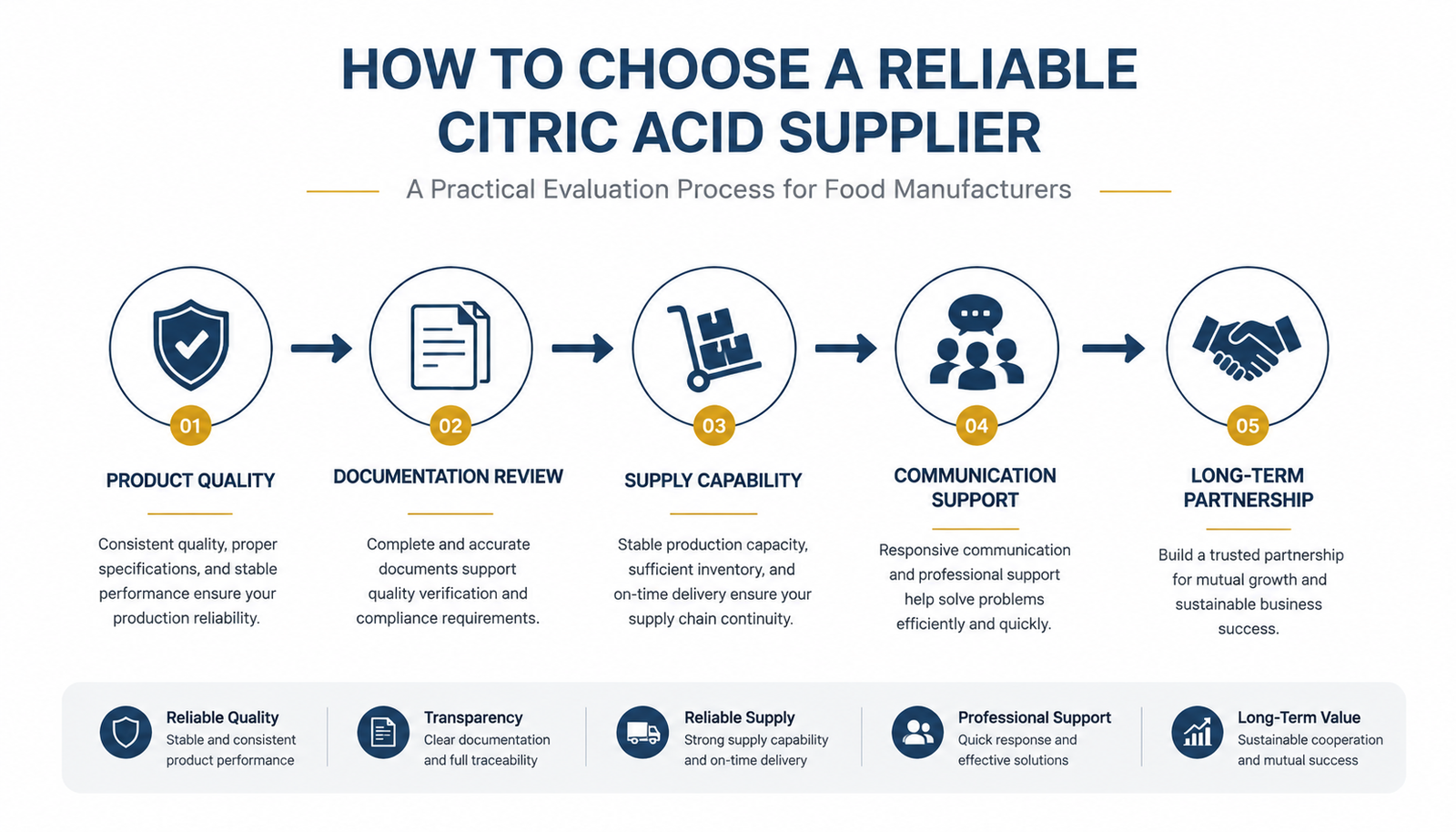
Choosing a citric acid supplier is not only about finding a product that meets basic specifications. For food manufacturers, a reliable supplier should also provide consistent quality, stable supply, and professional support throughout the cooperation process.
When comparing different suppliers, buyers should evaluate several factors beyond the initial quotation.
1. Quality Consistency Over Time
A supplier’s ability to maintain stable quality is often more important than a single successful sample.
Food manufacturers usually need ingredients that perform consistently across multiple production cycles. Therefore, buyers should consider whether the supplier has:
- stable manufacturing processes
- regular quality testing
- consistent batch performance
- proper quality documentation
A reliable supplier should be able to demonstrate that product quality remains consistent from one shipment to the next.
2. Supply Capability and Delivery Reliability
For companies purchasing citric acid in bulk, supply stability is an important consideration.
Production delays caused by inconsistent supply can affect manufacturing schedules and increase operational costs.
When evaluating a supplier, buyers should consider:
- production capacity
- inventory availability
- packaging options
- delivery experience
A supplier with reliable supply capability can help manufacturers maintain smoother production planning.
3. Communication and Technical Support
Effective communication is often overlooked during supplier selection, but it becomes increasingly important in long-term cooperation.
A professional supplier should be able to provide:
- clear product information
- timely document support
- responsive communication
- assistance with quality-related questions
Good communication helps avoid misunderstandings and allows both sides to solve potential issues more efficiently.
4. Balance Between Price and Overall Value
Price is an important factor, but choosing the lowest quotation is not always the best option.
A lower price may sometimes come with risks related to:
- inconsistent quality
- limited documentation support
- unstable supply
Instead of focusing only on unit cost, manufacturers should evaluate the overall value provided by the supplier, including quality stability, service capability, and long-term reliability.
A suitable citric acid supplier should provide a balance between competitive pricing and dependable product performance.
For bulk food ingredient purchasing, the best supplier is usually not simply the cheapest option, but the one that can consistently support production needs over time.
Common Mistakes When Buying Citric Acid
Choosing the right citric acid supplier requires more than comparing product prices or basic specifications. Many purchasing problems occur because buyers overlook important factors during supplier evaluation.
Understanding these common mistakes can help food manufacturers make better purchasing decisions and reduce potential supply risks.
1. Focusing Only on Price
Price is an important consideration, but it should not be the only deciding factor.
A lower quotation may appear attractive at first, but unexpected issues such as inconsistent quality, incomplete documentation, or unreliable delivery can create additional costs during production.
For food manufacturers, the overall value of a supplier is usually more important than the lowest initial price.
2. Ignoring Quality Documentation
Some buyers focus mainly on product samples and pricing while paying less attention to supporting documents.
However, documents such as COA and product specifications provide important information about product consistency and quality control.
Before establishing long-term cooperation, manufacturers should confirm that suppliers can provide complete and reliable quality documentation.
3. Choosing Suppliers Without Evaluating Long-Term Capability
A supplier may provide acceptable products for a single order, but long-term cooperation requires more stable support.
Manufacturers should consider whether a supplier can maintain:
- consistent product quality
- stable supply capacity
- professional communication
- continuous documentation support
Evaluating these factors in advance helps avoid unnecessary supplier changes in the future.
A careful supplier evaluation process allows food manufacturers to build more reliable supply chains and maintain stable production performance.
Frequently Asked Questions About Food Grade Citric Acid Quality
What should buyers check when purchasing food grade citric acid?
Buyers should evaluate several factors, including product specifications, purity, quality documentation, compliance information, and supplier reliability. A complete evaluation provides better confidence in long-term ingredient performance.
Why is COA important when buying citric acid?
A Certificate of Analysis (COA) provides batch-specific testing information and helps buyers verify that the delivered product meets the agreed quality requirements.
How can I choose a reliable citric acid supplier?
A reliable supplier should provide consistent product quality, complete documentation, stable supply capability, and professional communication support. Buyers should evaluate overall supplier performance rather than focusing only on price.
Conclusion
Evaluating food grade citric acid quality requires a comprehensive approach. Product specifications, testing documents, compliance information, and supplier capability all play important roles in the purchasing decision.
For food manufacturers, choosing the right ingredient supplier is not only about receiving a product that meets current requirements, but also about establishing a stable and reliable supply relationship for future production needs.