



- Your cart is empty Browse Shop
Citric Acid Applications in Food Manufacturing: A Guide for Food Producers
Introduction
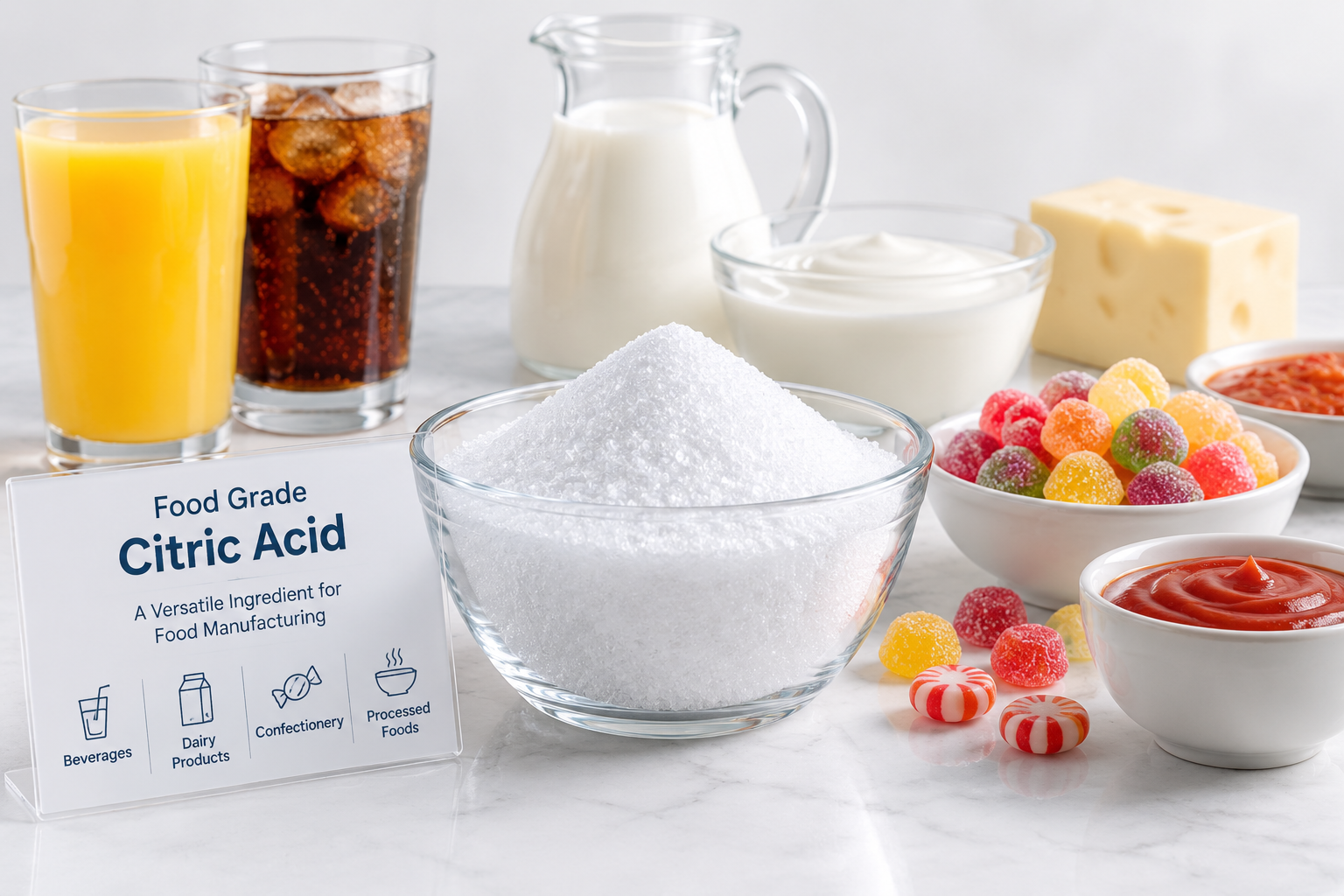
Citric acid is one of the most widely used ingredients in the global food manufacturing industry. From beverages and dairy products to confectionery and processed foods, citric acid plays an important role in controlling acidity, supporting formulation consistency, and maintaining desired product characteristics.
For food manufacturers, citric acid is not simply an acidulant added to create a sour taste. Its application is closely related to product formulation requirements, processing conditions, and the specific characteristics of the final product.
Different food categories may require different levels of acidity adjustment, flavor balance, and processing support. Understanding how citric acid is used across various applications helps manufacturers make more informed ingredient selection decisions.
This article explores the major applications of citric acid in food manufacturing, including beverages, dairy products, confectionery, and processed foods.Manufacturers may also compare sodium citrate vs citric acid when selecting ingredients for different formulation requirements.
Why Is Citric Acid Widely Used in Food Manufacturing?
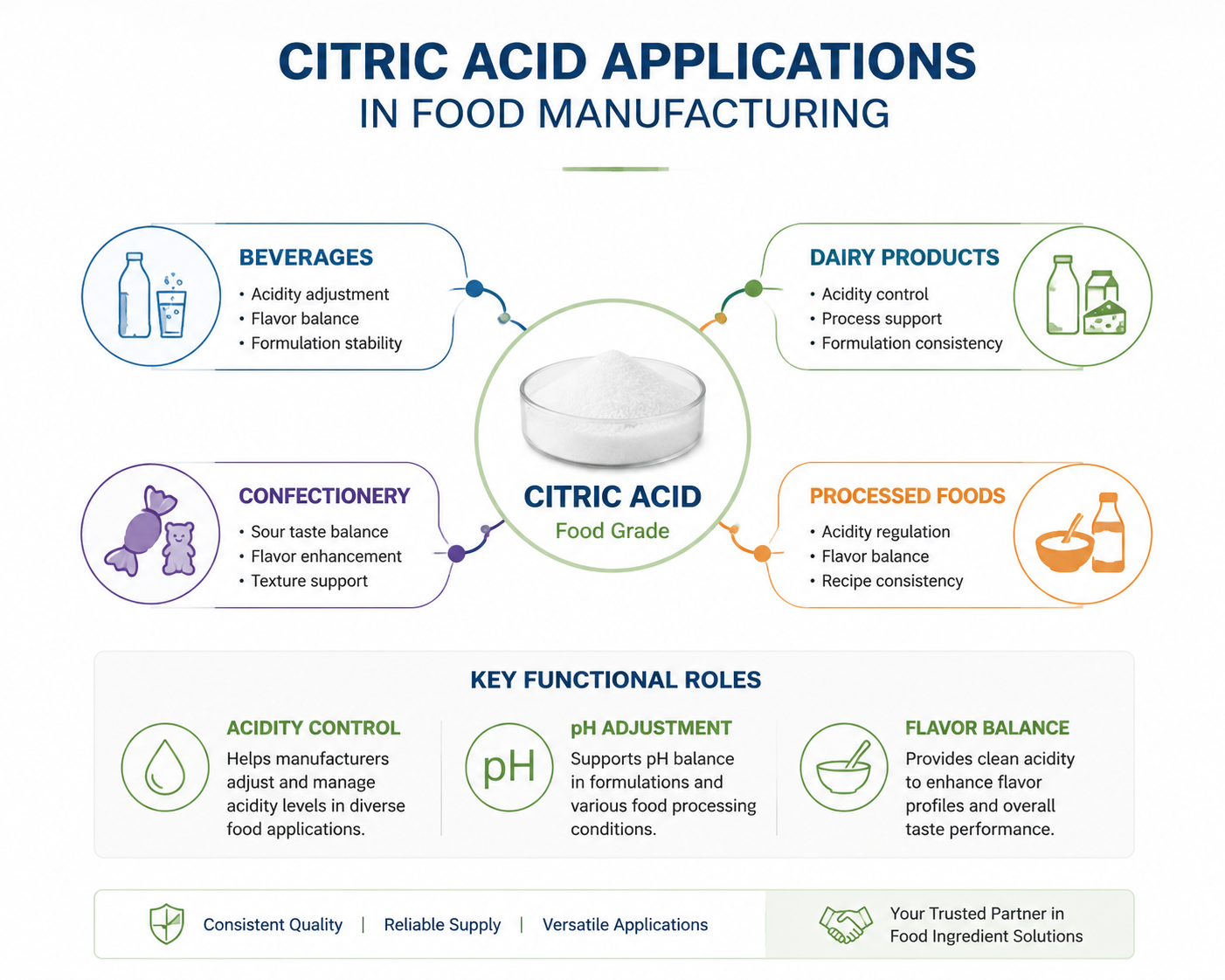
Citric acid is widely used in food manufacturing because of its versatile functional properties. Unlike ingredients that serve only one purpose, citric acid can contribute to several aspects of food formulation depending on the product requirements.
One of its primary functions is acidity regulation. By adjusting the acidity level of a formulation, manufacturers can achieve the desired taste profile and product characteristics.
Citric acid is also commonly used for pH adjustment. Maintaining an appropriate pH level is an important part of many food production processes because it can influence product stability, processing performance, and overall formulation control.
Another important function is flavor balance. Citric acid provides a clean acidic taste that can enhance flavor profiles in many food and beverage products. It is often selected when manufacturers need controlled acidity without adding unnecessary complexity to the formulation.
Because of these properties, citric acid has become a widely used ingredient across multiple food manufacturing sectors.
Citric Acid Applications in Beverages
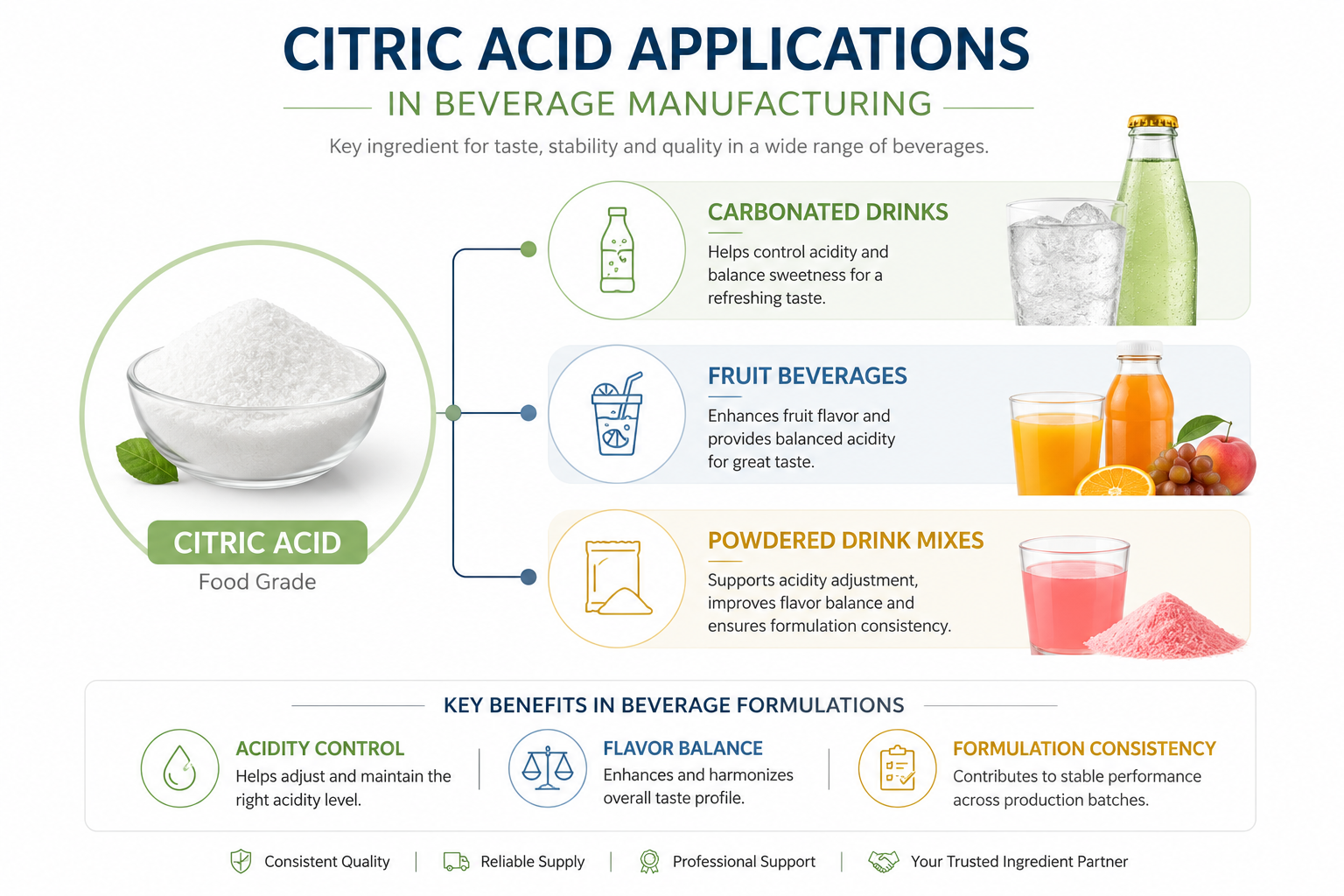
The beverage industry is one of the largest application areas for citric acid.For a more detailed overview of citric acid in beverage manufacturing, see our dedicated food and beverage applications guide.
For beverage manufacturers, citric acid is primarily valued for its ability to provide controlled acidity and support flavor development. The amount used in a formulation depends on the product type, ingredient combination, and desired sensory characteristics.
Rather than simply adding sourness, citric acid helps manufacturers achieve a balanced taste profile while maintaining consistency during large-scale production.
Acidity Control in Beverage Formulations
One of the main reasons citric acid is used in beverages is to control acidity levels.
Different beverage categories require different acidity profiles. For example, fruit-based beverages may require a specific level of acidity to achieve the intended flavor characteristics, while carbonated drinks may require different formulation considerations.
By adjusting acidity levels, manufacturers can fine-tune the relationship between sweetness, flavor intensity, and overall taste balance.
This makes citric acid a common choice for beverage formulations where precise acidity control is required.
Supporting Flavor Balance
Citric acid also plays an important role in balancing beverage flavors.
In many drink formulations, sweetness and acidity need to work together to create the desired taste experience. Citric acid provides a clean acidic note that can complement fruit flavors and other flavor systems.
For beverage producers, selecting the appropriate citric acid specification and usage level is an important part of achieving consistent product characteristics across production batches.
Considerations for Beverage Manufacturers
When selecting citric acid for beverage applications, manufacturers typically consider several factors, including:
- Product formulation requirements
- Solubility characteristics
- Quality specifications
- Batch consistency
- Supplier reliability
The right ingredient choice depends on the specific beverage system and production requirements. Working with a reliable food ingredient supplier helps manufacturers maintain stable quality and predictable performance over time.
Citric Acid Applications in Dairy Products
Citric acid is used in selected dairy applications where controlled acidity adjustment and processing performance are important considerations.
Compared with beverages, the role of citric acid in dairy manufacturing is usually more application-specific. Dairy formulations often involve complex ingredient interactions, and manufacturers need to carefully evaluate acidity levels, processing conditions, and product requirements when selecting ingredients.
In suitable dairy applications, citric acid can support formulation control by helping manufacturers achieve the desired acidity profile and processing characteristics.
Supporting Dairy Processing Requirements
One of the key applications of citric acid in dairy manufacturing is related to acidity control during specific processing steps.
In some dairy formulations, controlled acidification is an important part of achieving the desired product characteristics. Citric acid can be selected when manufacturers require a consistent and predictable acidifying ingredient within their formulation system.
The appropriate usage level depends on the specific dairy product, processing method, and desired final characteristics.
Applications in Dairy-Based Products
Citric acid may be used in certain dairy-related products and formulations where acidity adjustment or ingredient compatibility is required.
For example, some processed dairy products may require controlled acidity management as part of their manufacturing process. In these cases, manufacturers consider factors such as formulation design, processing conditions, and ingredient specifications.
Because dairy systems can be sensitive to changes in acidity, careful ingredient selection and precise formulation control are important.
Considerations for Dairy Manufacturers
When evaluating citric acid for dairy applications, manufacturers typically consider:
- Product formulation requirements
- Desired acidity level
- Processing conditions
- Ingredient compatibility
- Quality consistency
Selecting the appropriate food-grade citric acid depends on the specific application rather than a one-size-fits-all approach.
For this reason, dairy manufacturers usually work with suppliers who can provide consistent product specifications and reliable quality documentation.
Citric Acid in Confectionery and Processed Foods
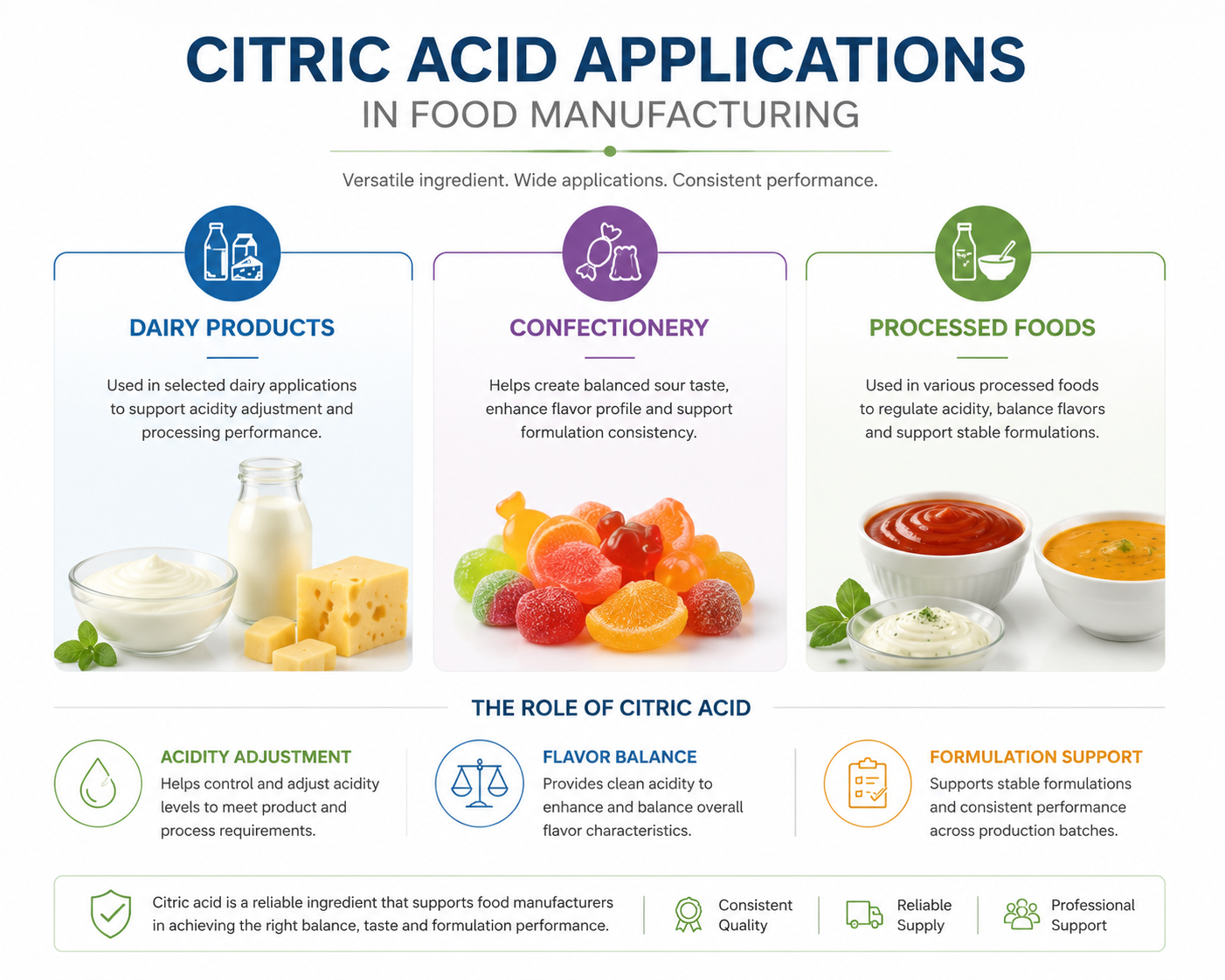
Beyond beverages and dairy applications, citric acid is also commonly used in various confectionery and processed food formulations.
In these categories, manufacturers often use citric acid to achieve specific acidity levels, create balanced flavor profiles, and maintain consistency during production. The exact role of citric acid depends on the product formulation, processing method, and desired characteristics of the final product.
From candies and gummies to sauces and processed foods, citric acid provides food manufacturers with a flexible ingredient option for managing acidity and flavor performance.
Confectionery Applications
In confectionery manufacturing, citric acid is widely used in products such as candies, gummies, and other sweet products where a controlled acidic taste is required.
The combination of sweetness and acidity is an important part of many confectionery formulations. Citric acid can help create a balanced flavor profile by providing a clean sour note that complements sweet ingredients.
For confectionery producers, factors such as acid intensity, ingredient compatibility, and formulation consistency are important when determining the appropriate usage level.
Processed Food Applications
Citric acid is also used in various processed food applications where manufacturers need controlled acidity adjustment.
Depending on the product category, citric acid may be considered in formulations such as sauces, seasonings, and other prepared foods.
In these applications, manufacturers typically evaluate how citric acid interacts with other ingredients and how it fits into the overall processing requirements.
The selection of suitable citric acid specifications depends on factors such as product design, manufacturing conditions, and quality requirements.
Why Application-Specific Selection Matters
Although citric acid is used across many food categories, the requirements can vary significantly between applications.
A beverage manufacturer, confectionery producer, and processed food company may have different expectations regarding:
- Acidity level
- Solubility
- Product specifications
- Processing conditions
- Batch consistency
Understanding these differences helps manufacturers select the right ingredient specification for their specific production needs.
Choosing the Right Citric Acid for Different Food Applications
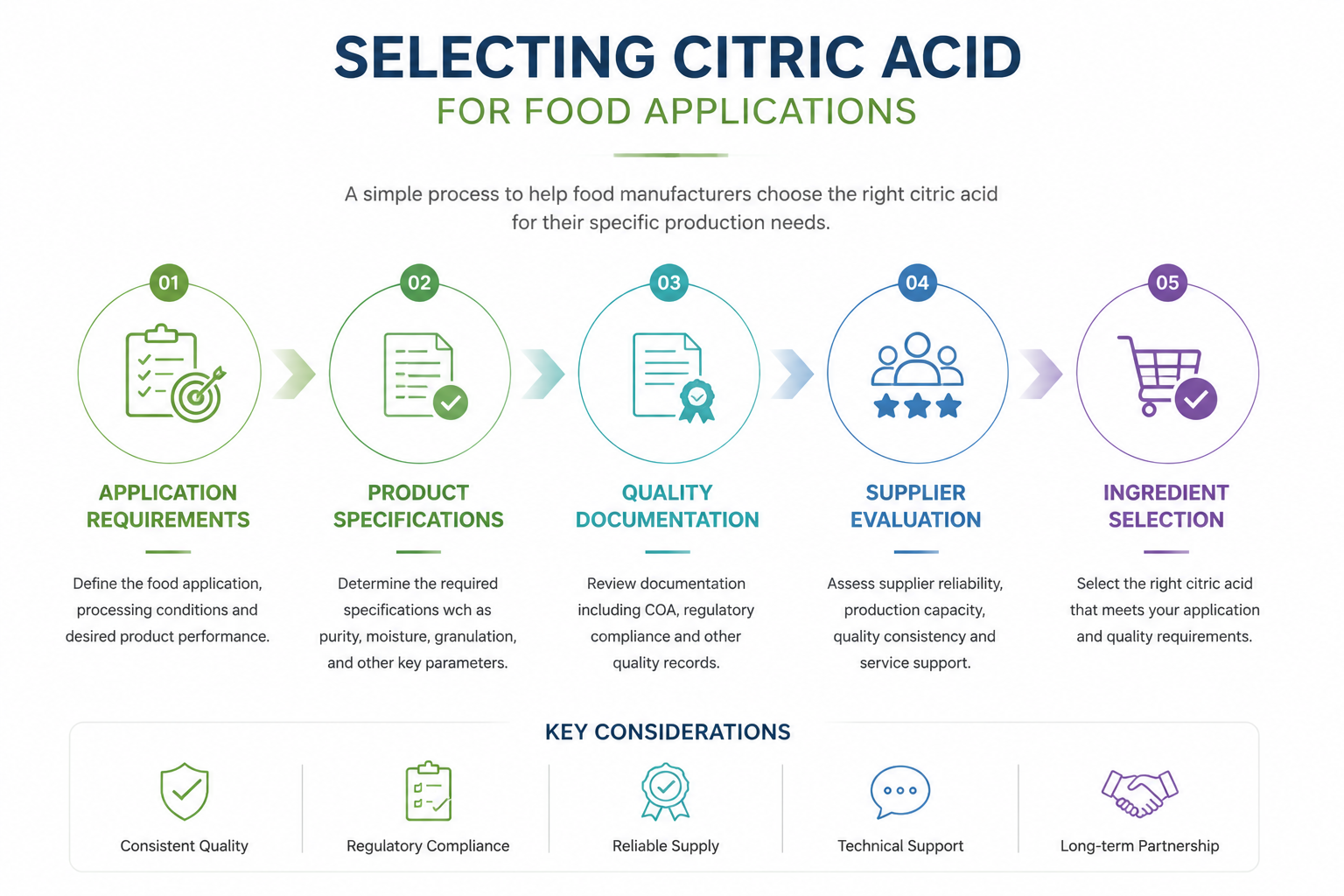
Although citric acid is widely used across many food manufacturing sectors, the requirements for each application can vary significantly. A beverage producer, confectionery manufacturer, and processed food company may have different expectations regarding formulation performance, product specifications, and processing requirements.
For this reason, selecting the right citric acid is not only about choosing a food-grade ingredient, but also about understanding how the ingredient fits into the specific production process.
Manufacturers typically evaluate several factors before selecting a citric acid product for their applications.
Consider Application Requirements
The first consideration is the specific food application.
Different products may require different acidity levels, formulation characteristics, and processing conditions. For example, a beverage manufacturer may focus on solubility and flavor balance, while a processed food producer may have different requirements related to formulation compatibility.
Understanding the intended application helps manufacturers determine the appropriate citric acid specifications for their production needs.
Evaluate Product Specifications
Product specifications are another important factor when selecting citric acid for food manufacturing.
Manufacturers commonly review information such as:
- Purity requirements
- Moisture content
- Physical characteristics
- Product consistency
- Applicable quality documentation
Clear specifications allow buyers to evaluate whether the ingredient meets their formulation requirements and production standards.
Consider Quality Consistency and Supplier Support
For companies purchasing ingredients for ongoing production, consistent quality and reliable supply are essential considerations.
Beyond the ingredient itself, manufacturers often evaluate whether a supplier can provide:
- Consistent batch quality
- Complete documentation support
- Stable supply capability
- Professional communication
A reliable supplier relationship helps food manufacturers maintain predictable production performance and reduce potential sourcing challenges.
For a more detailed overview of supplier evaluation, quality documentation, and bulk purchasing considerations, see ourCitric Acid Supplier Guide.
FAQ
What foods commonly use citric acid?
Citric acid is widely used in many food manufacturing applications, including beverages, confectionery, dairy-related products, sauces, and processed foods. Its specific role depends on the product formulation and manufacturing requirements. Food producers commonly use citric acid when they need controlled acidity adjustment, flavor balance, or consistent formulation performance.
Why is citric acid used in food manufacturing?
Citric acid is used in food manufacturing mainly because it provides controlled acidity and supports product formulation. It can help manufacturers adjust acidity levels, balance flavors, and achieve consistent product characteristics across production batches. The specific application depends on the food category, processing conditions, and desired product requirements.
How do manufacturers choose the right citric acid for their applications?
Manufacturers typically evaluate citric acid based on their specific production needs, including application type, product specifications, processing requirements, and quality documentation. Factors such as purity, moisture content, batch consistency, and supplier reliability may also influence ingredient selection decisions.