



- Your cart is empty Browse Shop
Citric Acid Uses in Food and Beverage Production: Applications and Functions
Introduction
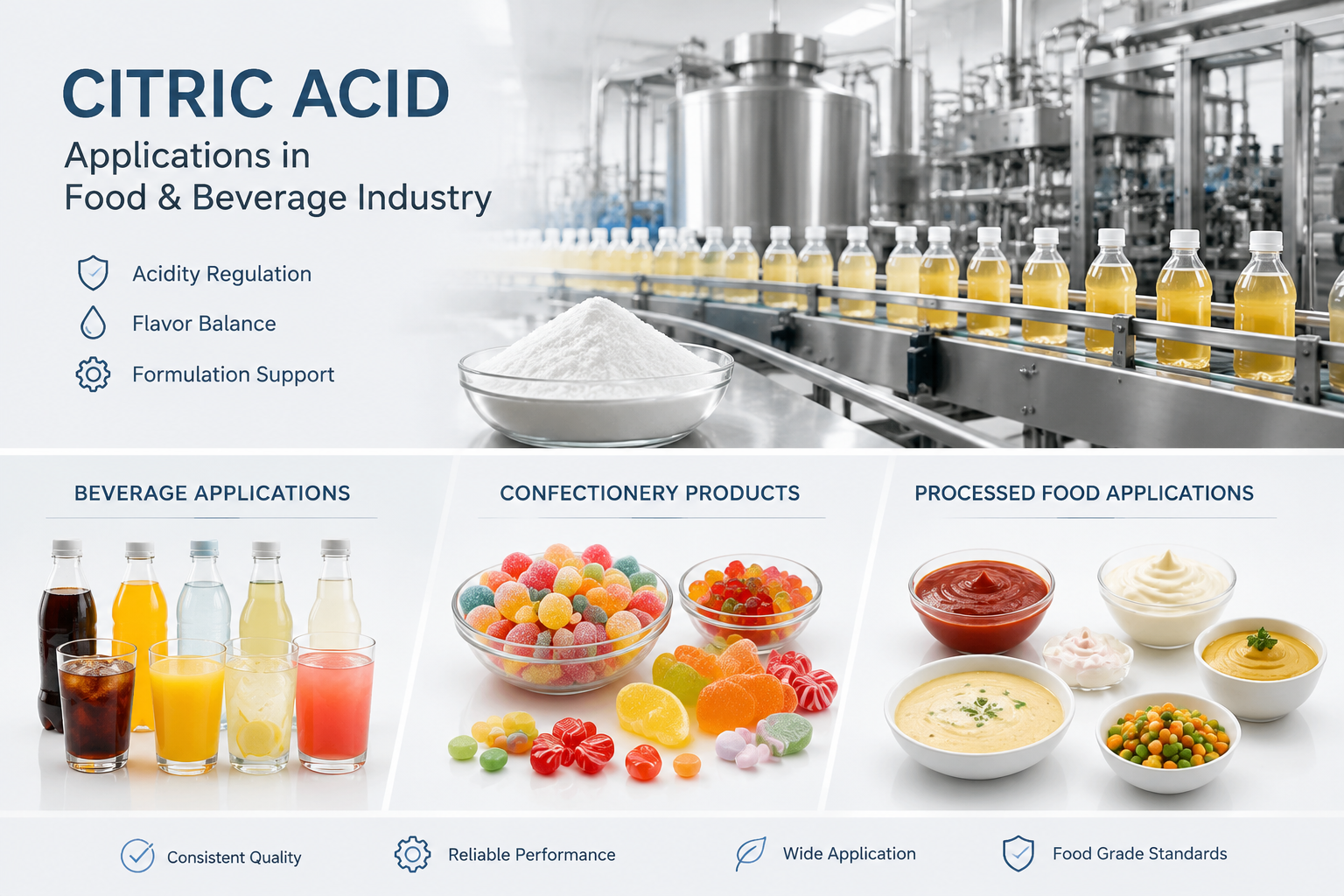
Citric acid is one of the most widely used food ingredients in modern food manufacturing. From beverages and confectionery products to processed foods and dairy applications, citric acid plays an important role in improving formulation performance and maintaining consistent product characteristics.
When discussing citric acid uses in food, many people first think of its sour taste. However, its applications go beyond flavor adjustment. Food manufacturers commonly use citric acid as an acidity regulator, formulation support ingredient, and processing aid to achieve the desired balance between taste, stability, and product quality.
Different food categories have different formulation requirements. A beverage producer may focus on acidity control and flavor balance, while a confectionery manufacturer may require precise sourness adjustment and consistent processing performance. Understanding these different citric acid applications helps manufacturers select the right ingredient solution for their products.
This article explores the main uses of citric acid in food and beverage production, including its key functions, common applications, and important considerations for food manufacturers.
What Is Citric Acid Used For in Food Manufacturing?
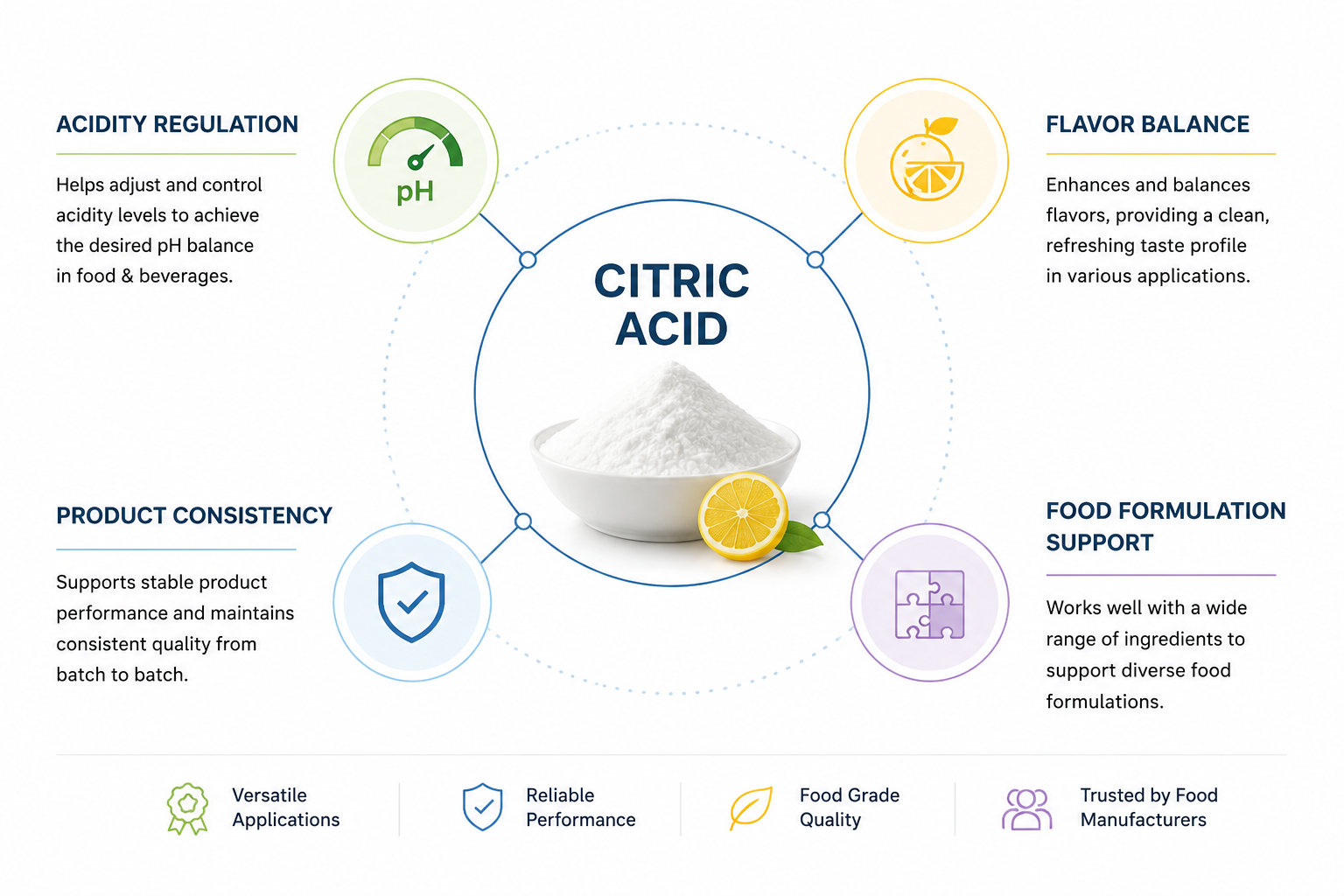
In food production, citric acid is primarily valued for its multifunctional properties. Rather than serving only as an acidulant that creates a sour taste, it helps manufacturers manage important formulation factors such as acidity level, flavor profile, and product consistency.
The specific role of citric acid depends on the food system, processing conditions, and desired product characteristics. Below are some of the most common functions of citric acid in food manufacturing.
1. Acidity Regulation and pH Adjustment
One of the primary citric acid uses in food manufacturing is acidity regulation.
Food products require carefully controlled acidity levels to achieve the desired taste and formulation performance. Citric acid provides a reliable way for manufacturers to adjust acidity and maintain consistent pH levels during production.
For example:
- Beverage manufacturers use citric acid to create a refreshing acidic profile.
- Processed food producers may use it to balance the overall formulation.
- Certain dairy and prepared food applications may require acidity adjustment during processing.
Because citric acid has good solubility and predictable performance, it is widely used across different food systems where accurate acidity control is required.Understanding the citric acid production process also helps manufacturers evaluate ingredient quality and consistency.
2. Flavor Balance and Taste Enhancement
Beyond acidity control, citric acid also contributes to the overall sensory experience of food products.
A well-balanced acidic profile can enhance flavor perception by:
- balancing sweetness,
- creating a refreshing taste,
- improving flavor complexity.
This is especially important in products such as beverages, candies, and fruit-based foods, where manufacturers need a clear and consistent taste profile.
For example, a beverage with high sugar content may taste overly sweet without sufficient acidity. Adding an appropriate amount of citric acid can help create a more balanced flavor experience.
3. Supporting Product Consistency During Processing
Food manufacturers need ingredients that perform consistently from batch to batch. Citric acid is widely used because of its predictable characteristics and compatibility with many food formulations.
During production, manufacturers consider factors such as:
- ingredient interaction,
- processing conditions,
- final product requirements.
Using a consistent food-grade citric acid ingredient helps maintain stable formulation performance and supports reliable production outcomes.
For large-scale food manufacturers, ingredient consistency is especially important because small formulation variations can affect product quality, processing efficiency, and customer expectations.
Citric Acid Uses in Beverage Production
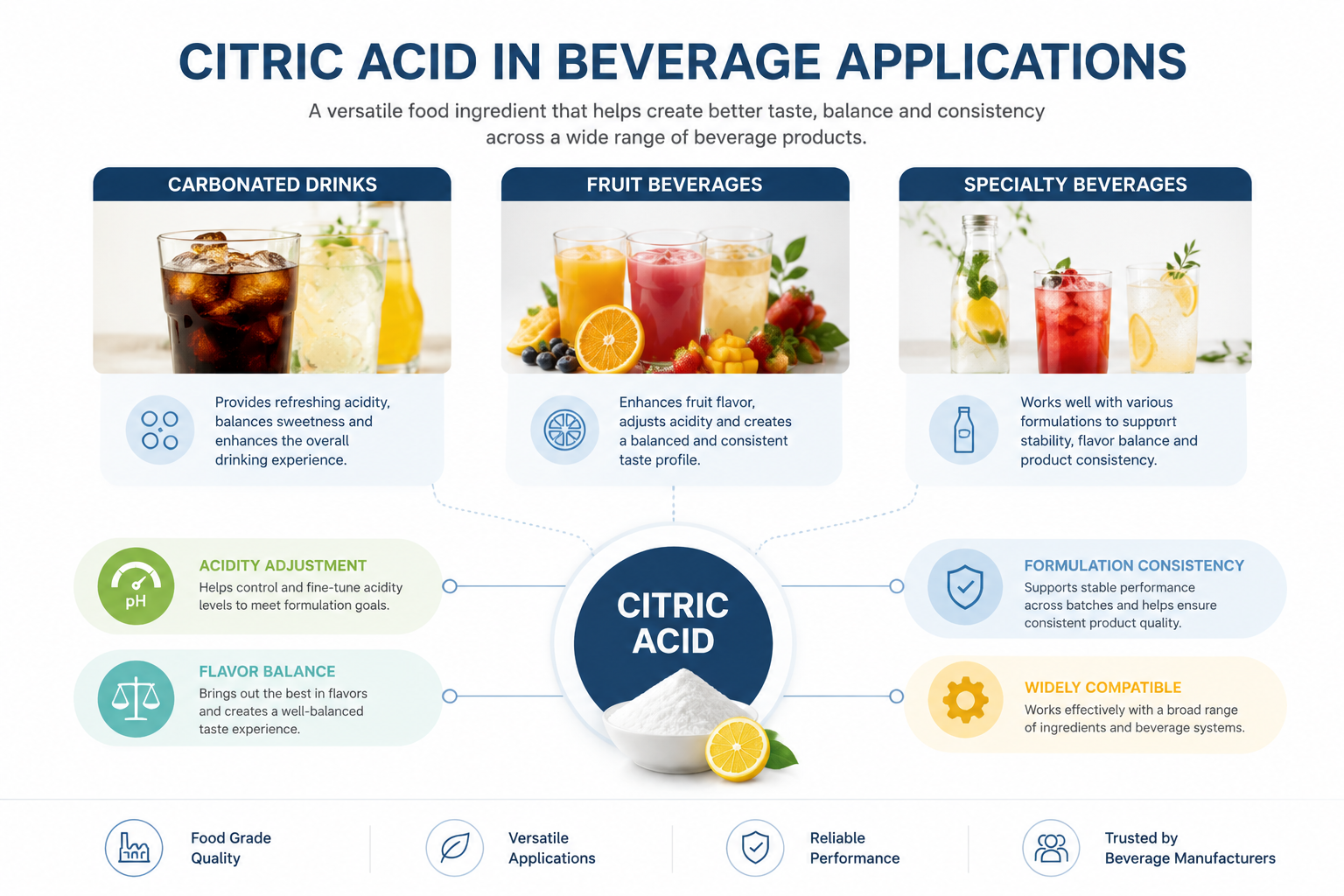
The beverage industry is one of the largest application areas for citric acid. From carbonated drinks and fruit beverages to functional beverages, manufacturers use citric acid to achieve the right balance of acidity, flavor, and overall product performance.
In beverage formulations, sweetness, acidity, and flavor intensity must work together. Too much sweetness can make a drink feel heavy, while insufficient acidity may result in a flat or unbalanced taste profile. Citric acid helps manufacturers fine-tune these characteristics and create a more consistent beverage experience.
Because of its high solubility, clean acidic taste, and compatibility with various formulations, citric acid is widely selected for different beverage applications.
1. Carbonated Soft Drinks
Carbonated beverages are one of the most common applications for citric acid.
In soft drink formulations, citric acid is mainly used to:
- provide acidity,
- balance sweetness,
- enhance refreshing taste characteristics.
Carbonated drinks often contain sweeteners, flavors, and other ingredients that require careful adjustment to achieve the desired taste profile. Citric acid helps create a balanced formulation by adding controlled acidity without overpowering the main flavors.
For beverage manufacturers, consistency is especially important because consumers expect the same taste experience across different production batches. A reliable food-grade citric acid ingredient supports stable formulation performance during large-scale production.
2. Fruit Drinks and Juice-Based Beverages
Fruit-based beverages naturally contain organic acids, but additional citric acid is often used to achieve a more consistent flavor profile.
In juice drinks and fruit beverages, citric acid may help:
- enhance fruit flavor perception,
- balance sweetness,
- adjust overall acidity.
Different fruits have different natural acidity levels. For example, a beverage made with sweet fruit ingredients may require additional acidity adjustment to achieve the intended taste profile.
By controlling acidity levels, manufacturers can create beverages with a more predictable sensory experience across different formulations.
3. Functional and Specialty Beverages
The growth of functional and specialty beverages has increased demand for ingredients that provide reliable formulation flexibility.
In these products, citric acid is commonly considered during formulation development because it can work well with various beverage ingredients.
Manufacturers may evaluate citric acid based on factors such as:
- compatibility with other ingredients,
- desired acidity level,
- processing requirements,
- final product characteristics.
For beverage companies developing new products, selecting the right acidulant is an important part of achieving the intended flavor and formulation goals.
Beverage Manufacturing Considerations When Using Citric Acid
Although citric acid is widely used in beverage production, manufacturers still need to consider several factors when developing a formulation.
Important considerations include:
Acidity Level Requirements
The amount of citric acid used depends on the target taste profile and product category. Different beverages require different acidity levels to achieve the desired balance.
Ingredient Compatibility
Citric acid should be evaluated alongside other formulation components, including sweeteners, flavors, and functional ingredients.
Quality Consistency
For commercial beverage production, ingredient consistency is critical. Food manufacturers typically evaluate factors such as product specifications, quality documentation, and batch-to-batch stability when selecting raw materials.
Key Takeaway for Beverage Manufacturers
Citric acid is not simply added to beverages for sourness. Its role is to help manufacturers achieve a balanced formulation with consistent acidity, flavor performance, and processing reliability.
From carbonated drinks to fruit beverages and specialty products, citric acid applications in beverage production demonstrate why this ingredient remains an important choice for modern food and beverage manufacturers.
Citric Acid Uses in Food Applications
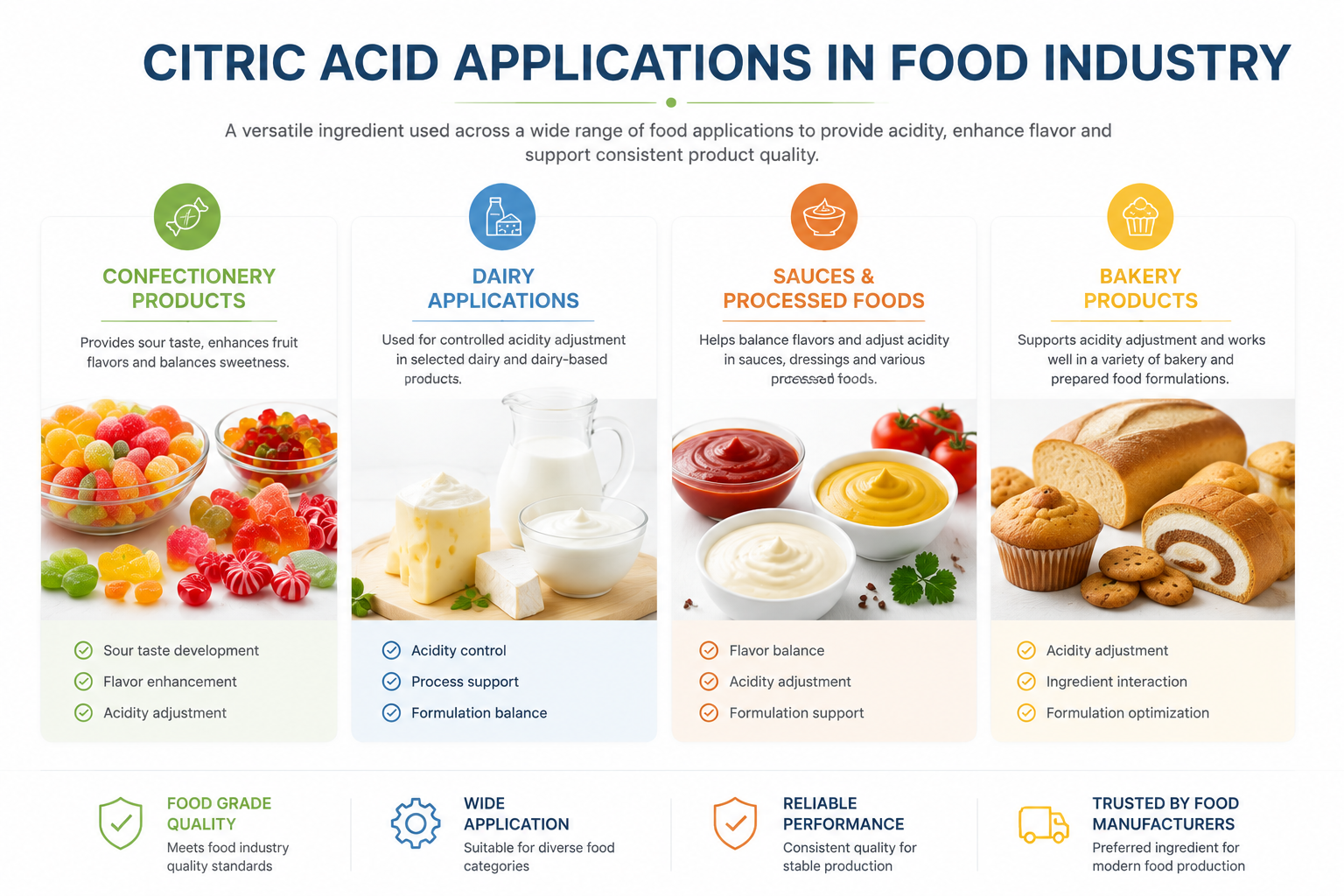
Beyond beverage production, citric acid is widely used across many food categories. Its ability to provide controlled acidity, support flavor balance, and work well with different formulations makes it a common ingredient choice for food manufacturers.
Different food products have different processing requirements. A confectionery manufacturer may focus on achieving the right sour flavor profile, while a processed food producer may prioritize formulation balance and ingredient compatibility.
Understanding the different citric acid applications in food manufacturing helps companies develop more consistent and efficient production processes.
1. Confectionery Products
Confectionery is one of the most recognizable application areas for citric acid.
Products such as candies, gummies, and jelly-based sweets often require precise acidity control to achieve the desired taste experience.
In confectionery formulations, citric acid is commonly used to:
- provide a balanced sour taste,
- enhance fruit flavors,
- adjust acidity levels.
For example, fruit-flavored candies often combine sweeteners and flavor compounds with citric acid to create a more noticeable and refreshing taste profile.
For manufacturers, consistency is important because small changes in acidity can influence the overall sensory characteristics of the final product. Therefore, reliable ingredient quality plays an important role in maintaining production standards.
2. Dairy and Dairy-Based Products
Citric acid also has applications in selected dairy and dairy-based food formulations.
In these products, manufacturers may use citric acid when acidity adjustment is required as part of the processing or formulation process.
Potential applications include:
- certain cheese-related products,
- dairy-based formulations,
- specialty dairy foods.
The functional roles of citric acid and sodium citrate differ in dairy applications, particularly in acidity adjustment and processed cheese emulsification.
While sodium citrate is often selected for improving cheese texture and emulsification, citric acid is mainly considered when manufacturers need controlled acidity adjustment.
This distinction is important for food producers when selecting the appropriate ingredient for a specific application.
3. Sauces, Dressings, and Processed Foods
Many processed food products require careful control of taste and formulation balance.
Citric acid may be used in products such as:
- sauces,
- dressings,
- ready-to-eat foods,
- processed food formulations.
In these applications, citric acid can help manufacturers adjust acidity and create a more balanced flavor profile.
For example, sauces often contain multiple ingredients including sweeteners, spices, and flavor components. Proper acidity adjustment can help create a more complete taste profile and improve product consistency during manufacturing.
4. Bakery and Prepared Food Applications
Citric acid can also be considered in certain bakery and prepared food formulations.
Depending on the product requirements, manufacturers may evaluate citric acid for:
- acidity adjustment,
- ingredient interaction,
- formulation optimization.
Because food formulations vary significantly between product categories, manufacturers typically determine the appropriate application level based on product requirements, processing conditions, and quality specifications.
Common Food Applications of Citric Acid
The following table summarizes some common citric acid applications in food manufacturing:
| Food Category | Common Application Purpose |
|---|---|
| Beverages | Acidity adjustment and flavor balance |
| Confectionery Products | Sour taste development and flavor enhancement |
| Dairy Applications | Controlled acidity adjustment |
| Sauces and Dressings | Flavor balance and formulation support |
| Processed Foods | Ingredient compatibility and acidity control |
| Bakery Products | Formulation adjustment |
This broad range of applications explains why citric acid remains one of the most commonly used acidulants in the food industry.
Why Food Manufacturers Choose Citric Acid
The wide range of citric acid applications across the food industry is mainly due to its versatility and reliable performance in different formulations.
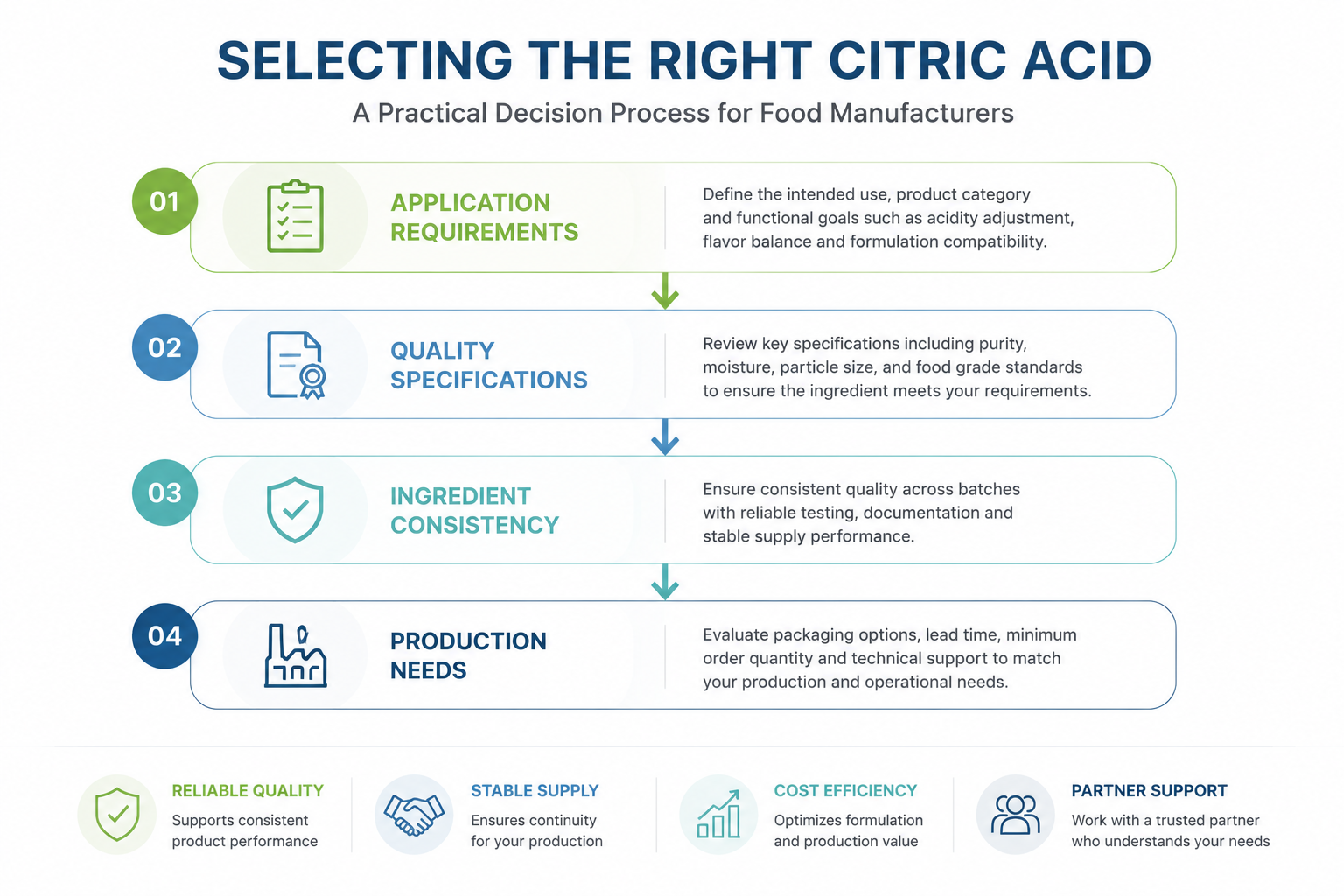
For food manufacturers, choosing an ingredient is not only about achieving a specific taste. Factors such as formulation compatibility, processing requirements, consistency, and product quality all influence ingredient selection.
Citric acid remains a preferred acidulant in many food applications because it provides several practical advantages.
1. Broad Application Compatibility
One of the key reasons manufacturers use citric acid is its ability to work across a wide range of food and beverage systems.
From beverages and confectionery products to processed foods, citric acid can be incorporated into different formulations with relatively predictable performance.
This versatility allows manufacturers to use the same ingredient category across multiple product lines while maintaining consistent formulation strategies.
2. Clean and Recognizable Acidic Profile
Citric acid provides a clean acidic taste profile that is familiar in many food products.
Compared with some other acidulants, citric acid is widely recognized for its ability to deliver a balanced sour taste without creating an overly aggressive acidic sensation when properly formulated.
This makes it particularly suitable for products where manufacturers need acidity adjustment while maintaining the intended flavor profile.
3. Consistent Performance in Food Processing
For commercial food production, ingredient consistency is a critical consideration.
Manufacturers typically evaluate raw materials based on factors such as:
- specification consistency,
- purity requirements,
- documentation availability,
- production reliability.
Food-grade citric acid with stable quality characteristics helps manufacturers maintain predictable results across different production batches.
This is especially important for large-scale operations where formulation changes can affect product quality and production efficiency.
Citric Acid Compared With Other Food Acids
Manufacturers may also compare citric acid with other food ingredients such as sodium citrate applications depending on their formulation goals.Depending on the product requirements, manufacturers may compare citric acid with alternatives such as malic acid and ascorbic acid.
The right choice depends on the intended application, flavor requirements, and functional purpose.
Citric Acid vs Malic Acid
Malic acid is another commonly used acidulant in food applications.
The main difference is their taste characteristics and application preferences.
| Citric Acid | Malic Acid | |
|---|---|---|
| Taste Profile | Clean, refreshing acidity | Longer-lasting tartness |
| Common Applications | Beverages, candies, processed foods | Confectionery, fruit-flavored products |
| Main Consideration | Balanced acidity and broad compatibility | Stronger lingering sour sensation |
For many beverage applications, citric acid is preferred because of its clean acidic profile and compatibility with a wide range of flavors.
Citric Acid vs Ascorbic Acid
Citric acid and ascorbic acid are sometimes compared because both are used in food formulations, but they serve different primary purposes.
| Citric Acid | Ascorbic Acid | |
|---|---|---|
| Main Role | Acidulant and acidity regulator | Antioxidant ingredient |
| Typical Application | Flavor balance and pH adjustment | Oxidation control in specific products |
| Functional Focus | Acidity management | Protection against oxidation |
Although both ingredients are used in food manufacturing, they are selected based on different formulation goals.
Selecting the Right Acidulant for Food Applications
When developing a food formulation, manufacturers should consider several factors before selecting an acidulant:
Product Requirements
Different products require different acidity levels and flavor characteristics.
A beverage, candy, and processed food product may have completely different formulation targets.
Processing Conditions
Manufacturing processes, ingredient interactions, and storage requirements can influence ingredient selection.
Quality Specifications
Food manufacturers generally evaluate factors such as purity, consistency, and supporting quality documentation when sourcing ingredients.
Understanding these factors helps companies select the most suitable acidulant for their specific application.
Conclusion: Citric Acid Applications in Food Manufacturing
Citric acid is widely used across the food and beverage industry because of its versatility, consistent performance, and compatibility with different formulations.
From beverages and confectionery products to processed foods, manufacturers use citric acid for acidity adjustment, flavor balance, and formulation support.
Understanding different citric acid uses in food manufacturing helps companies select the right ingredient solution based on their product requirements and processing conditions.
As food formulations continue to evolve, citric acid remains an important acidulant for manufacturers looking to achieve reliable product quality and consistent performance.
Frequently Asked Questions
What is citric acid used for in food?
Citric acid is mainly used as an acidulant and acidity regulator in food manufacturing. It helps adjust acidity levels, balance flavors, and support consistent formulations in products such as beverages, confectionery, and processed foods.
What foods commonly use citric acid?
Citric acid is commonly used in beverages, candies, fruit products, sauces, dressings, and other processed foods where acidity adjustment or flavor balance is required.
Why is citric acid used in beverages?
Citric acid helps beverage manufacturers achieve balanced acidity and improve flavor profiles. Its clean acidic taste and good solubility make it suitable for various beverage formulations.