



- Your cart is empty Browse Shop
Sodium Citrate Specifications Guide: Food Grade Standards, MSDS and Quality Requirements
Introduction
When purchasing sodium citrate for food manufacturing, understanding product specifications is essential for ensuring consistent quality, regulatory compliance, and reliable production performance.
For food manufacturers and ingredient buyers, sodium citrate specifications provide important information about product characteristics, including appearance, purity, moisture content, pH range, solubility, and other quality parameters. These specifications help buyers evaluate whether a sodium citrate product meets their formulation requirements and application standards.
Beyond basic product characteristics, professional buyers should also review quality documentation such as specification sheets, Certificates of Analysis (COA), and Material Safety Data Sheets (MSDS). These documents provide transparency regarding product quality, testing results, handling requirements, and batch consistency.
A reliable sodium citrate supplier should be able to provide clear technical information and consistent documentation to support global food ingredient applications.
This guide explains the key elements of sodium citrate specifications, food grade requirements, purity testing methods, and essential quality documents that buyers should evaluate before selecting a supplier.
What Are Sodium Citrate Specifications?
Sodium citrate specifications define the key technical characteristics and quality requirements of a sodium citrate product. For food manufacturers and ingredient buyers, these specifications provide important information for evaluating product quality, comparing suppliers, and ensuring compatibility with different food applications.
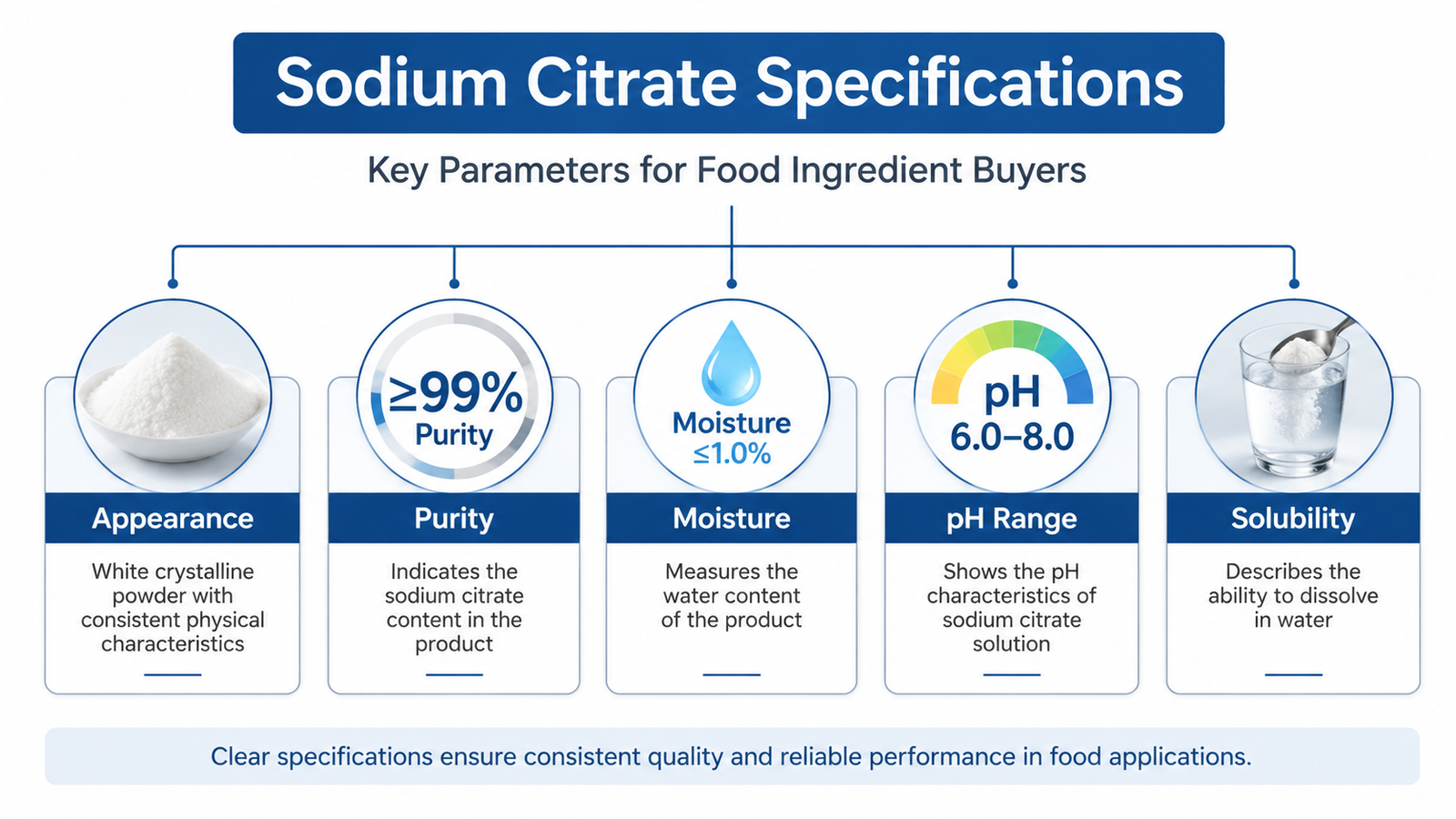
A professional sodium citrate specification sheet typically includes parameters such as appearance, purity, moisture content, pH range, and solubility. These indicators help buyers understand product consistency and determine whether the ingredient meets their production requirements.
When selecting food grade sodium citrate, buyers should review not only the product name but also the detailed specifications provided by the supplier. Consistent specifications are essential for maintaining stable production processes and reliable product quality.
Key Parameters in Sodium Citrate Specifications
| Parameter | Description | Importance |
|---|---|---|
| Appearance | White crystalline powder with consistent physical characteristics | Helps confirm product quality and handling performance |
| Purity (Assay) | Indicates the sodium citrate content in the product | Ensures formulation accuracy and consistent performance |
| Moisture Content | Measures the water content of the product | Supports storage stability and powder quality |
| pH Range | Shows the pH characteristics of sodium citrate solution | Important for buffering performance in food formulations |
| Solubility | Describes the ability to dissolve in water | Affects processing efficiency and ingredient distribution |
Appearance
Appearance is one of the basic indicators included in sodium citrate specifications. Food grade sodium citrate is generally supplied as a white crystalline powder with a consistent appearance. Uniform physical characteristics help manufacturers maintain stable handling and processing conditions.
Purity
Sodium citrate purity is an important factor when evaluating product quality. Purity specifications indicate the concentration of sodium citrate within the product and help manufacturers achieve predictable formulation results.
Buyers should review both the supplier’s stated purity requirements and the actual test results provided in quality documents such as a Certificate of Analysis (COA).
Moisture, pH and Solubility
Moisture content, pH range, and solubility are also important parameters that influence storage, processing, and application performance.
Controlled moisture levels support product stability during transportation and storage. Consistent pH characteristics help manufacturers achieve reliable buffering performance, while good solubility supports efficient mixing in applications such as beverages, dairy products, and processed foods.
Understanding these key sodium citrate specifications allows buyers to make better purchasing decisions and evaluate whether a product meets their technical requirements.
Food Grade Sodium Citrate Requirements
Food grade sodium citrate is widely used in food manufacturing because of its functional properties and compatibility with different formulations. However, when purchasing sodium citrate for commercial production, buyers should evaluate more than just the product grade. Quality standards, manufacturing controls, and supporting documentation are also important factors.
A reliable food grade sodium citrate supplier should provide clear product information and quality records to help customers verify that the ingredient meets their application requirements.
Food Safety Requirements
Food manufacturers typically require sodium citrate products to meet strict food safety expectations. This includes controlled production processes, proper raw material management, and quality testing procedures to ensure product consistency.
Suppliers should maintain appropriate manufacturing practices and quality control systems to reduce risks related to contamination, inconsistency, or unexpected variations between batches.
Regulatory Compliance
Depending on the target market and application, food ingredient buyers may need products that comply with applicable food regulations and industry requirements.
A professional supplier should be able to provide technical information and documentation that supports customer evaluation, including product specifications, testing records, and safety information.
For global food ingredient purchasing, clear documentation helps simplify supplier approval processes and improves communication between manufacturers, importers, and distributors.
Quality Documentation
Quality documentation is an essential part of evaluating food grade sodium citrate.
Before placing an order, buyers commonly review documents such as:
- Product specification sheet
- Certificate of Analysis (COA)
- Material Safety Data Sheet (MSDS)
- Batch testing information
These documents allow buyers to confirm product specifications, review testing results, and ensure consistency between different shipments.
Choosing the right sodium citrate supplier requires buyers to review documentation, quality transparency, batch consistency, and long-term supply reliability.
Sodium Citrate Purity and Quality Testing

Sodium citrate purity is one of the most important quality indicators evaluated by food manufacturers and ingredient buyers. Consistent purity levels help ensure reliable formulation performance, stable processing conditions, and predictable product quality across different production batches.
When evaluating sodium citrate suppliers, buyers should review both the stated product specifications and the actual quality test results provided for each batch. A professional supplier should be able to demonstrate that products consistently meet the agreed technical requirements.
Purity Testing and Quality Control
Purity testing is typically performed as part of the supplier’s quality control process to verify that the product meets the required specification standards.
Common quality evaluations for sodium citrate may include:
- Assay testing to confirm sodium citrate content
- Moisture analysis to monitor water content
- pH testing to verify solution characteristics
- Physical appearance inspection
- Other applicable quality tests based on customer requirements
These testing procedures help manufacturers confirm that the ingredient performs consistently during production and meets the expectations of their specific applications.
Importance of Batch Consistency
For food manufacturers, product consistency is just as important as initial quality.
A supplier may provide a product sample that meets expectations, but long-term purchasing decisions depend on whether future shipments maintain the same specifications.
Batch consistency helps reduce production risks related to:
- Changes in processing performance
- Unexpected formulation adjustments
- Quality variations between shipments
Reliable sodium citrate suppliers usually maintain documented quality control procedures and provide batch-specific testing records, such as Certificates of Analysis (COA), to verify each shipment.
Evaluating Sodium Citrate Quality
When reviewing sodium citrate purity and quality performance, buyers should consider:
- Whether specifications are clearly defined
- Whether testing results are available
- Whether quality documents match the supplied product
- Whether the supplier can maintain consistent standards over time
A transparent quality control system gives buyers greater confidence when selecting a long-term sodium citrate supplier.
Sodium Citrate MSDS, COA and Specification Sheet
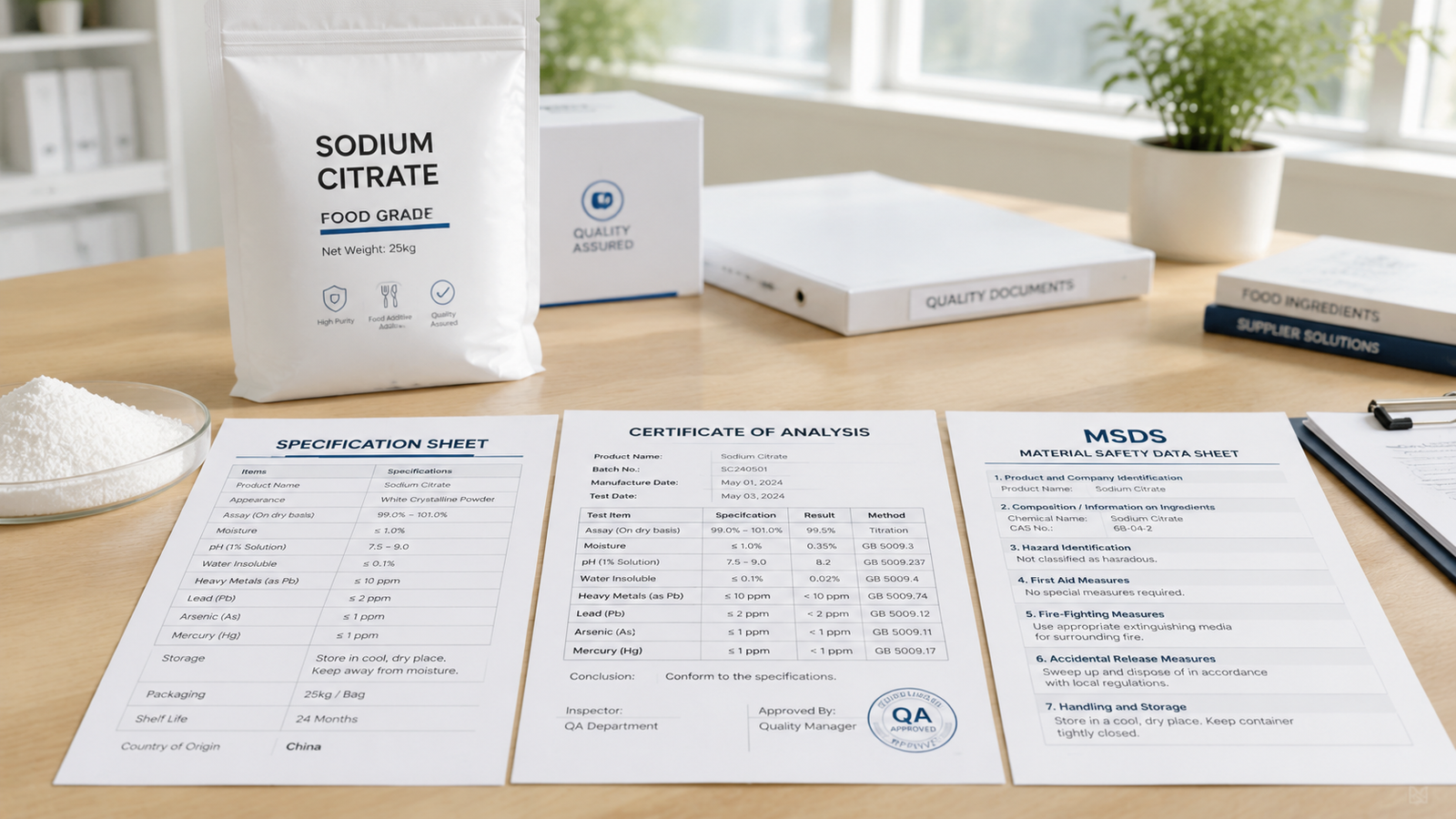
For food ingredient buyers, technical documents are an important part of the supplier evaluation process. In addition to product specifications, professional sodium citrate suppliers should provide complete quality documents to support product verification, regulatory review, and supply chain management.
Documents such as a sodium citrate MSDS, Certificate of Analysis (COA), and sodium citrate specification sheet help buyers understand product characteristics, safety information, and batch quality performance before purchasing.
Sodium Citrate Specification Sheet
A sodium citrate specification sheet provides the technical requirements and quality parameters of the product.
This document typically includes information such as:
- Product name and grade
- Appearance requirements
- Purity or assay specifications
- Moisture limits
- pH range
- Solubility characteristics
- Packaging information
- Storage recommendations
For food manufacturers, reviewing the specification sheet before purchasing helps confirm whether the product matches their formulation requirements and production standards.
A clear and detailed specification sheet also improves communication between suppliers and buyers by ensuring that both parties have the same understanding of product requirements.
Sodium Citrate COA (Certificate of Analysis)
A Certificate of Analysis (COA) is a batch-specific quality document that provides actual test results for a supplied product.
A typical sodium citrate COA may include:
- Batch number
- Testing date
- Quality test results
- Specification comparison
- Product conformity information
Unlike a general specification sheet, which describes the product requirements, a COA shows the actual results of a specific production batch.
For international food ingredient purchasing, COA documentation is especially valuable because it allows buyers to verify product consistency between different shipments.
Sodium Citrate MSDS
A sodium citrate MSDS provides important information related to product handling, storage, transportation, and safety considerations.
Although sodium citrate is commonly used as a food ingredient, buyers may require MSDS documentation as part of internal approval procedures, logistics requirements, or supply chain management processes.
Professional suppliers should be able to provide updated MSDS documents together with other technical files to support smooth purchasing and international trade processes.
Why Quality Documents Matter
Complete quality documentation demonstrates supplier transparency and professionalism.
Before working with a sodium citrate supplier, buyers should confirm that the supplier can provide:
- Specification sheet
- COA
- MSDS
- Supporting quality records
These documents help reduce purchasing risks and build confidence in long-term supplier relationships.
How to Evaluate a Sodium Citrate Supplier
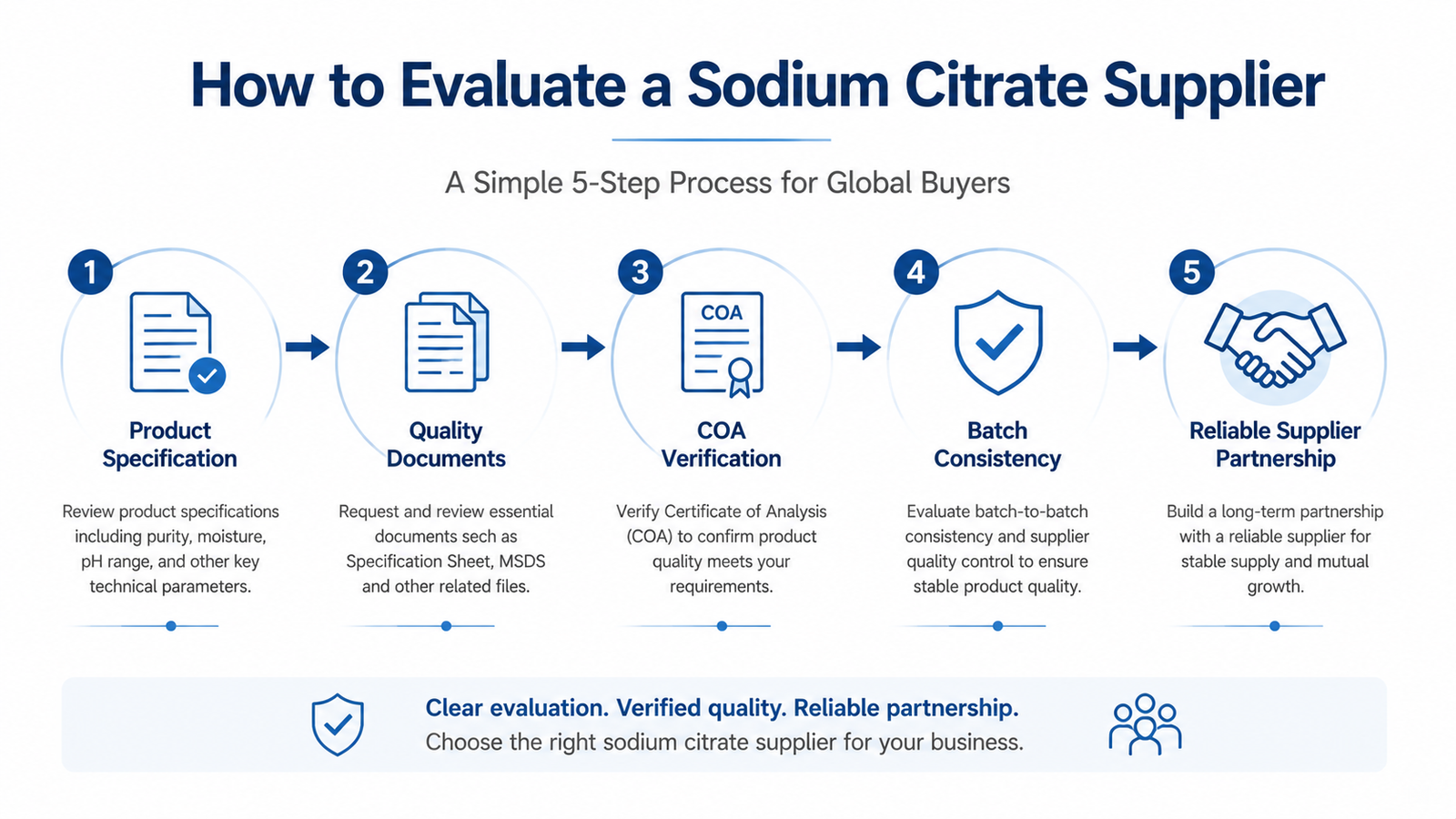
Selecting the right sodium citrate supplier requires more than comparing product prices. Food manufacturers and ingredient buyers should evaluate product quality, documentation, and supply reliability before establishing a long-term partnership.
A reliable supplier should be able to provide clear technical information and consistent quality support throughout the purchasing process.
Key factors to consider include:
Complete Quality Documentation
Professional suppliers should provide essential documents such as product specification sheets, Certificates of Analysis (COA), and MSDS documents. Complete documentation helps buyers verify product requirements and support internal approval procedures.
Consistent Product Specifications
Supplier reliability depends on the ability to maintain stable product quality between different batches. Consistent purity, moisture levels, and physical characteristics help manufacturers reduce production risks.
Quality Control and Batch Traceability
Suppliers with structured quality control processes can provide better transparency regarding production and testing records. Batch traceability helps buyers identify and verify product information when needed.
Export and Customer Support
For international food ingredient purchasing, suppliers should understand export requirements, packaging needs, and communication processes. Responsive support helps ensure smoother cooperation between manufacturers, distributors, and suppliers.
FAQ About Sodium Citrate Specifications
What is the purity of food grade sodium citrate?
Food grade sodium citrate purity requirements depend on product grade and applicable specifications. Many commercial food grade products are manufactured to meet high assay standards. Buyers should review supplier specifications and batch-specific COA results to confirm actual product quality.
Does sodium citrate have an MSDS?
Yes. Sodium citrate suppliers commonly provide MSDS documents to support product handling, storage, transportation, and customer approval procedures. MSDS is one of the important technical documents buyers may request during supplier evaluation.
What documents should sodium citrate suppliers provide?
Professional sodium citrate suppliers should typically provide documents such as a specification sheet, Certificate of Analysis (COA), and MSDS. These documents help buyers verify product specifications, quality test results, and supply consistency.