



- Your cart is empty Browse Shop
How to Choose the Right Sodium Citrate Supplier: Quality Standards, Bulk Buying and Applications
Introduction
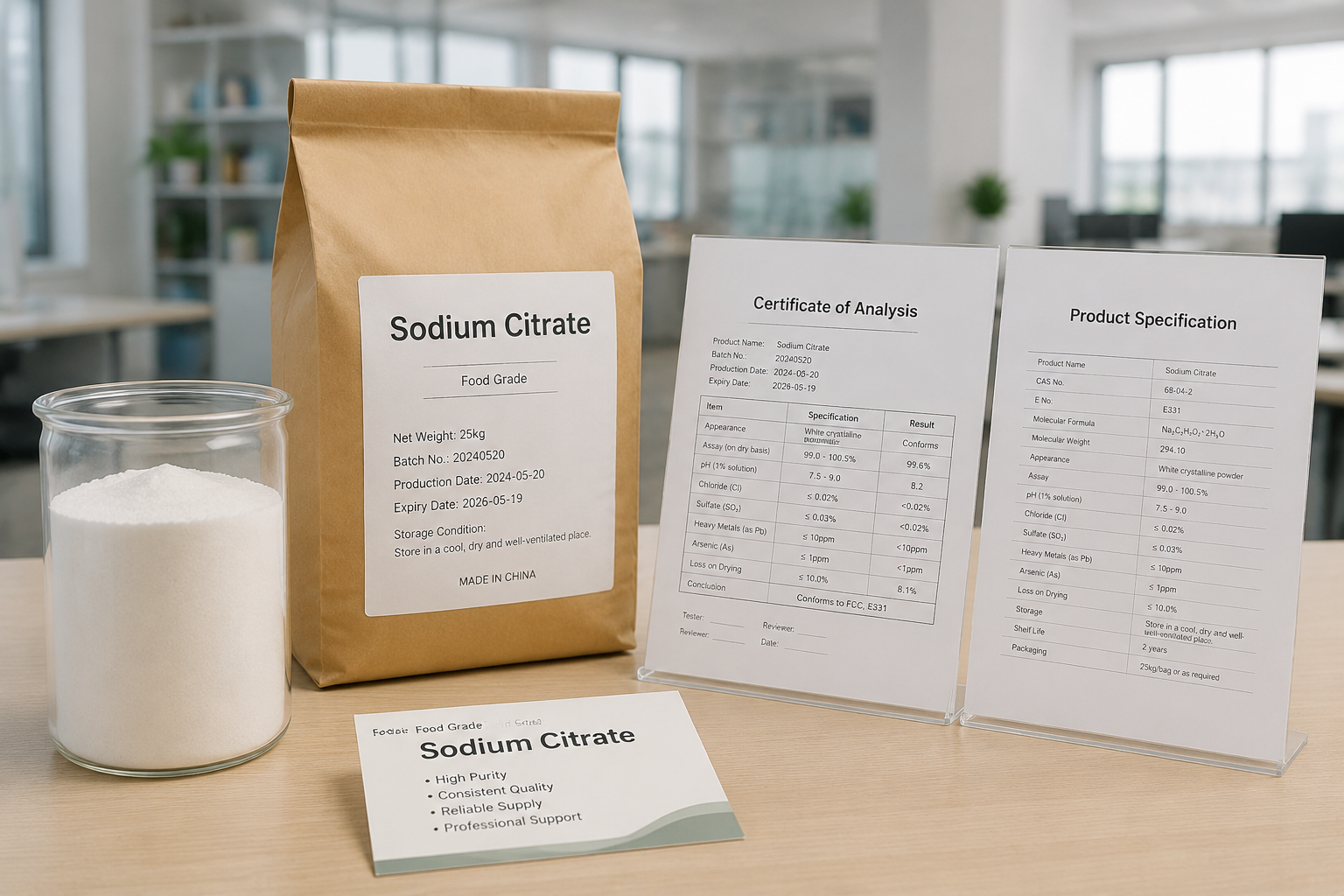
When sourcing sodium citrate for food manufacturing and industrial applications, choosing the right supplier is an important decision that goes beyond product price. Consistent quality, reliable supply capacity, proper documentation, and professional support all play an important role in ensuring long-term cooperation.
A reliable sodium citrate supplier should not only provide stable product quality but also offer essential technical documents, including specifications, quality reports, and material information for buyer evaluation. For companies purchasing sodium citrate in bulk, understanding supplier capabilities and quality standards can help reduce risks and improve supply efficiency.
This guide explains the key factors buyers should consider when selecting a sodium citrate supplier, including product quality, documentation requirements, bulk purchasing considerations, and common applications of sodium citrate in the food industry.
What Is Sodium Citrate and What Is It Used For?
Sodium citrate is the sodium salt derived from citric acid and is widely used in food and beverage manufacturing. It helps regulate acidity, control pH levels, and improve product stability.
For buyers who are new to this ingredient, understanding what is sodium citrate and how it performs in different applications is an important first step before selecting a suitable supplier.
In food manufacturing, sodium citrate is valued for its buffering properties and compatibility with many formulations. It can help maintain consistent texture, improve processing performance, and support product quality during production.
Common Uses of Sodium Citrate
The main sodium citrate uses are found in food, beverage, and formulation industries, including:
Dairy Products
Sodium citrate is commonly used in processed cheese production because it helps improve emulsification and create a smoother texture. It allows cheese formulations to maintain better consistency during heating and processing.
Beverages
In beverage formulations, sodium citrate can be used as an acidity regulator and buffering agent to help maintain a balanced flavor profile.
Processed Foods and Sauces
Sodium citrate is also used in various processed foods and sauces where manufacturers need better stability, texture control, and formulation consistency.
Because sodium citrate plays an important role in different manufacturing processes, buyers should evaluate not only the product itself but also supplier capabilities, quality control systems, and documentation support.
Sodium Citrate Applications in Food Manufacturing
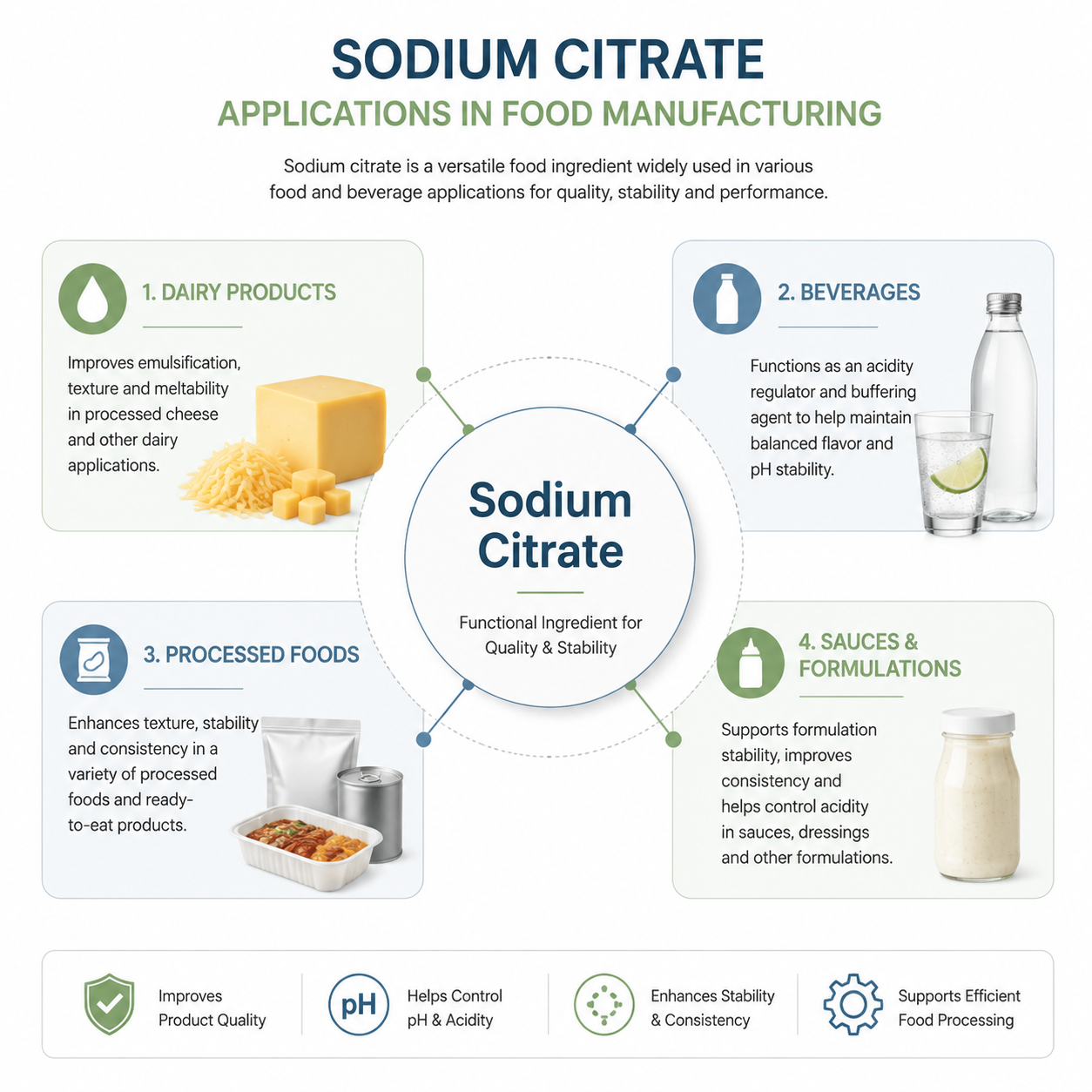
Sodium citrate is widely used in food manufacturing because of its functional properties and compatibility with different formulations. From dairy products to beverages and processed foods, manufacturers rely on consistent ingredient performance to maintain product quality and production efficiency.
Understanding sodium citrate applications helps buyers choose the right product specifications and evaluate whether a supplier can meet their specific requirements.
Sodium Citrate in Dairy Products
One of the most common sodium citrate uses in food manufacturing is in dairy applications, particularly processed cheese products.
During cheese processing, sodium citrate acts as an emulsifying salt that improves texture, consistency, and processing stability.
For dairy manufacturers, factors such as product purity, particle size, solubility, and batch consistency can directly influence the final production results.
Sodium Citrate in Beverage Production
In beverage formulations, sodium citrate is commonly used as an acidity regulator and buffering ingredient.
It helps manufacturers maintain a balanced formulation by supporting pH control and flavor consistency. Depending on the beverage type and production requirements, suppliers may need to provide different specifications and technical documentation to support formulation development.
Sodium Citrate in Processed Foods and Sauces
Sodium citrate is also used in various processed food applications, including sauces, ready-to-eat products, and other formulated foods.
In these applications, manufacturers typically focus on ingredient stability, processing compatibility, and reliable supply. A consistent supply chain is especially important for companies producing products at commercial scale, where changes in raw material quality can affect production efficiency.
Why Application Knowledge Matters When Choosing a Supplier
Different industries may have different expectations for sodium citrate quality, packaging, and documentation.
For example, a food manufacturer purchasing sodium citrate in bulk may require:
- Detailed product specifications
- Quality documentation such as COA and MSDS
- Stable production capacity
- Consistent batch performance
Therefore, understanding the intended application is an important step when evaluating a sodium citrate supplier.
Key Factors When Choosing a Sodium Citrate Supplier
Selecting the right sodium citrate supplier requires careful evaluation of several factors beyond product pricing. For manufacturers and distributors, supplier reliability, product consistency, documentation support, and supply capability all play an important role in long-term cooperation.
For additional sourcing and bulk purchasing considerations, buyers can review our sodium citrate supplier guide.
Below are the key factors buyers should consider when evaluating potential sodium citrate suppliers.
Product Quality and Specifications
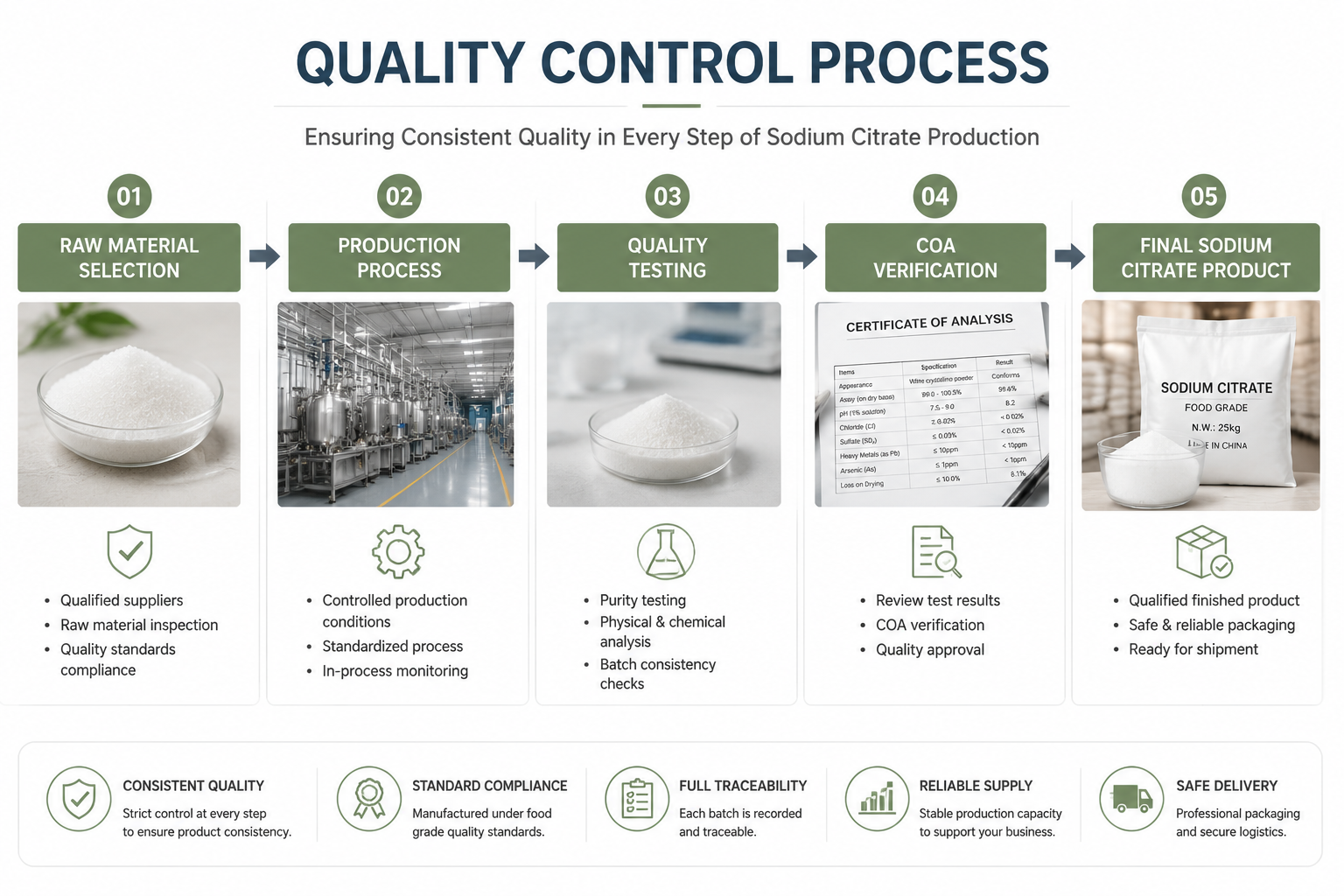
Product quality is one of the most important considerations when selecting sodium citrate suppliers.
Although sodium citrate is widely available in the market, differences in manufacturing processes, quality control systems, and production standards can affect product consistency.
Before purchasing, buyers should review important product information, including:
- Product specifications
- Purity requirements
- Batch consistency
For food manufacturers, consistent product specifications are especially important because variations in raw materials may influence formulation stability and production efficiency.
A reliable supplier should have clear quality control procedures and provide detailed product information to help buyers evaluate whether the sodium citrate meets their application requirements.
Documentation and Quality Support
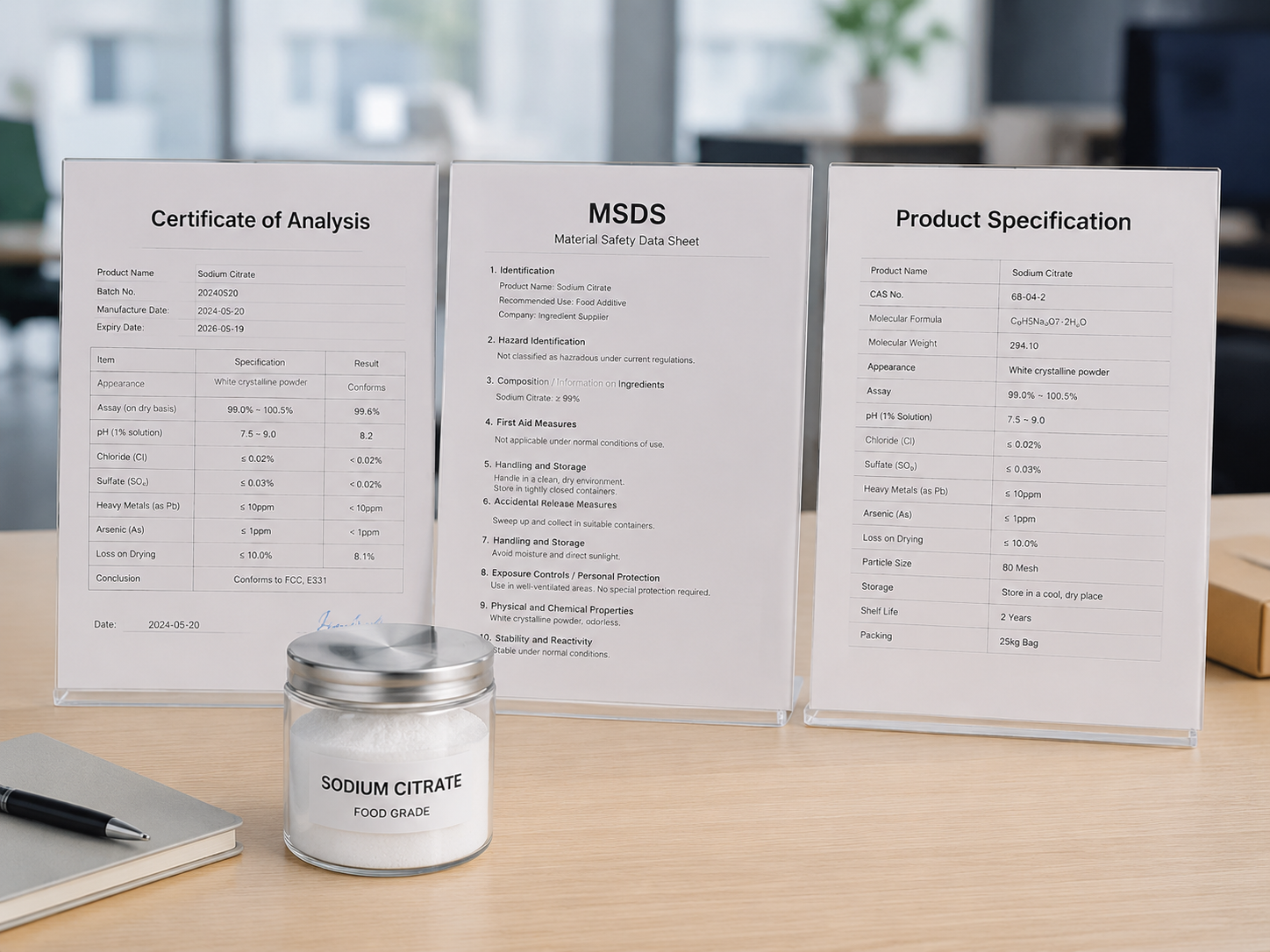
For many industrial buyers, product documentation is an essential part of the supplier evaluation process.
A professional sodium citrate supplier should be able to provide relevant quality documents, such as:
- COA
- MSDS
- Specification
These documents allow buyers to verify product information and support internal quality management procedures.
For companies purchasing sodium citrate in bulk, transparent documentation and consistent quality reporting can help reduce sourcing risks and improve supply chain management.
Bulk Supply Capability and Production Stability
For manufacturers requiring large quantities, evaluating a supplier’s production capability is critical.
When purchasing bulk sodium citrate, buyers should consider factors such as:
- Production capacity
- Supply stability
- Packaging options
- Export experience
- Lead time management
A supplier with stable production and reliable logistics support can help businesses maintain consistent operations, especially when sodium citrate is used as a regular ingredient in commercial manufacturing.
Choosing a supplier based only on price may create risks related to inconsistent quality, delayed delivery, or insufficient supply capacity.
Sodium Citrate Bulk Buying Guide: What Buyers Should Know
For companies purchasing sodium citrate for commercial production, bulk sourcing can provide advantages in supply stability and cost management. However, selecting the right bulk sodium citrate supplier requires careful evaluation of product quality, packaging options, and supply capabilities.
Bulk purchasing is not only about obtaining a larger quantity at a lower price. For manufacturers, a reliable supply chain is equally important because ingredient consistency can directly affect production processes and final product quality.
Before placing a bulk order, buyers should consider several important factors.
Confirm Product Requirements Before Purchasing
Before sourcing sodium citrate in bulk, buyers should first define their specific application requirements.
Different industries may have different expectations regarding:
- Product grade
- Purity specifications
- Packaging format
- Required documentation
- Delivery requirements
For example, a food manufacturer may focus on formulation performance and compliance documentation, while a distributor may pay more attention to packaging flexibility and supply consistency.
Clear product requirements help buyers communicate more effectively with suppliers and avoid potential issues during procurement.
Evaluate Packaging and Storage Conditions
Packaging plays an important role in maintaining sodium citrate quality during transportation and storage.
Professional suppliers usually provide suitable packaging solutions based on order volume and market requirements, such as:
- Standard industrial bags
- Customized packaging options
- Export-ready packaging
Proper packaging helps protect the product from moisture, contamination, and handling issues throughout the supply chain.
When purchasing sodium citrate bulk, buyers should confirm packaging details and storage recommendations with their supplier before shipment.
Consider Supply Stability and Long-Term Cooperation
For companies that use sodium citrate as a regular ingredient, supplier stability is often more important than short-term price advantages.
A dependable supplier should be able to support:
- Consistent product availability
- Stable production schedules
- Responsive communication
- Long-term supply planning
Building a relationship with a reliable sodium citrate supplier can help manufacturers reduce procurement risks and maintain smoother production operations.
Sodium Citrate vs Citric Acid: Which One Should Buyers Choose?
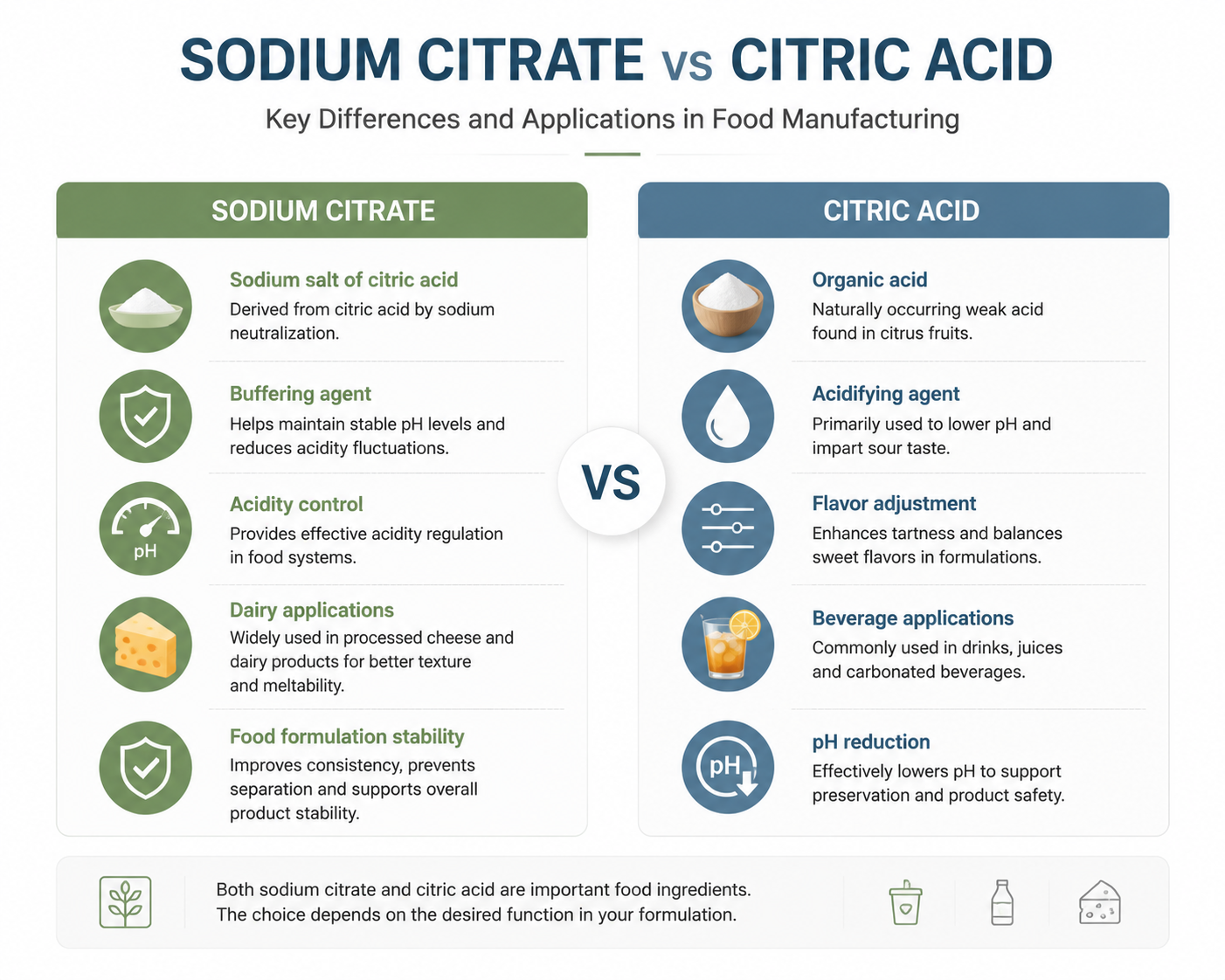
Sodium citrate and citric acid are closely related ingredients, as sodium citrate is derived from citric acid. However, they serve different functions in food manufacturing and industrial applications.
When comparing sodium citrate vs citric acid, buyers should consider the specific purpose of the ingredient rather than focusing only on the chemical relationship between the two products.
Citric acid is mainly known for its acidic properties, while sodium citrate is often selected when manufacturers require buffering capability, acidity control, and improved formulation stability.
Key Differences Between Sodium Citrate and Citric Acid
| Feature | Sodium Citrate | Citric Acid |
|---|---|---|
| Chemical Type | Sodium salt of citric acid | Organic acid |
| Main Function | Buffering agent and acidity regulator | Acidifying agent |
| pH Control | Helps maintain stable pH levels | Primarily lowers pH |
| Common Applications | Processed foods, dairy products, beverages | Beverages, food preservation, flavor adjustment |
When Should Manufacturers Choose Sodium Citrate?
Sodium citrate is often preferred when manufacturers need better control over formulation stability and processing performance.
Common situations where sodium citrate may be suitable include:
- Maintaining balanced acidity levels
- Improving texture and consistency
- Supporting emulsification processes
- Providing buffering effects
For example, in processed cheese production, sodium citrate is widely used because it helps create a smoother and more stable product texture.
When Is Citric Acid More Suitable?
Citric acid is commonly selected when the main requirement is acidity adjustment or flavor enhancement.
It is frequently used in applications such as:
- Beverage acidification
- Flavor adjustment
- pH reduction
The choice between sodium citrate and citric acid depends on the desired function within the final formulation.
Whether purchasing sodium citrate or citric acid, supplier evaluation remains an important part of the sourcing process.
Buyers should consider:
- Product specifications
- Quality documentation
- Production consistency
- Packaging options
- Supply capability
A reliable supplier should be able to provide clear product information and support buyers in selecting the appropriate ingredient for their application.
Sodium Citrate Supplier Evaluation Checklist
Choosing a reliable sodium citrate supplier requires evaluating several important factors before making a purchasing decision.
A simple checklist can help buyers compare suppliers more effectively:
| Evaluation Factor | What Buyers Should Check |
|---|---|
| Product Quality | Specifications, consistency, and quality control standards |
| Documentation | COA, MSDS, and technical documents availability |
| Supply Capability | Production capacity and bulk order support |
| Packaging | Suitable packaging options for transportation and storage |
| Communication | Professional response and technical support |
A dependable supplier should be able to provide clear product information, maintain consistent quality, and support buyers throughout the sourcing process.
Frequently Asked Questions About Sodium Citrate
What documents should a sodium citrate supplier provide?
A professional sodium citrate supplier should typically provide important quality documents such as COA, MSDS, and product specification sheets. These documents help buyers verify product information and support internal quality control procedures.
Can sodium citrate be purchased in bulk?
Yes. Many manufacturers and distributors purchase sodium citrate in bulk for commercial production. Before placing a bulk order, buyers should confirm product specifications, packaging requirements, supply capacity, and delivery arrangements with the supplier.
What is the difference between sodium citrate and citric acid?
The main difference is their function. Citric acid is mainly used as an acidifying ingredient, while sodium citrate is often selected for buffering and acidity control purposes.