



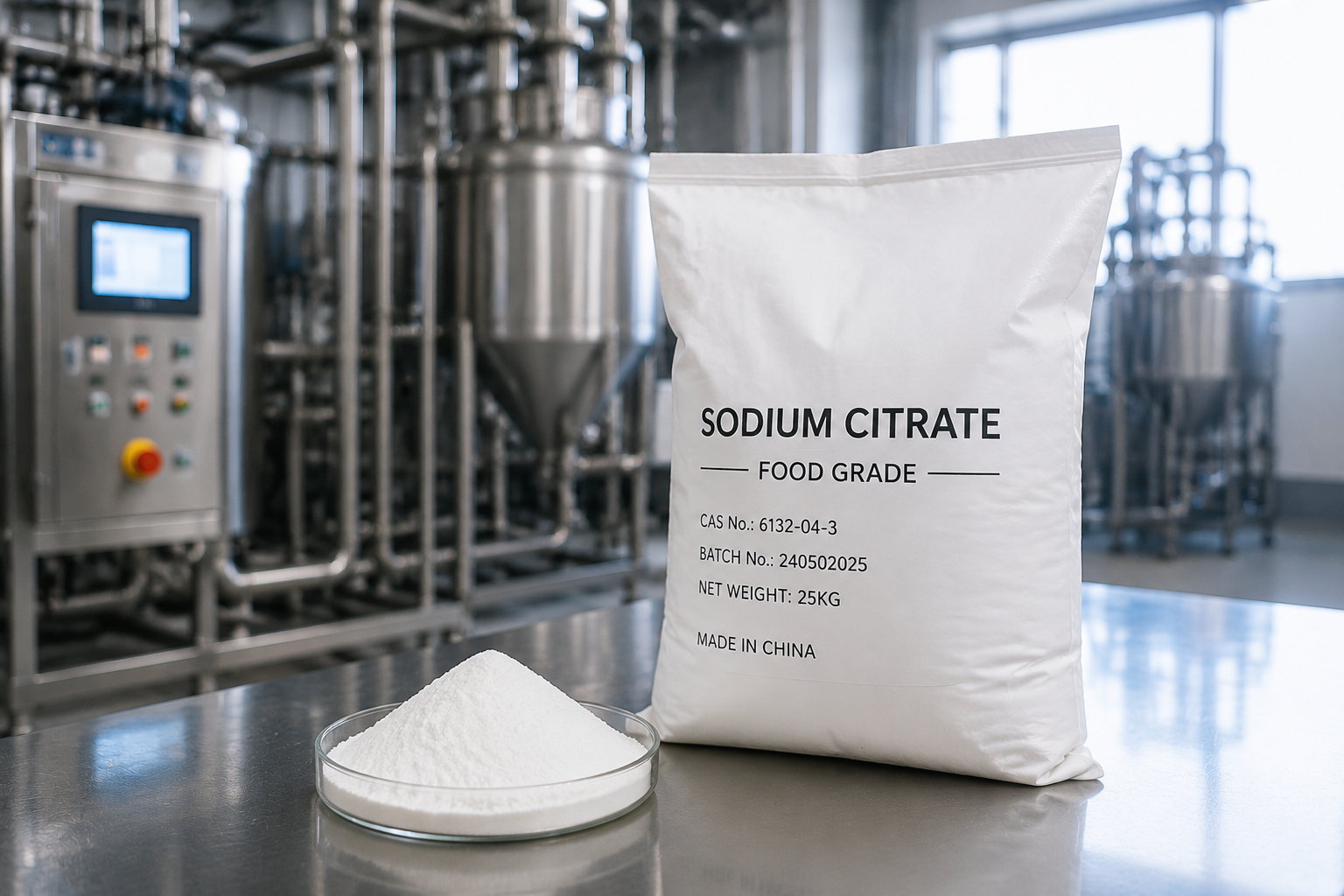
- Your cart is empty Browse Shop
Introduction
Sodium citrate is a widely used food ingredient found in many everyday food products, from processed cheese and beverages to sauces and other prepared foods. As a versatile food additive, it helps manufacturers control acidity, improve texture, and maintain product consistency during processing.
But what exactly is sodium citrate, and why is it commonly used in the food industry?
In simple terms, sodium citrate is the sodium salt of citric acid and is valued for its buffering and emulsifying properties. These characteristics make it an important ingredient for food manufacturers looking to improve stability and processing performance in different formulations.
This article explores the main sodium citrate uses in food industry, including its applications in dairy products, beverages, and processed foods, while explaining how this ingredient supports modern food manufacturing.
What Is Sodium Citrate?
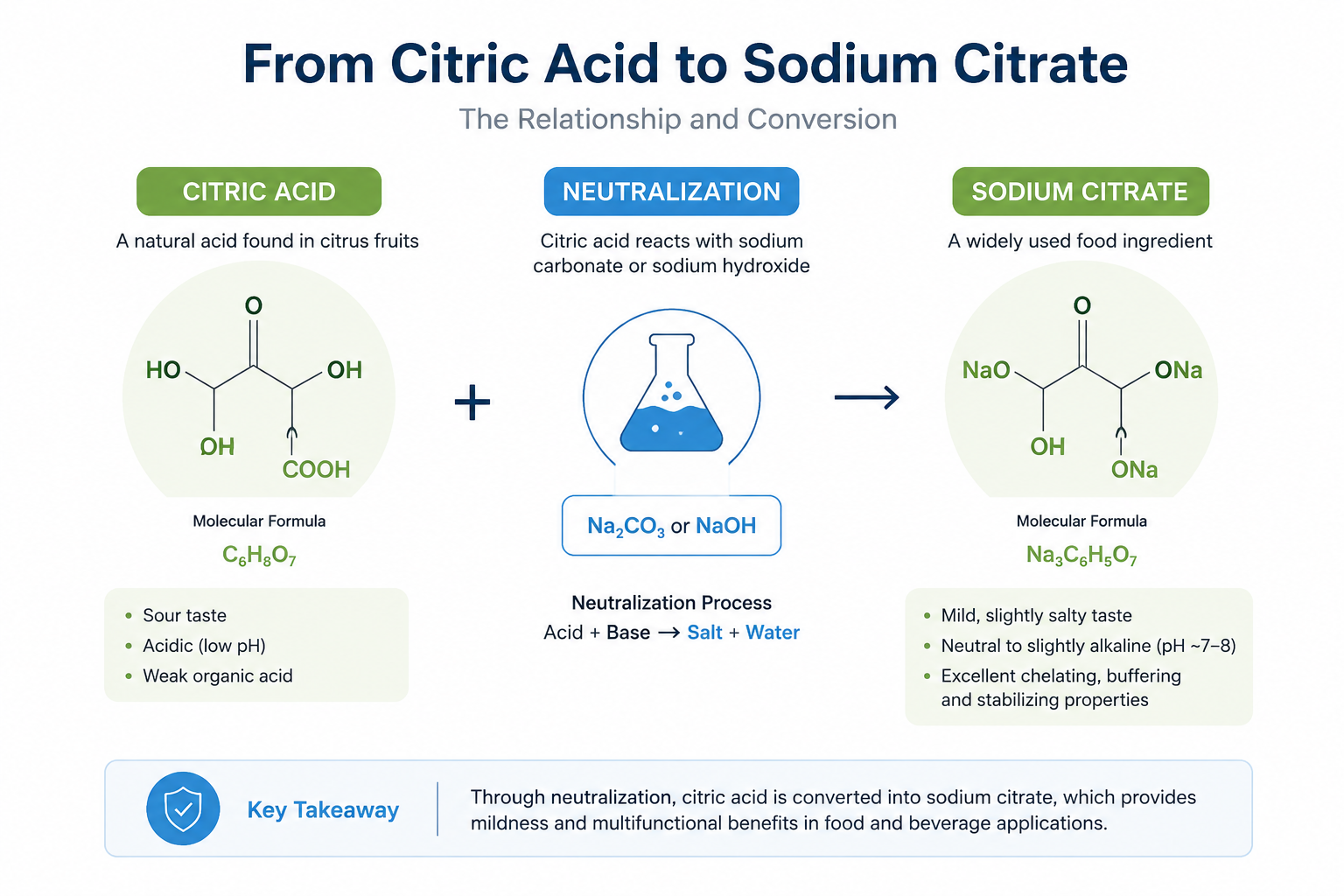
Sodium citrate is the sodium salt of citric acid, a commonly used ingredient in the food industry. It is produced by neutralizing citric acid with a sodium compound, resulting in a stable ingredient with unique functional properties. Due to its ability to help control acidity and improve food texture, sodium citrate is widely used in different food formulations.
As a food additive, sodium citrate is mainly valued for three important functions: acidity regulation, emulsification, and stabilization. It can help maintain the desired pH level in food products, improve the interaction between different ingredients, and support consistent quality during processing and storage.
Unlike simple flavoring ingredients, sodium citrate is often used because of its functional role in food manufacturing. For example, in processed cheese production, it helps create a smooth texture by supporting the blending of fat and water components. In beverages and other processed foods, it can help manufacturers achieve better formulation stability and consistency.
Because of these properties, food grade sodium citrate has become a valuable ingredient for manufacturers producing dairy products, beverages, sauces, and other prepared foods. Its versatility allows it to be used across multiple food categories while meeting the specific requirements of different formulations.
Main Sodium Citrate Uses in Food Industry
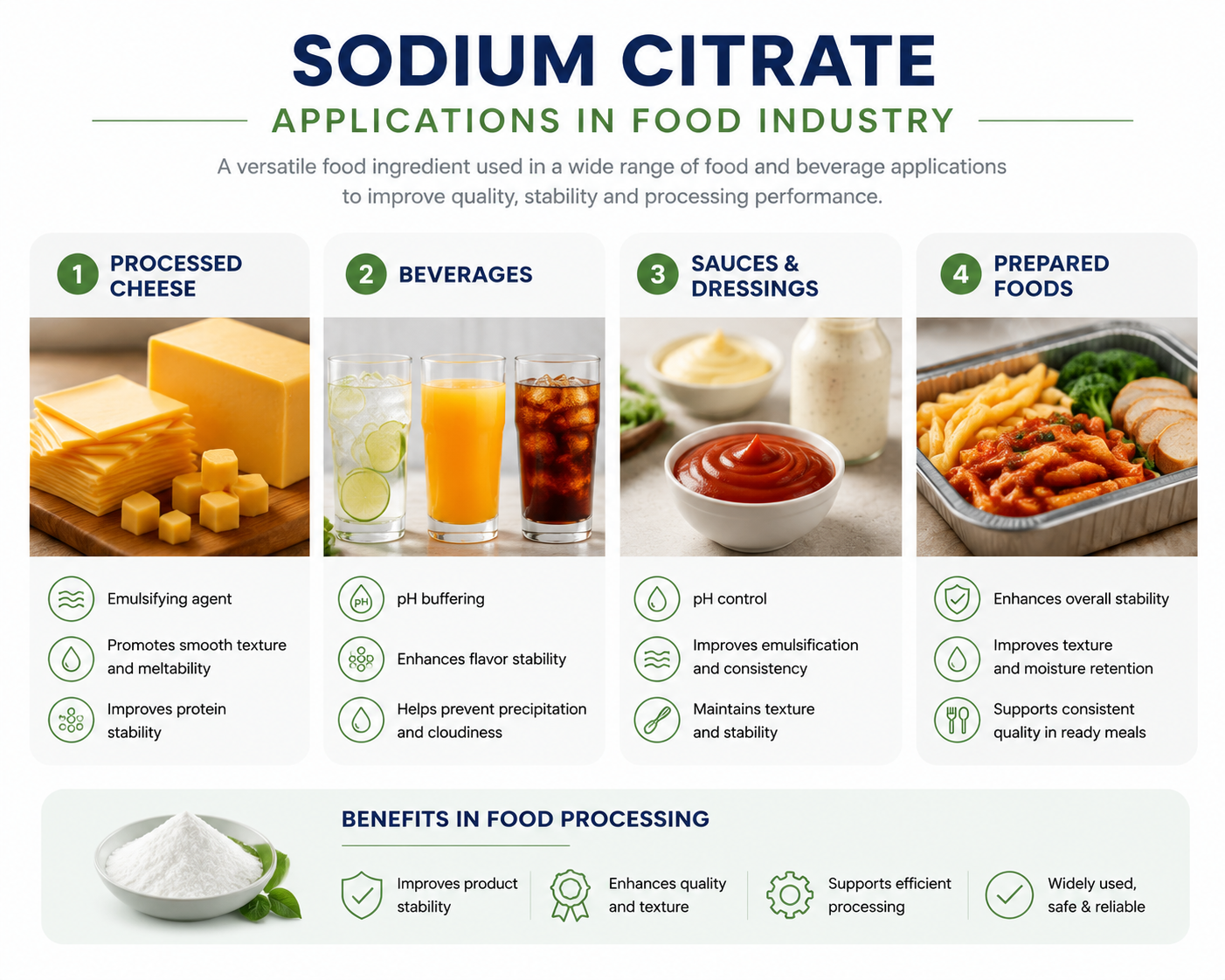
Sodium citrate is widely used across the food industry because of its ability to improve product stability, texture, and consistency. Different food categories require different functional properties, and sodium citrate provides manufacturers with a reliable ingredient solution for various formulations.
The most common sodium citrate uses in food include dairy products, beverages, processed foods, and other specialty food applications.
Sodium Citrate in Dairy Products and Cheese Processing
One of the most recognized applications of sodium citrate in dairy processing is processed cheese production.In this application, sodium citrate works as an emulsifying salt that helps create a smooth and uniform texture by improving the interaction between fat, protein, and water components.
During cheese processing, sodium citrate helps control the melting properties and prevents separation of ingredients when the product is heated. This makes it possible to produce processed cheese products with consistent texture, appearance, and stability.
Because of these functional benefits, sodium citrate is commonly used in cheese sauces, processed cheese slices, spreads, and other dairy-based formulations where texture control is important.
Sodium Citrate in Beverage Applications
Another important sodium citrate application is in beverage manufacturing. Sodium citrate can help regulate acidity and maintain flavor balance, making it a useful ingredient in different beverage formulations.
In beverages such as sports drinks, flavored drinks, and functional beverages, maintaining the right acidity level is essential for achieving a consistent taste profile. Sodium citrate can act as a buffering agent, helping manufacturers maintain product stability during production and storage.
Its ability to support formulation control makes sodium citrate a practical choice for beverage producers looking to improve consistency across different batches.
Sodium Citrate in Processed Foods
Beyond dairy products and beverages, sodium citrate is also used in various processed food applications. Its buffering and stabilizing properties make it suitable for products where manufacturers need better ingredient compatibility and processing performance.
Common examples include sauces, dressings, canned foods, and ready-to-eat products. In these applications, sodium citrate can help maintain product quality by supporting stable formulations and consistent characteristics throughout the production process.
Other Food Applications of Sodium Citrate
In addition to its major applications, sodium citrate can also be found in other food categories where acidity control and ingredient stability are required. These may include bakery products, dairy alternatives, and specialty food formulations.
The versatility of sodium citrate allows food manufacturers to use it across different product categories while adjusting formulations based on specific processing requirements.
How Does Sodium Citrate Work as a Food Ingredient?
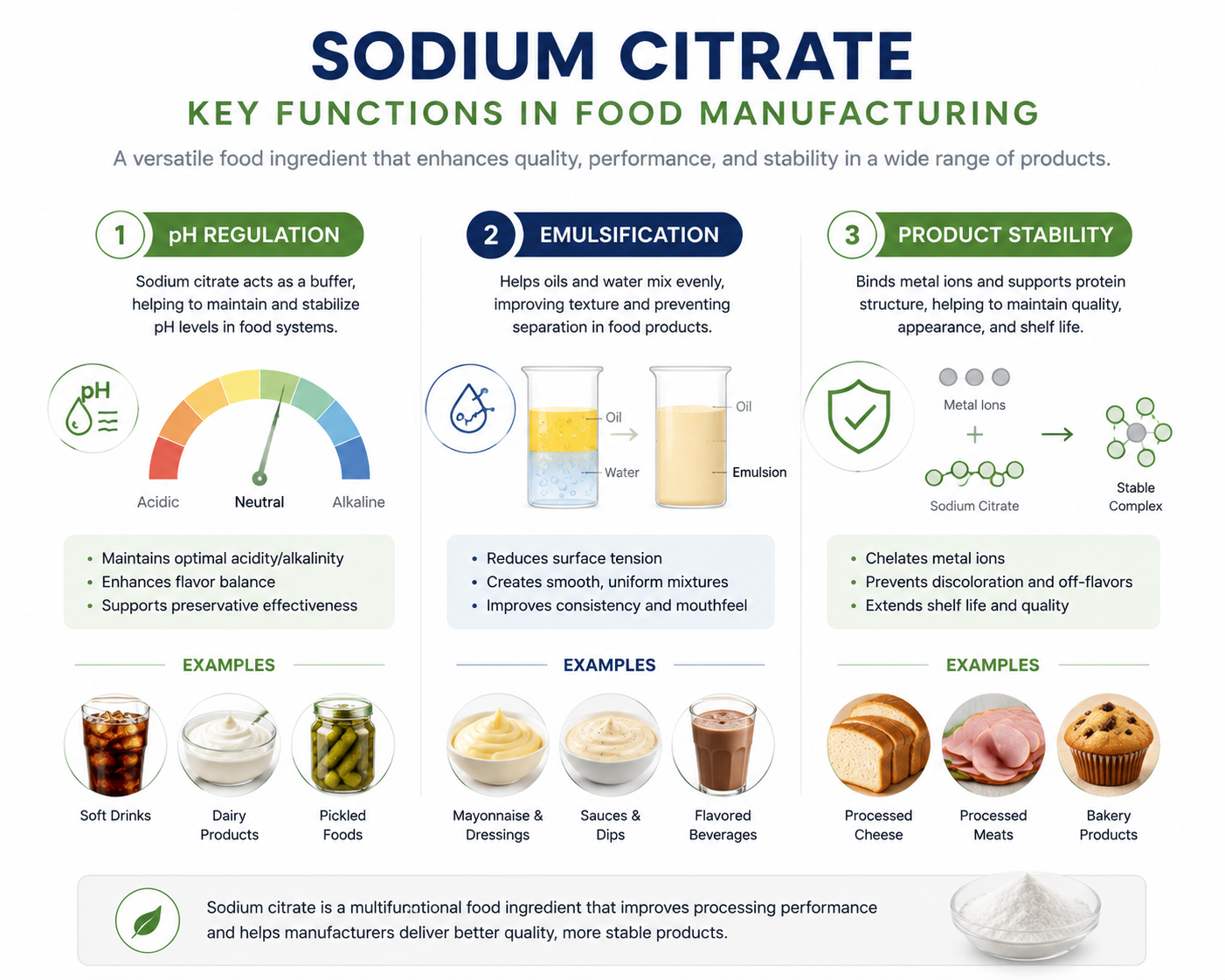
The effectiveness of sodium citrate in food manufacturing comes from its unique functional properties. As a food ingredient, sodium citrate is not only used for its chemical composition but also for the way it interacts with other ingredients during processing.
One of its main functions is pH regulation. Sodium citrate can help maintain a stable acidity level in food formulations, which is important for controlling flavor, texture, and overall product consistency. This buffering ability makes it a valuable ingredient in products where precise acidity control is required.
Another important function of sodium citrate is emulsification. In products such as processed cheese, sodium citrate helps improve the interaction between fat, protein, and water, creating a smoother and more uniform texture. This property is one of the key reasons why sodium citrate is widely used in dairy processing.
Sodium citrate also contributes to formulation stability by helping manufacturers maintain consistent product quality during processing and storage. By supporting ingredient compatibility and reducing formulation challenges, it provides practical benefits for food producers across different applications.
These functional characteristics explain why sodium citrate continues to be an important food additive in modern food manufacturing.
Sodium Citrate vs Citric Acid: Key Differences
Sodium citrate and citric acid are closely related ingredients because sodium citrate is derived from citric acid. However, they serve different functions in food manufacturing due to their different chemical properties and applications.
Citric acid is mainly used as an acidulant to provide a sour taste and adjust acidity levels in food and beverages. It is commonly found in products where manufacturers need direct acidity control or flavor enhancement.
Sodium citrate, on the other hand, is the sodium salt of citric acid and is often selected for its buffering and emulsifying properties. Compared with citric acid, sodium citrate provides better control over acidity changes and can help improve texture and stability in certain food formulations.
For example, in processed cheese production, sodium citrate is widely preferred because of its ability to support emulsification and create a smooth, consistent texture. In beverage applications, both ingredients may be used depending on the desired acidity profile and formulation requirements.
Choosing between sodium citrate and citric acid depends on the specific purpose of the product. Food manufacturers typically consider factors such as pH requirements, texture expectations, processing conditions, and final product characteristics when selecting the appropriate ingredient.
Sodium Citrate Substitute and Alternative Ingredients
While sodium citrate is widely used in food manufacturing, some formulations may consider alternative ingredients depending on the desired product characteristics and processing requirements. The choice of a sodium citrate substitute usually depends on factors such as acidity control, emulsification needs, texture expectations, and regulatory considerations.
Citric acid is one ingredient that is sometimes considered as an alternative when the primary goal is acidity adjustment. However, citric acid and sodium citrate serve different functional purposes, meaning they are not always interchangeable in food formulations.
Other buffering agents or emulsifying salts may also be considered in specific applications, particularly when manufacturers are optimizing product texture, stability, or processing performance. The most suitable option depends on the type of food product and the role the ingredient needs to perform.
For this reason, food manufacturers typically evaluate ingredients based on their functional properties rather than simply replacing one ingredient with another. Sodium citrate remains a preferred choice in many applications where buffering capacity, emulsification, and formulation stability are important.
Food Grade Sodium Citrate Quality Considerations
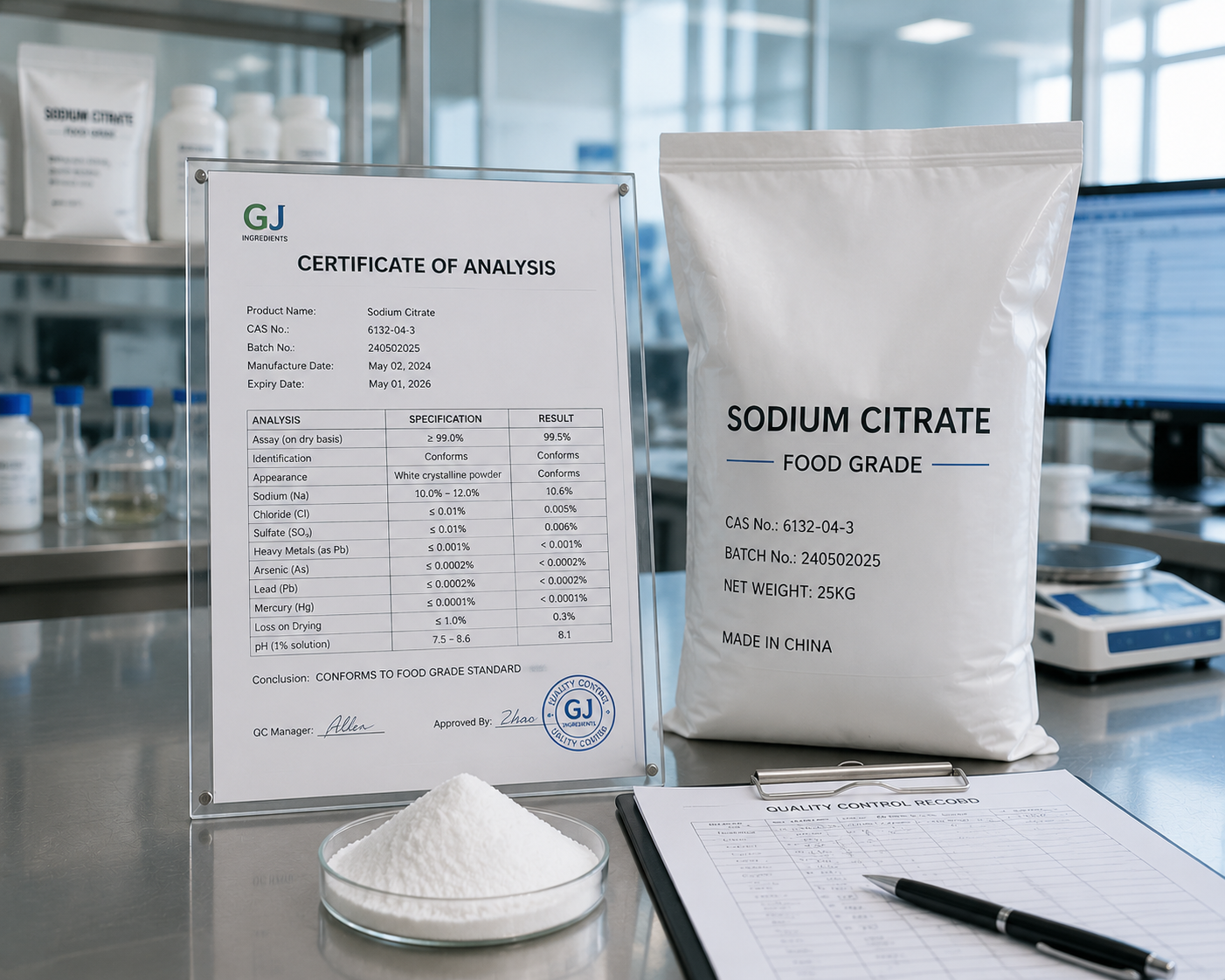
For food manufacturers, choosing the right sodium citrate supplier is not only about ingredient availability but also about quality consistency and reliable documentation. Food grade sodium citrate needs to meet specific quality requirements to ensure stable performance in different food applications.
One of the most important factors is product purity and consistency. High-quality sodium citrate should meet clearly defined sodium citrate specifications and maintain consistent performance between batches, allowing manufacturers to achieve predictable results during production. Consistent ingredient performance is especially important for large-scale food processing where formulation accuracy is critical.
Documentation and quality control are also important considerations when sourcing food grade sodium citrate. Manufacturers often review documents such as product specifications, certificates of analysis (COA), and quality testing records before selecting a supplier. These documents help verify that the ingredient meets the required standards for its intended application.
In addition, a reliable sodium citrate supplier should provide stable supply capability, professional packaging, and clear product information to support long-term cooperation. By evaluating quality, documentation, and supply reliability together, food manufacturers can make more informed sourcing decisions.
Conclusion
Sodium citrate plays an important role in modern food manufacturing due to its versatile functional properties and wide range of applications. From processed cheese and beverages to sauces and other prepared foods, sodium citrate helps manufacturers improve product consistency, texture, and formulation stability.
Understanding sodium citrate uses in food industry allows food producers to select ingredients based on their specific processing requirements and product goals. Its ability to support acidity control, emulsification, and stability makes food grade sodium citrate a valuable ingredient across multiple food categories.
When sourcing sodium citrate, manufacturers should consider not only product specifications but also quality consistency, documentation, and supplier reliability. Choosing a trusted sodium citrate supplier can help ensure stable ingredient performance and long-term production efficiency.