



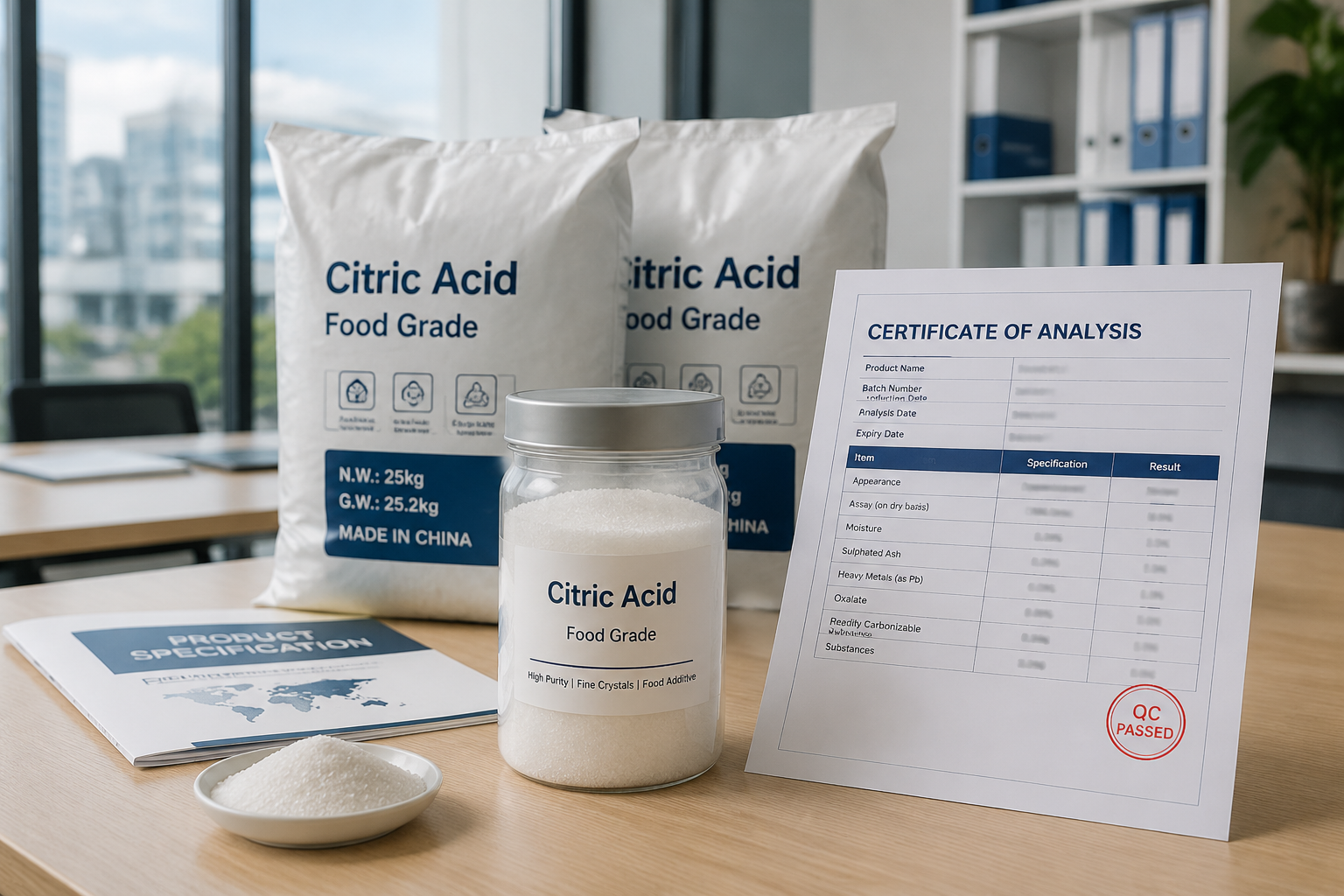
- Your cart is empty Browse Shop
Citric Acid Supplier Guide: Where to Buy Food Grade Citric Acid in Bulk
Introduction
Citric acid is one of the most widely used food ingredients in the global food manufacturing industry. It is commonly used in beverages, dairy products, confectionery, sauces, and processed foods due to its ability to regulate acidity, enhance flavor balance, and support consistent product formulation.
For food manufacturers, choosing the right citric acid supplier involves more than simply comparing prices. Product quality, specification consistency, documentation support, packaging options, and supply reliability all play important roles in maintaining stable production.
When sourcing food grade citric acid in bulk, buyers typically need to consider factors such as product type, application requirements, quality standards, and supplier capabilities. Different formulations may require different grades or forms of citric acid, including anhydrous citric acid and citric acid monohydrate.
This guide provides an overview of food grade citric acid, including its types, applications, quality considerations, and key factors to evaluate when selecting a reliable citric acid supplier.
What Is Citric Acid?
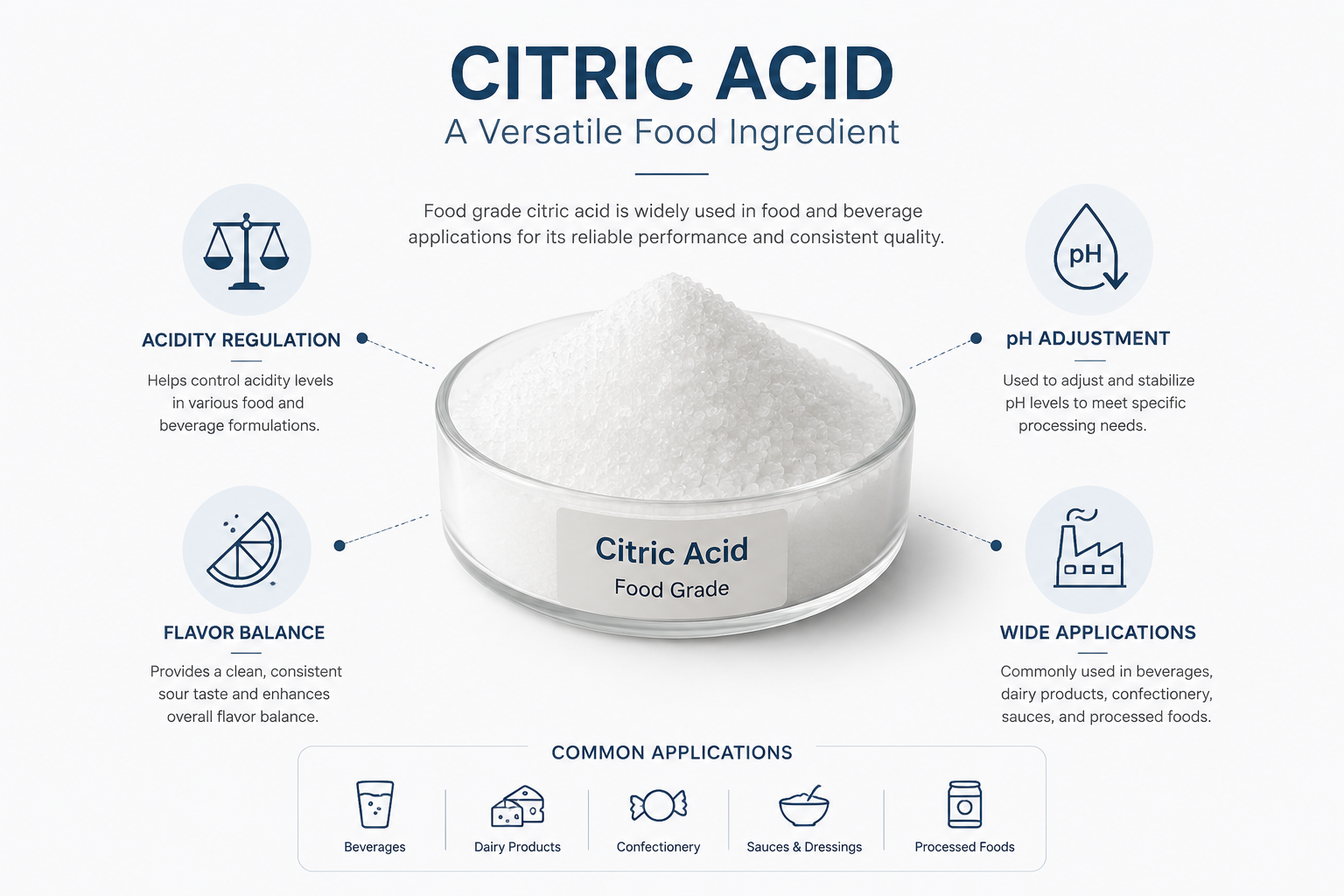
Citric acid is a naturally occurring organic acid that is widely used as a functional ingredient in the food and beverage industry. It is naturally present in citrus fruits, but commercial food-grade citric acid is primarily produced through industrial fermentation processes to meet the consistent quality and volume requirements of global food manufacturing.
In food applications, citric acid is mainly valued for its ability to regulate acidity, adjust pH levels, and provide a balanced sour taste. These properties make it an important ingredient in a wide range of products, including beverages, dairy products, confectionery, sauces, and processed foods.
Unlike simple flavoring ingredients, citric acid plays a functional role in product formulation. By controlling acidity levels, it can help manufacturers achieve consistent taste profiles and maintain product stability during processing and storage. The specific application and required characteristics may vary depending on the final product formulation.
For food manufacturers, selecting the appropriate food grade citric acid requires consideration of several factors, including product specifications, application requirements, quality documentation, and supplier reliability. Different forms of citric acid may offer different characteristics, which is why understanding available product types is an important step before purchasing in bulk.
Food Grade Citric Acid Types and Applications
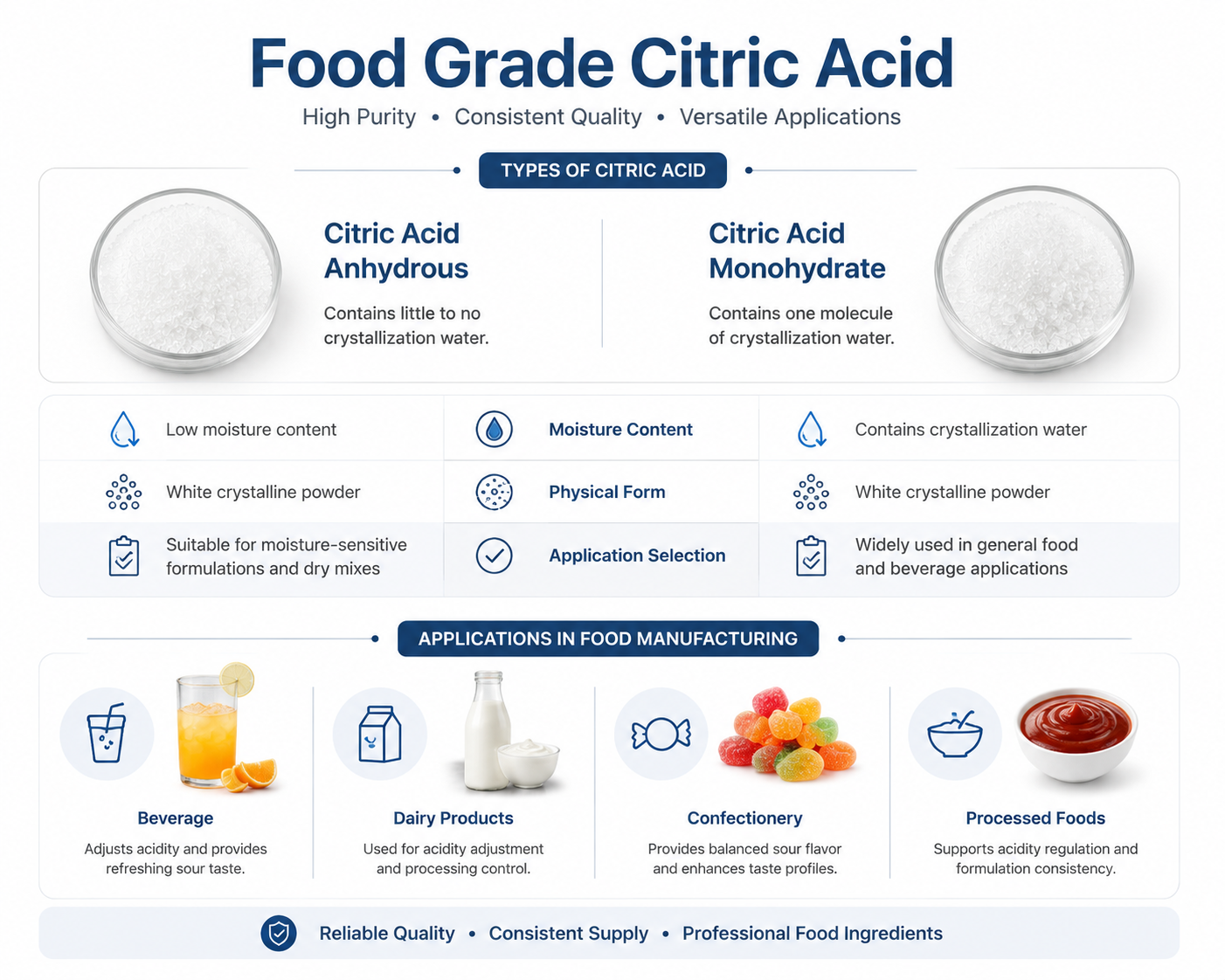
Food manufacturers typically select citric acid based on product formulation requirements, processing conditions, and application needs. Commercial food grade citric acid is mainly available in two common forms: citric acid anhydrous and citric acid monohydrate. While both forms provide similar functional properties, differences in moisture content and physical characteristics may influence their suitability for specific applications.
Types of Food Grade Citric Acid
Citric Acid Anhydrous
Citric acid anhydrous is a form of citric acid that contains little to no crystallization water. Due to its lower moisture content, it is often selected for applications where moisture control and formulation consistency are important considerations.
This form can be suitable for food manufacturers that require precise ingredient specifications, particularly in dry mixes, powdered products, and formulations where additional moisture may affect processing performance.
Citric Acid Monohydrate
Citric acid monohydrate contains one molecule of crystallized water within its structure. It is one of the most commonly used forms of food-grade citric acid and is widely applied across different food and beverage industries.
Because of its stable characteristics and broad application range, citric acid monohydrate is frequently used in beverages, dairy products, confectionery, and other processed food formulations.
Citric Acid Anhydrous vs Monohydrate
For food manufacturers, choosing between anhydrous and monohydrate citric acid depends mainly on formulation requirements, processing conditions, and the desired product characteristics.
| Feature | Citric Acid Anhydrous | Citric Acid Monohydrate |
|---|---|---|
| Moisture Content | Lower moisture content | Contains crystallized water |
| Physical Form | White crystalline powder | White crystalline powder |
| Application Consideration | Suitable for moisture-sensitive formulations | Widely used in general food applications |
| Selection Factor | Processing requirements and formulation design | Application needs and product specifications |
Applications of Citric Acid in Food Manufacturing
Citric acid applications in food manufacturing commonly involve acidity regulation, flavor balance, and consistent product formulation.
Beverage Industry
Citric acid in beverage production is commonly used to adjust acidity and provide a refreshing sour taste.It is widely found in products such as fruit drinks, flavored beverages, and powdered drink mixes.
For beverage manufacturers, consistent acidity control is important for maintaining the expected taste profile and product quality.
Dairy Products
Citric acid can be used in certain dairy applications where acidity adjustment and processing control are required. Its functional properties make it a useful ingredient in specific dairy formulations.
Confectionery Products
In confectionery manufacturing, citric acid is often used to provide a balanced sour flavor and enhance the sensory characteristics of products such as candies and gummies.
Sauces and Processed Foods
Citric acid is also used in various processed food applications where manufacturers need reliable acidity adjustment and formulation consistency.
Understanding the differences between citric acid types and their applications helps food manufacturers select the appropriate ingredient for their production requirements. When purchasing bulk citric acid, buyers should also consider product specifications, quality documentation, and supplier capabilities to ensure consistent supply.
Citric Acid Quality Standards for Food Manufacturers
When sourcing food grade citric acid, quality consistency is one of the most important considerations for food manufacturers. Reliable ingredient supply depends not only on meeting basic product requirements but also on maintaining stable specifications across different production batches.
Food manufacturers typically evaluate citric acid quality through product specifications, testing documentation, and supplier quality management processes. These factors help ensure that the ingredient performs consistently during formulation and production.
Product Specifications and Quality Requirements
Food-grade citric acid is generally evaluated based on several key specifications, including appearance, purity, moisture content, and other relevant quality parameters.
Common quality considerations include:
- White crystalline appearance
- Consistent particle characteristics
- Stable purity levels
- Controlled moisture content
- Compliance with applicable food ingredient standards
For manufacturers, consistent specifications are especially important because variations in raw materials can affect production processes, product quality, and formulation accuracy.
Certificate of Analysis (COA) and Quality Documentation
A professional citric acid supplier should provide complete quality documentation to support product verification and purchasing decisions.
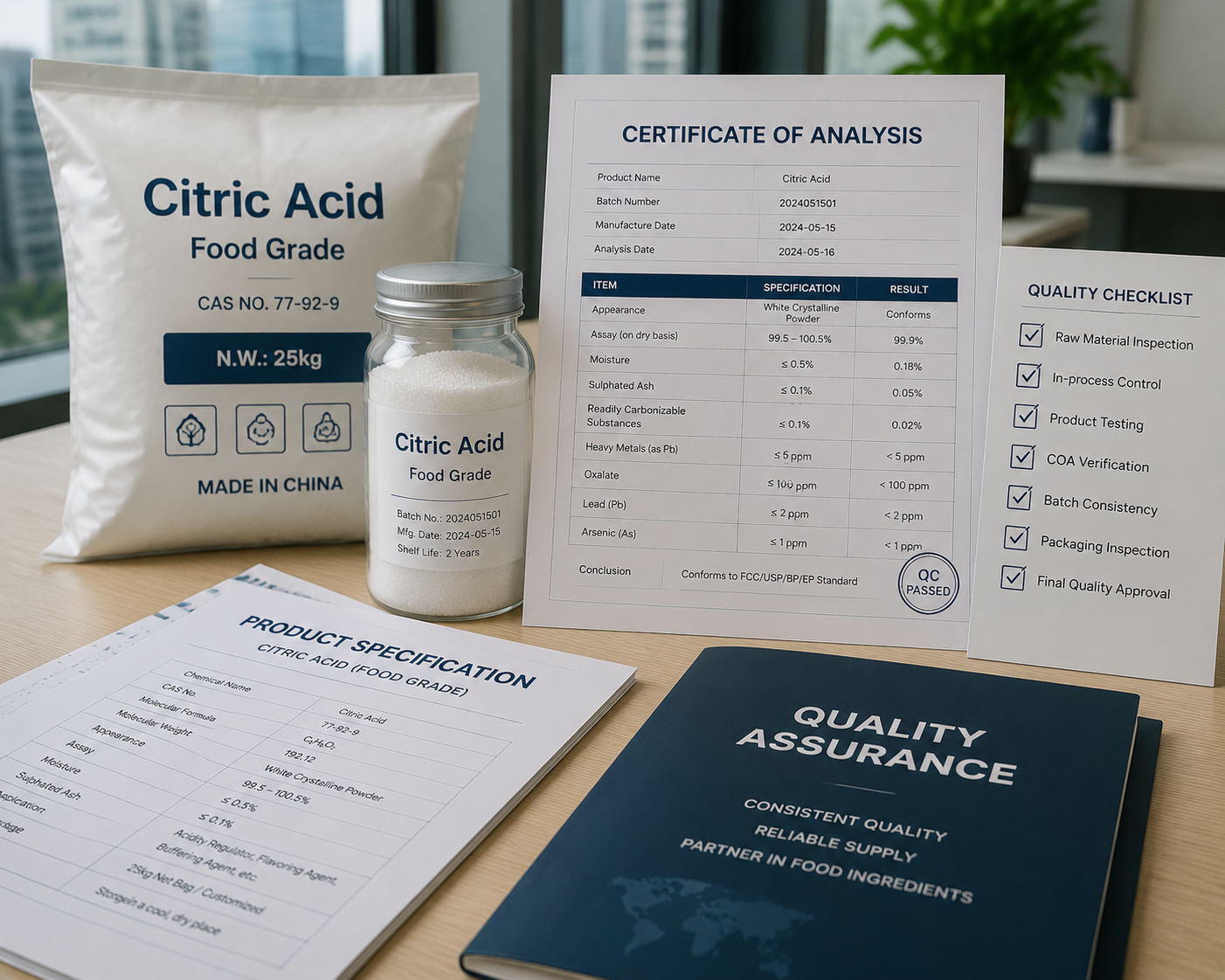
A Certificate of Analysis (COA)typically includes important batch information such as:
- Product name and specification
- Batch number
- Testing results
- Quality parameters
- Production date or related information
COA documentation allows buyers to verify that each batch meets the agreed product specifications before use in food production.
For international buyers, clear documentation also improves communication efficiency and helps establish a more reliable supply relationship.
Batch Consistency and Supply Reliability
Beyond individual product testing, long-term consistency between batches is a critical factor for food manufacturers.
A reliable supplier should maintain consistent production processes and quality control procedures to minimize variations between shipments.
Stable batch quality helps manufacturers:
- Maintain consistent product formulation
- Reduce production adjustments
- Improve supply planning
- Build long-term sourcing relationships
When evaluating a citric acid supplier, buyers should consider not only the product itself but also the supplier’s ability to provide consistent quality over time.
Choosing Citric Acid Based on Application Requirements
Different food applications may have different requirements for citric acid specifications. Factors such as formulation design, processing conditions, and storage requirements should be considered when selecting the appropriate product.
For example:
- Beverage manufacturers may focus on acidity control and dissolution characteristics.
- Dry food manufacturers may pay closer attention to moisture-related specifications.
- Large-scale producers may prioritize supply consistency and documentation support.
Understanding these quality factors helps buyers make more informed decisions when purchasing bulk citric acid for food manufacturing.
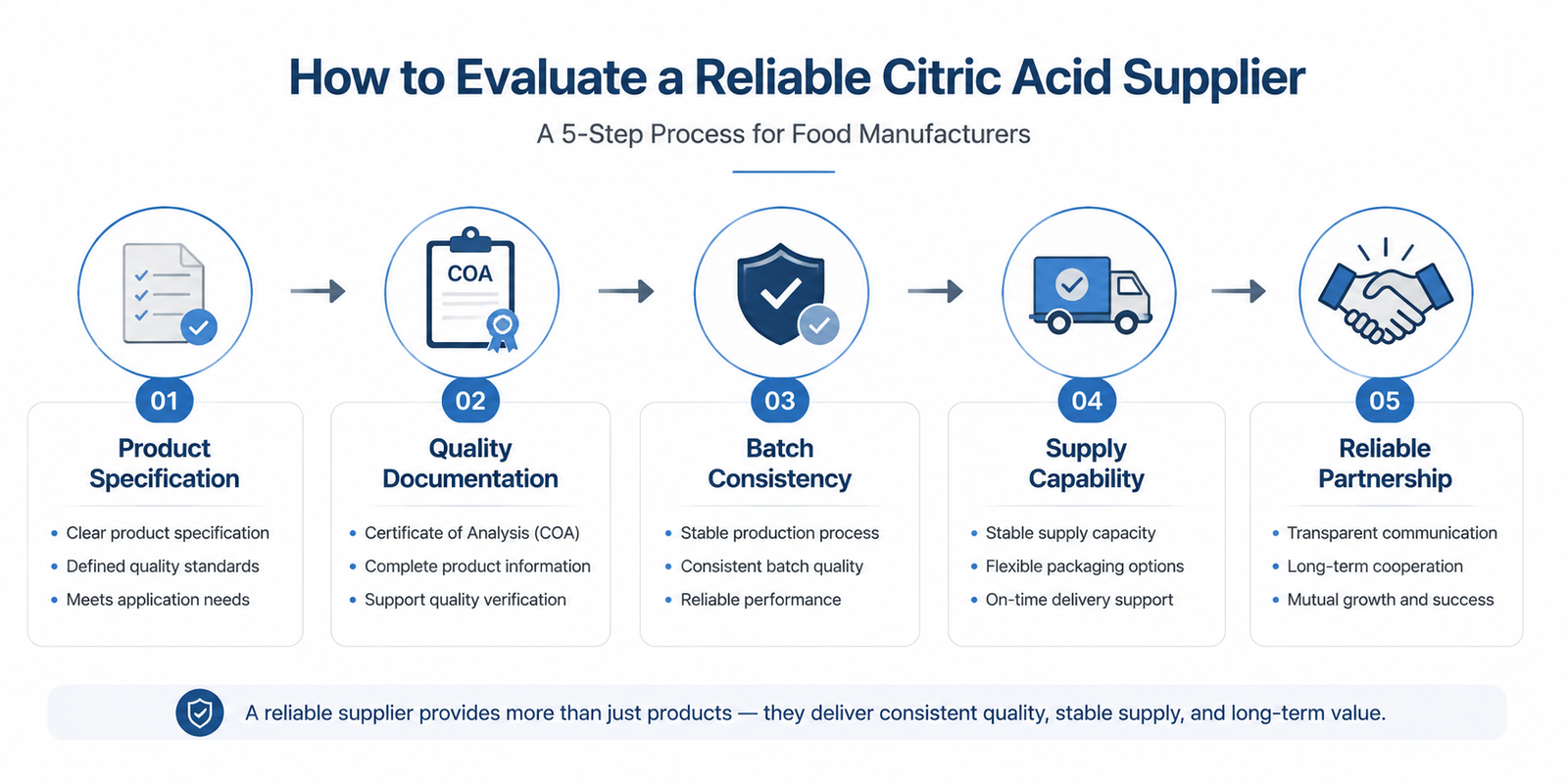
How to Choose a Reliable Citric Acid Supplier
Selecting the right citric acid supplier is an important decision for food manufacturers, distributors, and industrial buyers. While product pricing is an important factor, long-term supply reliability depends on multiple aspects, including product consistency, quality documentation, production capability, and communication efficiency.
A reliable supplier should not only provide food grade citric acid that meets required specifications but also support stable sourcing through transparent quality management and professional service.
When evaluating a potential citric acid manufacturer or supplier, buyers should consider the following key factors.
1. Consistent Product Quality
Product consistency is one of the most important factors when choosing a citric acid supplier.
For food manufacturers, changes in ingredient specifications between different shipments may affect production processes and final product characteristics. A professional supplier should have stable production procedures and quality control systems to maintain consistency across batches.
Important considerations include:
- Stable product specifications
- Consistent purity and appearance
- Reliable batch-to-batch performance
- Clear quality standards
A supplier’s ability to maintain consistent quality is often more valuable than simply offering the lowest purchase price.
2. Complete Quality Documentation
Professional ingredient suppliers should provide appropriate documentation to help buyers verify product quality.
For international food ingredient purchasing, common documents and information may include:
- Certificate of Analysis (COA)
- Product specifications
- Batch information
- Packaging details
- Technical product information
Clear documentation helps buyers evaluate products efficiently and reduces communication challenges during sourcing.
3. Stable Supply Capability
For companies purchasing bulk citric acid, supply stability is another important consideration.
A dependable supplier should have the ability to support:
- Regular production schedules
- Consistent inventory availability
- Flexible packaging options
- Reliable export coordination
Stable supply capability helps manufacturers avoid unexpected interruptions and maintain continuous production.
4. Professional Communication and Export Experience
For global buyers, supplier communication is also an important part of the sourcing process.
A professional citric acid supplier should be able to provide clear information regarding:
- Product specifications
- Order requirements
- Packaging options
- Shipping arrangements
Experience in international trade can help suppliers better understand the requirements of overseas customers and improve cooperation efficiency.
5. Focus on Long-Term Partnership
The best supplier relationship is not only based on individual transactions but also on long-term cooperation.
Food manufacturers often prefer suppliers who can provide:
- Stable quality
- Reliable delivery
- Transparent communication
- Continuous support
Building a reliable supply relationship helps companies improve purchasing efficiency and reduce sourcing risks over time.
Bulk Citric Acid Supply Options
For food manufacturers and distributors, purchasing bulk citric acid requires consideration of packaging, storage conditions, transportation requirements, and supply planning. Choosing the appropriate supply format can help companies improve purchasing efficiency and maintain consistent production operations.
Food grade citric acid is commonly supplied in industrial packaging formats designed for large-volume handling and transportation. The specific packaging solution may depend on order volume, application requirements, storage conditions, and customer preferences.
Common considerations for bulk citric acid purchasing include:
- Packaging requirements: Different buyers may require specific packaging formats based on warehouse conditions, production processes, and handling methods.
- Storage conditions: Proper storage helps maintain product quality and prevent issues caused by moisture exposure.
- Transportation planning: Reliable logistics coordination is important for international buyers managing regular ingredient supply.
For companies sourcing bulk citric acid, working with an experienced supplier can simplify procurement by providing consistent product specifications, clear documentation, and coordinated supply support.
A professional bulk citric acid supplier should be able to support both product quality requirements and long-term supply needs, helping manufacturers maintain stable ingredient sourcing for their production processes.
FAQ
What is food grade citric acid?
Food grade citric acid is a high-quality form of citric acid that meets the requirements for use in food manufacturing. It is commonly used as an acidity regulator, flavor balancing ingredient, and functional component in beverages, dairy products, confectionery, and other food applications.
What is the difference between anhydrous and monohydrate citric acid?
The main difference between anhydrous and monohydrate citric acid is moisture content. Citric acid anhydrous contains little to no crystallization water, while citric acid monohydrate contains one molecule of crystallized water. The appropriate type depends on the manufacturer’s formulation requirements and application conditions.
How do I choose a reliable citric acid supplier?
When selecting a citric acid supplier, buyers should consider product consistency, quality documentation, supply capability, packaging options, and communication efficiency. A reliable supplier should be able to provide clear specifications and support stable long-term ingredient sourcing.